



French Column Mantel Clock
A french column mantel clock brings architectural order and mechanical precision to a room, drawing the eye with stately proportions.
French Column Mantel Clock
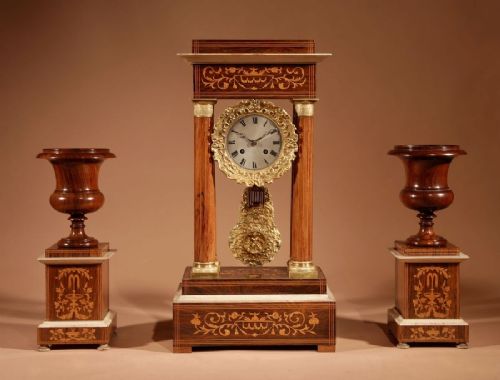
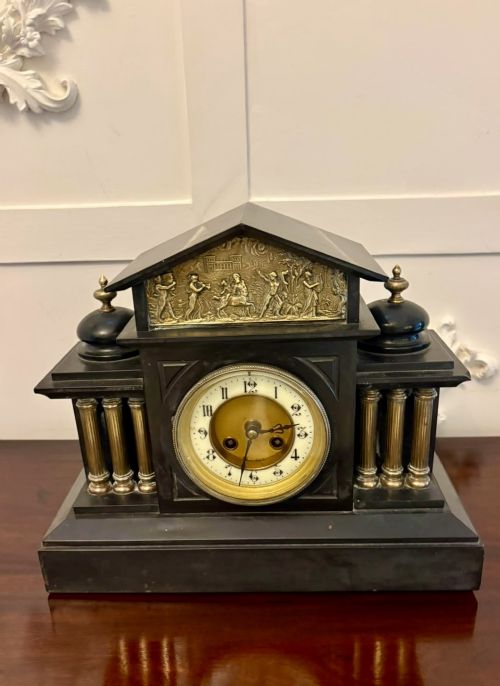
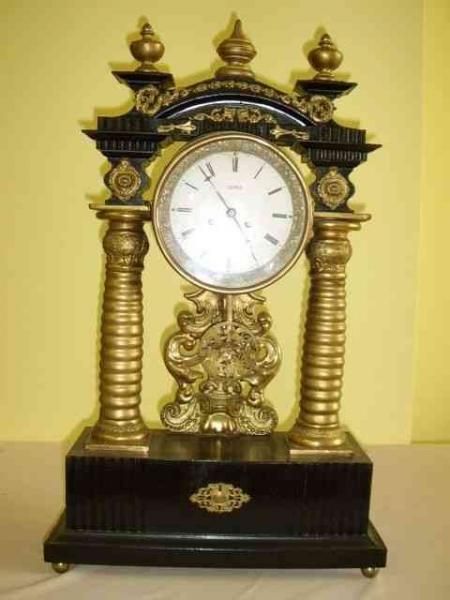
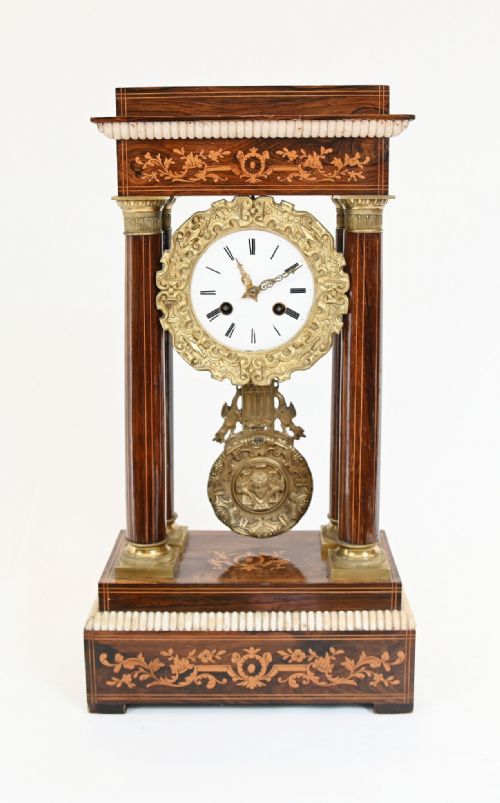
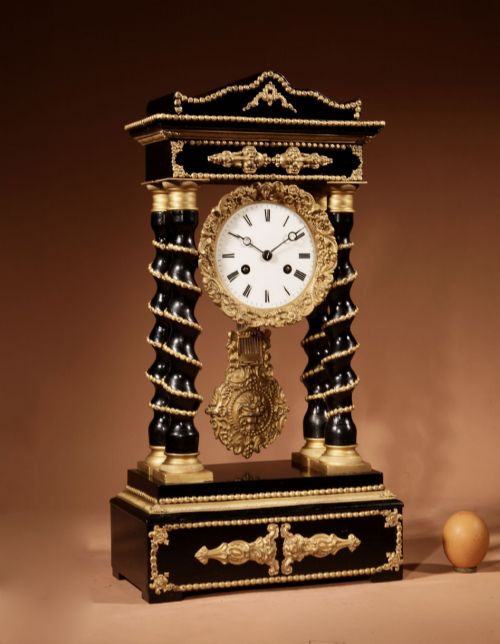
A french column mantel clock stands as an architectural focal point, taking the form of robust marble cases or slender portico designs supported by upright pillars. Buyers seeking a french column mantel clock encounter pieces predominantly spanning the nineteenth century, alongside earlier Empire and Charles X examples.
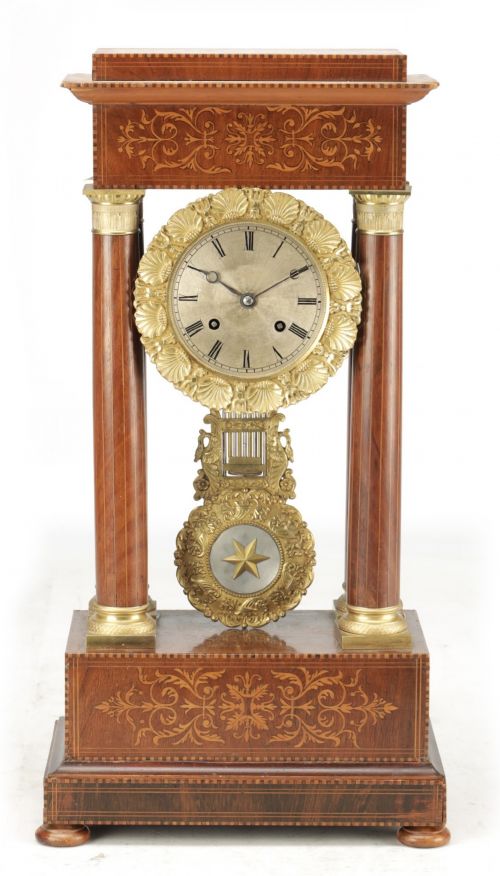
The architectural format draws directly from classical buildings, housing circular enamel dials between matched columns of marble, wood, or gilt bronze. These timepieces served both practical and decorative functions in nineteenth-century drawing rooms and libraries.
Most pieces meeting this search belong to the Victorian era and the mid to late nineteenth century, built with heavy stone bodies or veneered wooden frames. Enamel dials and visible pendulums complete the characteristic arrangement seen across these listings.
Standards of Workmanship
Quality rests in the crispness of the cast ormolu mounts and the depth of the marble polishing, where sharper chisel work and heavier gilding separate superior examples from standard production. The integration of architectural details, such as true free-standing columns rather than flat applied pilasters, marks the distinction.
Movement execution dictates long-term performance, with high-tier makers employing refined escapements, numbered matching components, and sound acoustic gongs or bells. The choice of secondary woods, precise string inlay, and undamaged enamel dials further elevate a piece above its contemporaries.
Materials appearing across the inventory include rich ormolu, cut crystal, alabaster, ebonised wood, and finely painted enamel dial panels.
Philippes Paris·Baby and Jannings·Breguet·Mappin and Webb
The French Column Mantel Clock Glossary
- Portico clock
- An architectural mantel clock design featuring a raised entablature supported by four columns enclosing a suspended pendulum. This style gained immense popularity during the Empire and Charles X periods.
- Garniture
- A matching set consisting of a central clock flanked by side ornaments such as urns or candelabra. These sets were designed to sit symmetrically upon a mantelpiece.
- Ormolu
- Finely chased bronze coated with a layer of gold amalgam through a fire-gilding process. The technique produces a rich, durable metallic lustre found on high-end nineteenth-century mounts.
- Grand Sonnerie
- A complex clock striking mechanism that sounds both the hours and the quarters automatically on every quarter-hour. It represents a high degree of watchmaking skill.
- Fusee
- A conical pulley used in spring-driven clocks to equalize the diminishing power of the mainspring as it unwinds. This ensures consistent force is delivered to the gear train.
French Column Mantel Clock: Frequently Asked Questions
Where should I place a heavy marble clock?
These dense stone and metal timepieces require a sturdy, level surface capable of supporting considerable weight without sagging. Heavy furniture or dedicated mantelpieces prevent the clock from leaning, which alters the beat of the pendulum.
Keep the clock away from direct sunlight, radiators, and damp exterior walls to protect the wood veneers, marble surfaces, and delicate interior steel pivots from expansion and rust.
Why does my clock keep stopping?
Stopping usually indicates that the clock is out of beat, meaning the pendulum is not resting in a symmetrical position relative to the escapement. Adjusting the small regulating nut at the base of the pendulum often restores an even tick.
Accumulated dust in the gear train or dried lubricants can also halt the movement, requiring professional cleaning by a skilled horologist rather than home intervention.
How do I identify the period of the clock?
Dating relies on stylistic clues, such as the austere classical lines of Empire and Charles X portico clocks versus the heavier, ornate architectural forms of Victorian marble models. Materials like ormolu, ebonised wood, and specific dial signatures provide firm chronological markers.
Examining the backplate of the movement often reveals stamped maker marks, serial numbers, or exhibition medals that narrow down the date of manufacture to a specific decade.