

19th Century Mahogany Carver
A 19th century mahogany carver offers solid timber frames and open arms built for dining rooms and desks alike.
19th Century Mahogany Carver
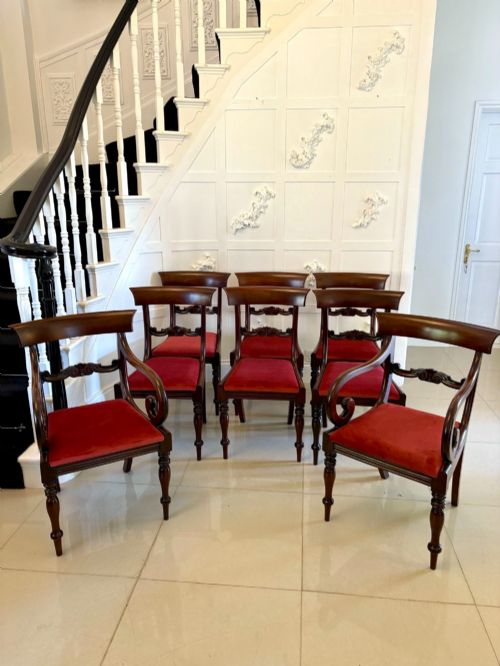
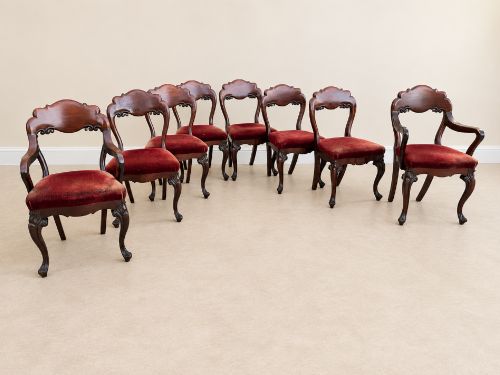
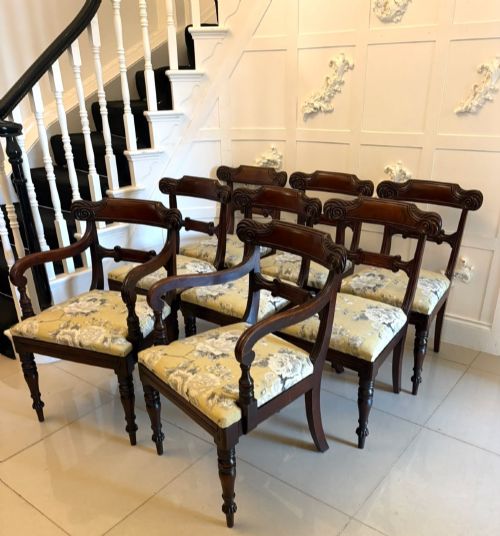
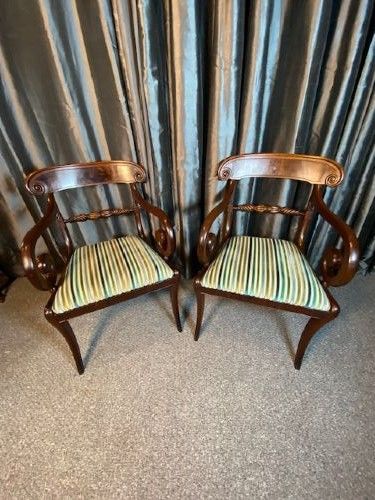
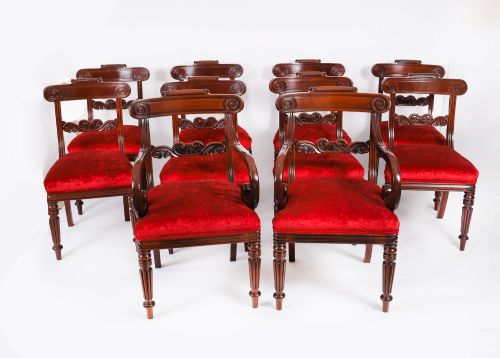
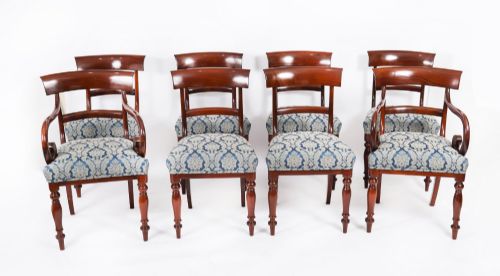
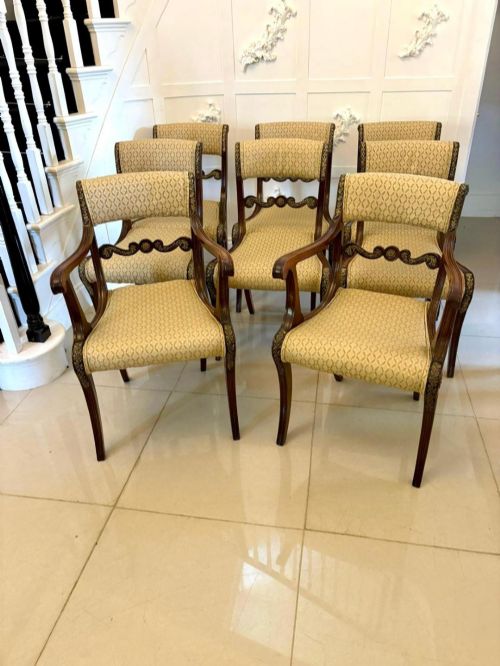
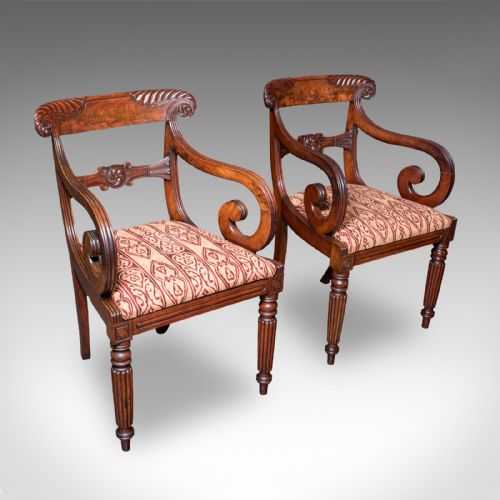
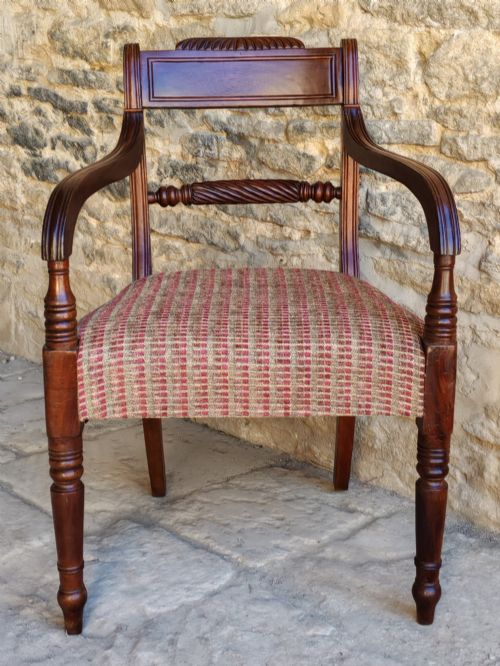
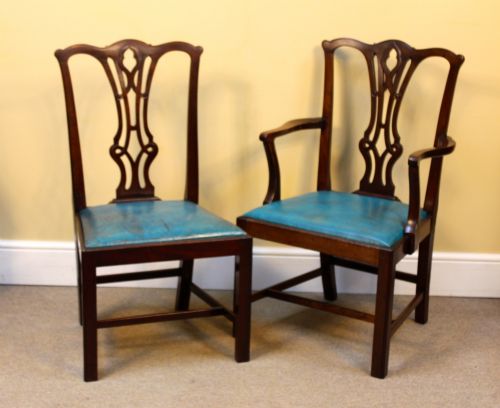
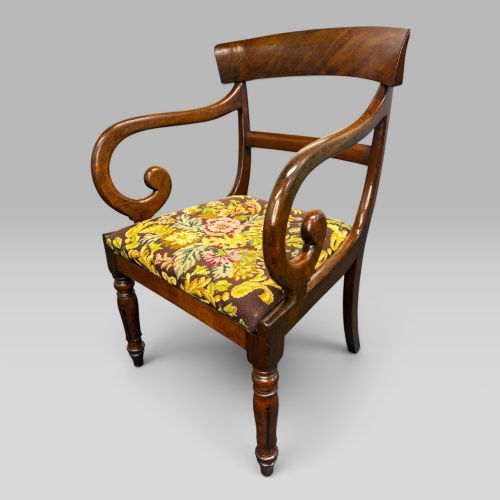
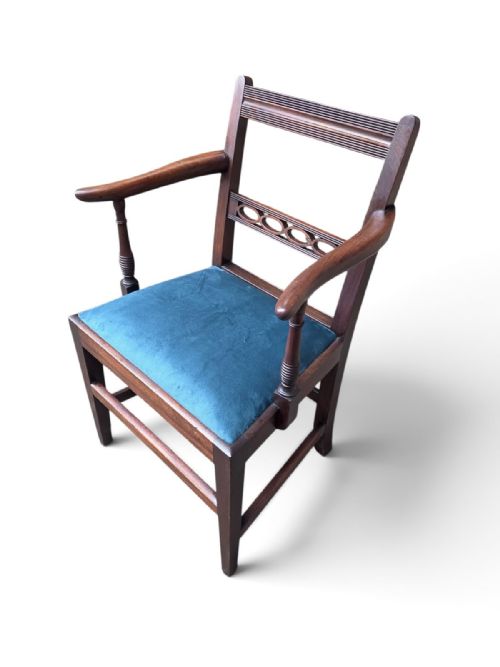
A 19th century mahogany carver is an armchair designed to match a set of dining chairs, frequently appearing alongside single chairs or as paired elbow seats. These pieces function as reception seats, desk chairs, and morning room armchairs, marked by their distinct structural framing.
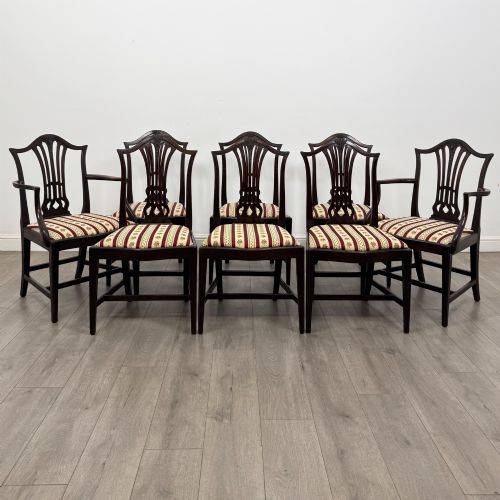
The versions most commonly met on this page include Regency, William IV, and George IV examples, alongside later Victorian interpretations in the Chippendale and Hepplewhite styles. They take forms such as bar back, shield back, ropeback, and lyre back designs.
Makers shaped these carvers across English, Irish, Scottish, Swedish, and French workshops throughout the 1800s and late 19th century. Their origins show up in specific regional details like ball and claw feet and sabre legs.
Materials and construction methods
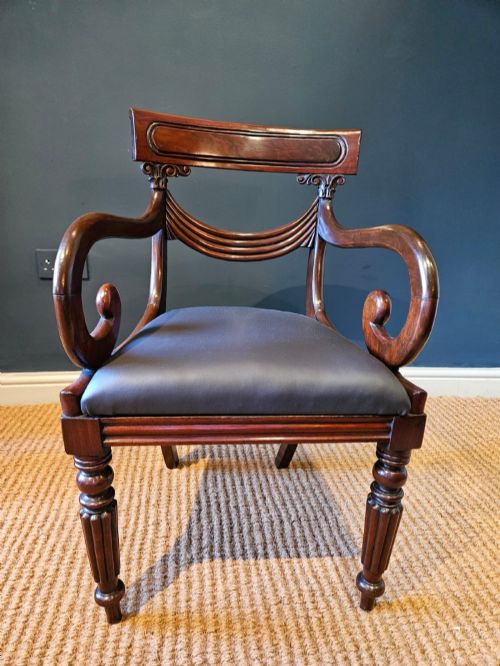
Craftsmen built these carvers primarily using solid mahogany, shaping the timber into supportive elbow rests, vase splats, and robust frames. Many examples incorporate brass details or cane seating into the structural design.
Upholstery materials provide the padding on seats and elbow rests, utilising fabric, leather, velvet, tapestry, and general upholstery fabric fixed over the wooden base. Joinery techniques secure the open arms and carved backs to the main chair structure.
Some carvers spent their mornings at a mahogany partners desk and their evenings at the dining table.
Distinctions in craftsmanship and condition
The standard of carving on the mahogany splats, scroll arms, and legs separates standard seating from exhibition quality pieces. Crisp detailing in design styles like Chippendale revival or Regency indicates higher workshop skill.
Original condition and the integrity of the timber frame dictate the desirability of an armchair. Uniformity within large sets of dining chairs or matched pairs influences how the carver sits alongside its companion pieces.
The 19th Century Mahogany Carver Glossary
- Carver
- An armchair designed to match a set of dining chairs, featuring open arms to accommodate formal clothing. These chairs often double as desk or reception seats.
- Elbow chair
- An alternative term for an armchair, describing the supportive rests built into the sides of the seat. These appear frequently in morning rooms and offices.
- Ropeback
- A chair back design featuring carved wooden members twisted to resemble thick cord. This style is often found on pieces dating from the early 19th century.
- Bar back
- A horizontal wooden rail across the backrest of a chair, sometimes shaped into curves or slats. This form is common in Regency dining sets.
- Shield back
- A chair back shaped like a heraldic shield, popularized by Hepplewhite designs. Carvers with this form display intricate pierced splats.
- Sabre leg
- A chair leg that curves outwards in a concave sweep resembling a cavalry sabre. This structural form is characteristic of Regency seating.
19th Century Mahogany Carver: Frequently Asked Questions
How do I use a carver?
A carver functions primarily as the head-of-table chair in a dining set, providing comfortable elbow rests for the host. These armchairs also serve effectively as standalone desk chairs or accent seats in reception spaces.
Because they match standard dining heights, you can integrate them into existing seating arrangements without awkward level changes. Their sturdy timber construction supports daily sitting in studies and morning rooms alike.
Were carvers made as singles?
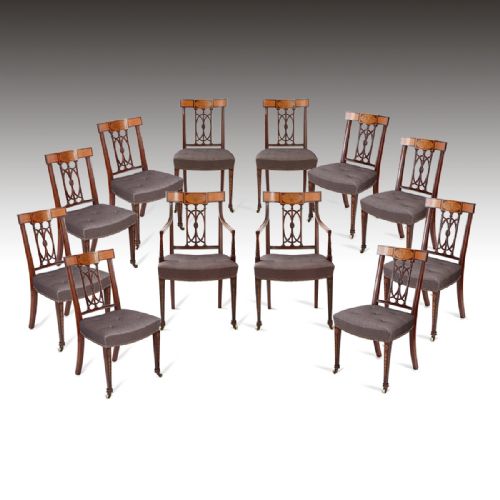
Makers produced carvers both as individual pieces for desks and as paired elbow chairs for morning rooms. They also formed part of larger dining sets alongside multiple single chairs.
Finding a carver as a single piece is common in office or desk chair formats. Sets of dining chairs frequently include one, two, or four matching carvers to balance the seating arrangement.
How do I identify Regency style?
Regency pieces often display sabre legs, brass inlay, and scroll arms derived from classical antiquity. These chairs reflect design trends spanning the early decades of the 19th century.
Look for clean linear forms, bar backs, and dark mahogany grains that characterise English and Scottish workshops of this period. Such details separate Regency work from heavier Victorian interpretations.
What is a Chippendale revival?
A Chippendale revival carver reinterprets 18th-century designs during the late 19th century. These pieces showcase intricate carved details, ball and claw feet, and elaborate vase splats.
Cabinetmakers of the later Victorian era utilised solid mahogany to recreate these earlier aesthetic standards. The results combine Georgian motifs with late-century manufacturing precision.