

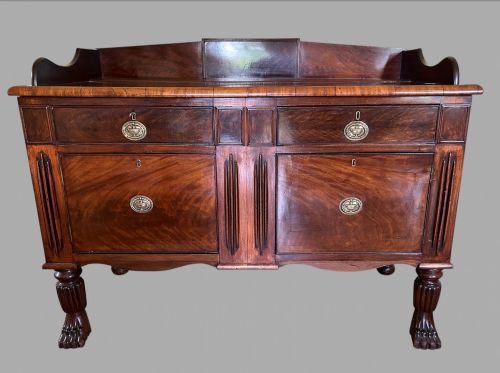
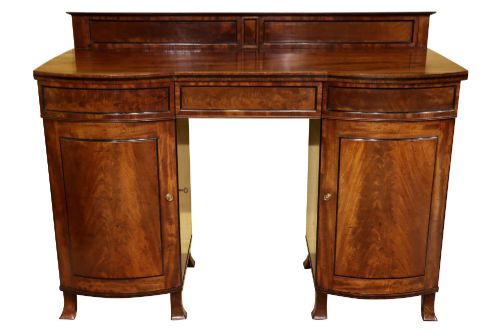
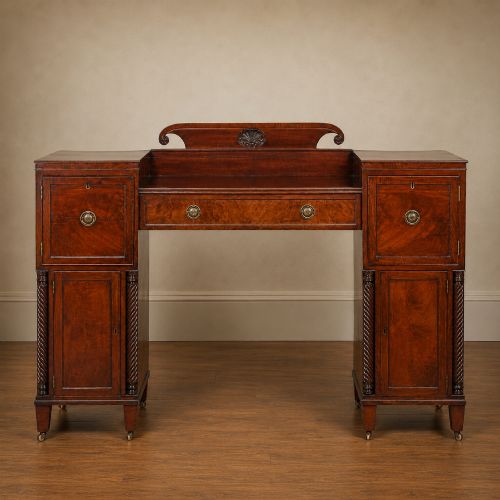
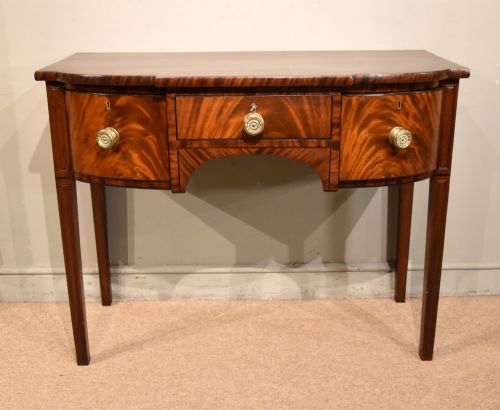
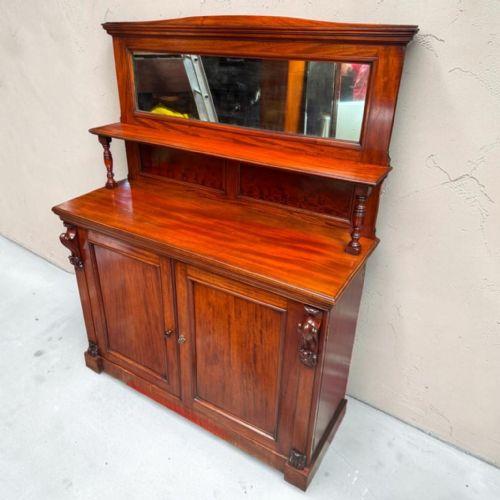
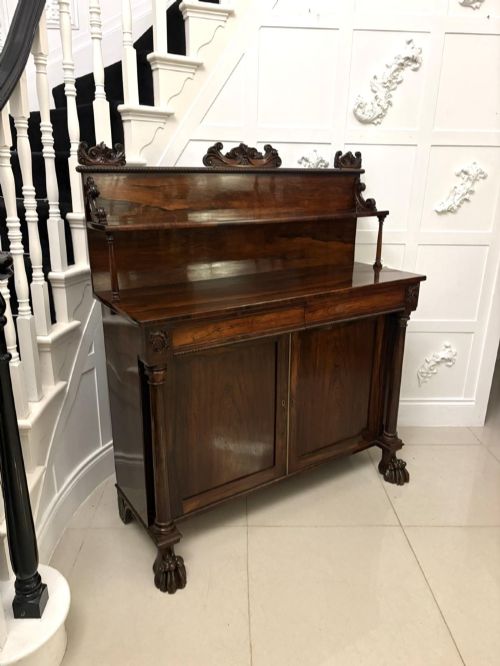
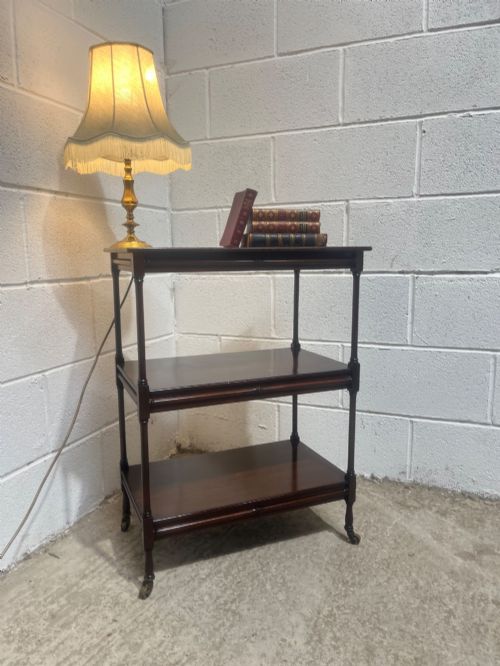
19th Century Mahogany Buffet
A 19th century mahogany buffet offers sturdy dining room storage and surface space built from rich timber.
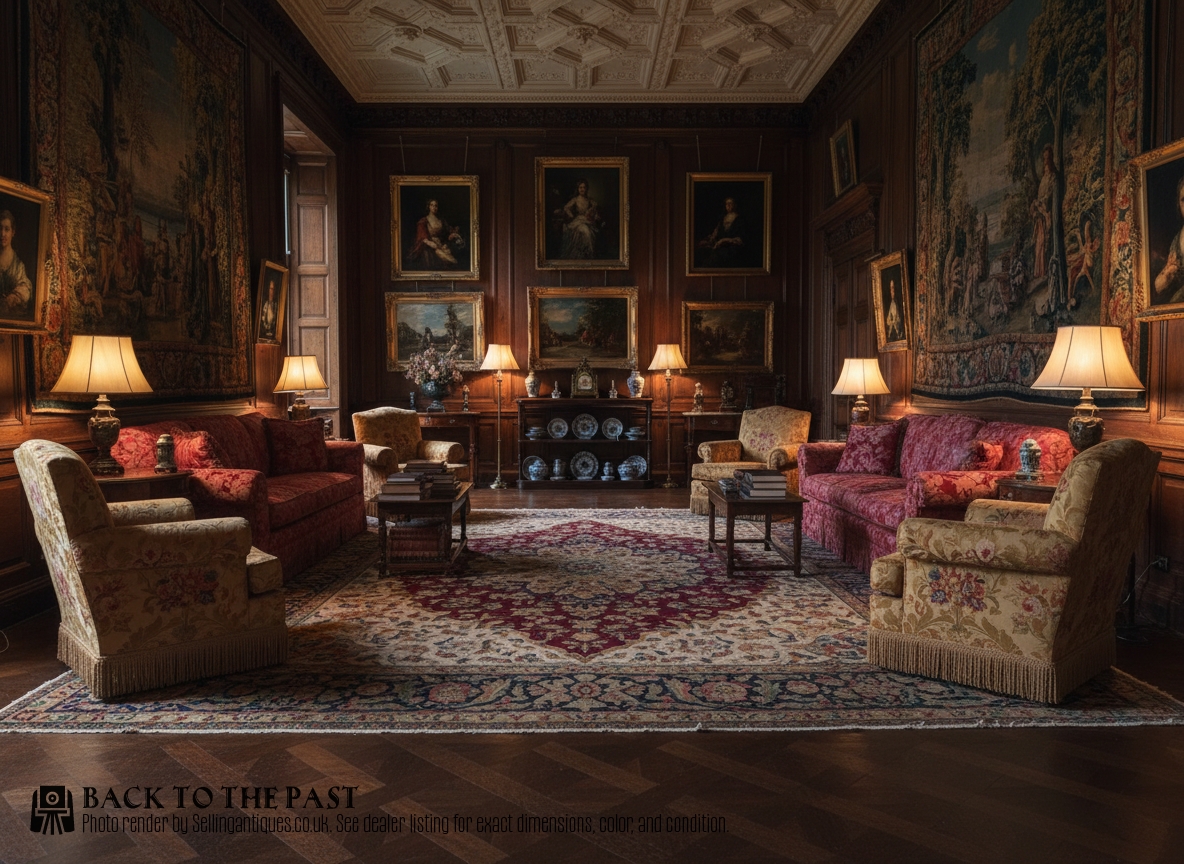
19th Century Mahogany Buffet
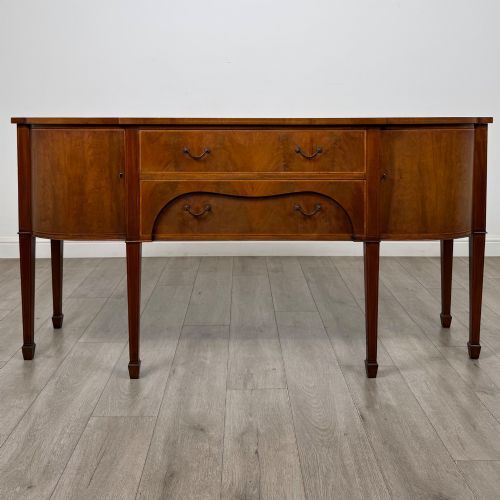
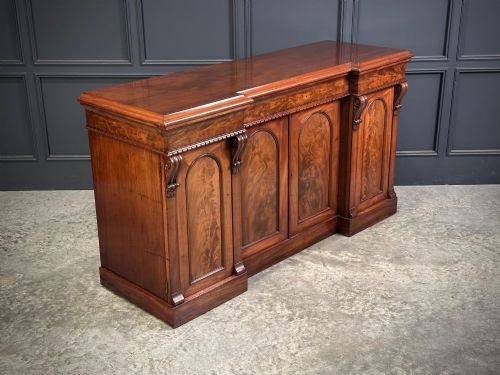
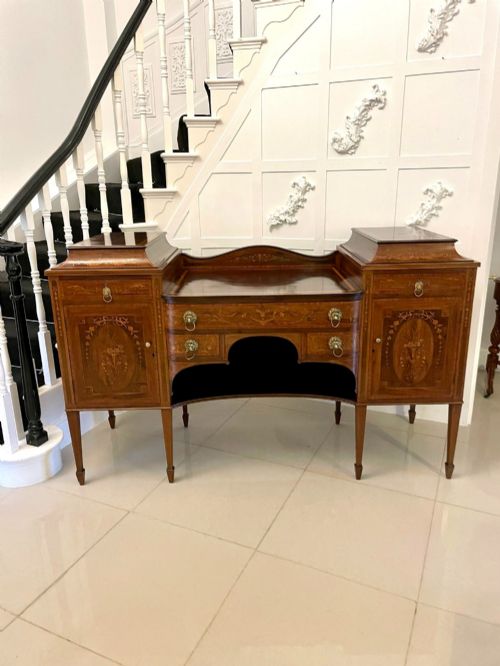
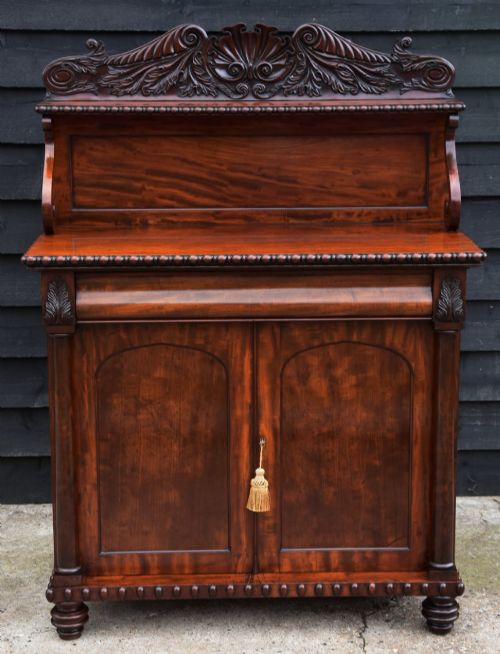
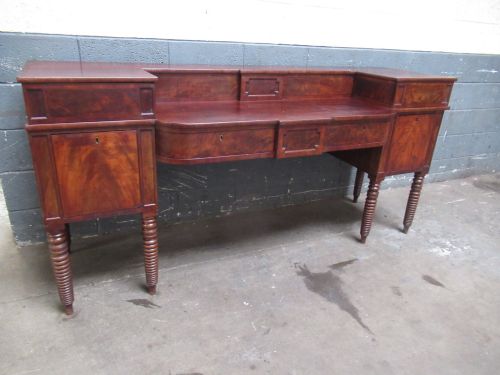
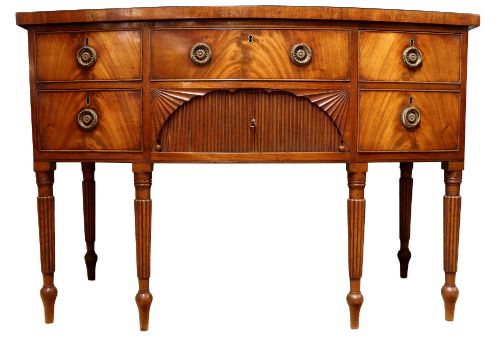
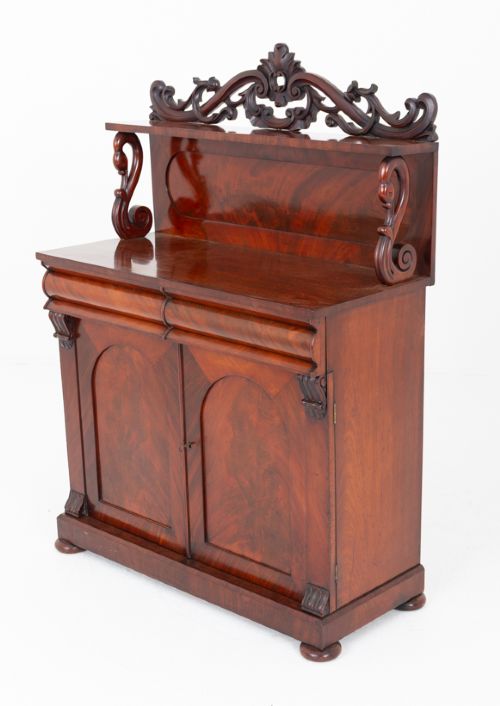
A 19th century mahogany buffet comprises heavy serving furniture designed for dining spaces, spanning periods from Regency to Victorian. Pieces range from multi-tiered dumb waiters and chiffoniers to pedestal sideboards and large breakfront cabinets.
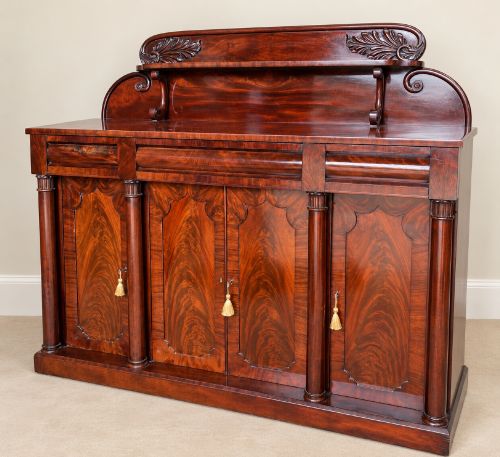
Buyers frequently encounter tiered serving tables alongside traditional cupboards with flame mahogany veneer. Scottish and English workshops produced these forms using dense tropical hardwoods meant to anchor formal rooms.
Materials and Construction
Cabinet makers utilised solid mahogany and applied flame mahogany veneers over secondary timbers to create patterned surfaces. Brass fittings, glass doors, boxwood inlay, and marble tops appear across various regional styles.
Joinery methods included framed panel doors, dovetailed drawers, and turned or carved columns supporting multiple tiers on wheels or fixed plinths.
Listings combine traditional sideboards with tiered dumb waiters, chiffoniers, and marble-topped serving cabinets across Victorian and Regency eras.
Markers of Distinction
The choice of timber grain defines visual value, with matched flame veneer and deep figuring commanding attention over plain stock. Hand-carved details, ebony stringing, and intact original brass hardware elevate individual examples.
Proportion and structural weight separate standard utility pieces from grand pedestal sideboards and breakfronts designed for large dining halls.
Hewetsons London
The 19th Century Mahogany Buffet Glossary
- Flame mahogany
- A veneer cut from the fork of the tree where branches join the trunk, producing a distinctive fire-like ripple pattern.
- Chiffonier
- A compact sideboard or cabinet featuring enclosed lower cupboards, frequently topped with a shelf or mirror back.
- Dumb waiter
- A multi-tiered serving trolley or stand with revolving or stationary shelves used for holding dishes during meals.
- Breakfront
- A cabinet or sideboard where the central section projects forward from the flanking outer cupboards.
- Pedestal sideboard
- A heavy serving table featuring two substantial side pedestals flanking a central drawer or recess.
19th Century Mahogany Buffet: Frequently Asked Questions
How were buffets used in nineteenth century dining rooms?
Dining rooms utilised these pieces for staging dishes, holding silver service, and storing dining linen out of sight.
Servants placed food on the tiers or top surfaces before guests served themselves during large meals.
What is the difference between a buffet and a sideboard?
Buffets often feature open tiers or multi-level shelving designed specifically for serving food and displaying tableware.
Sideboards generally provide enclosed cupboard space and drawer storage rather than open stacking tiers.
How do I identify a Regency period piece?
Regency items display classical restraint with clean architectural lines, brass gallery rails, and subtle flame veneer.
Maker details often point towards early decades around eighteen-ten to eighteen-twenty.
How do I care for antique mahogany wood?
Maintain the timber by keeping furniture away from direct heat sources and sudden humidity changes.
Apply gentle beeswax periodically to nourish the surface without building up heavy chemical residues.