


Antique Tiered Dumbwaiter
An antique tiered dumbwaiter offers a practical multi-level surface for serving, originating in periods from the Georgian era onward.
Antique Tiered Dumbwaiter
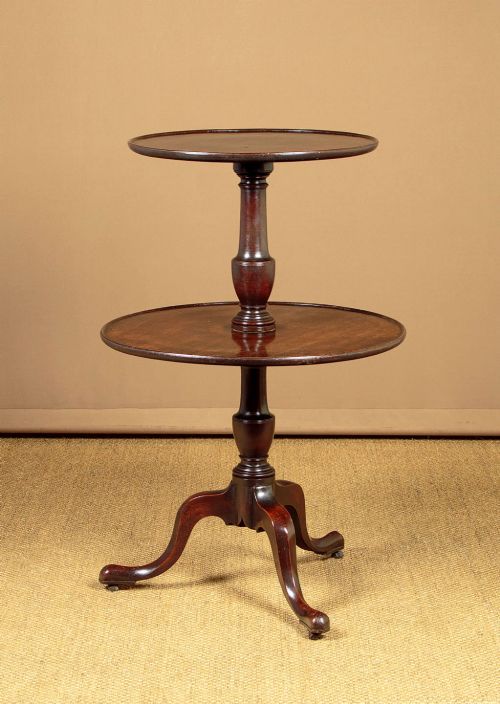
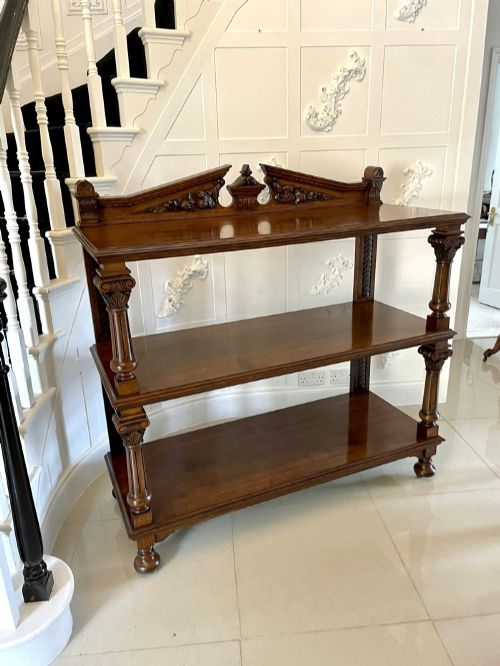
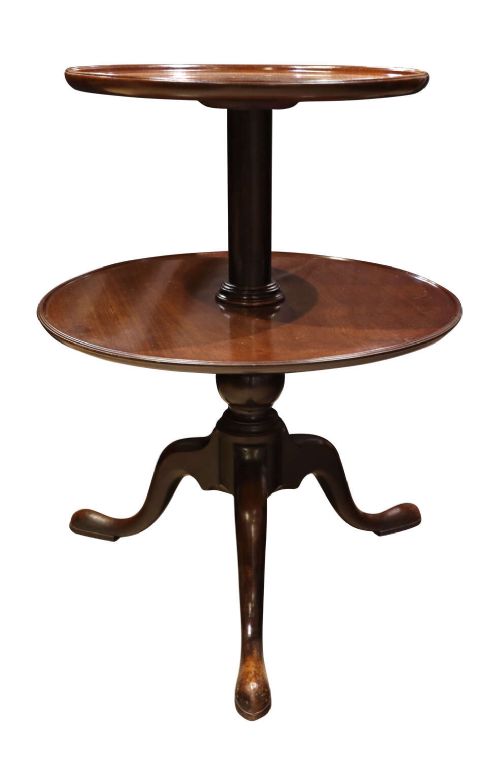
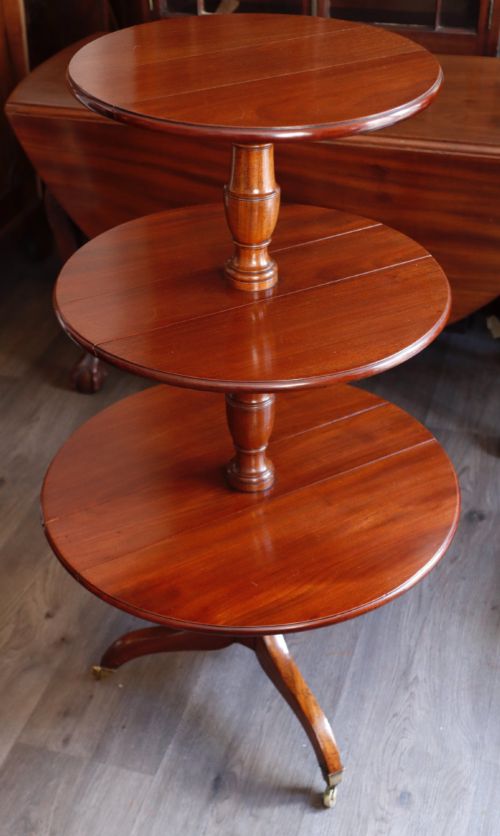
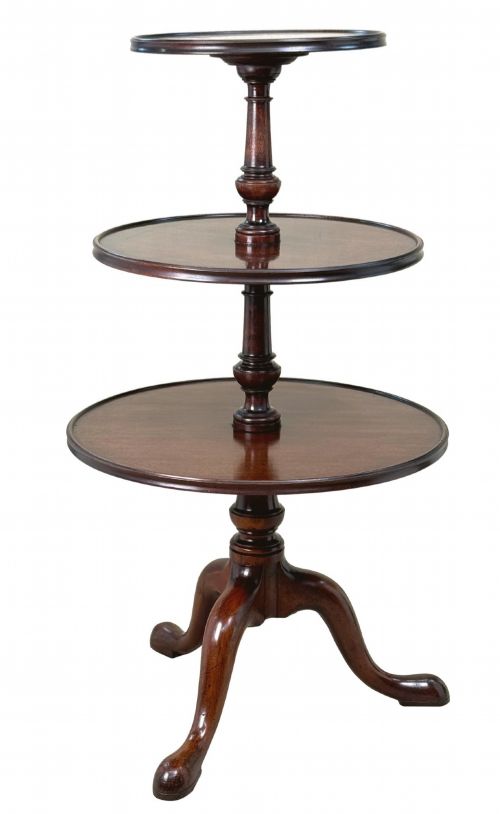
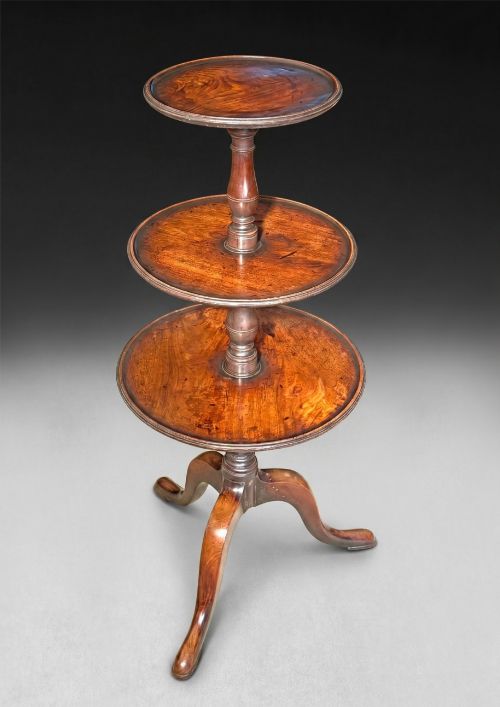
An antique tiered dumbwaiter provides graduated circular or rectangular shelves supported by a central pedestal or vertical frame, designed to hold dishes and bottles without requiring a servant in attendance. These pieces emerge predominantly in mahogany, walnut, and oak, spanning the eighteenth, nineteenth, and early twentieth centuries under Georgian, Regency, and Victorian styles.
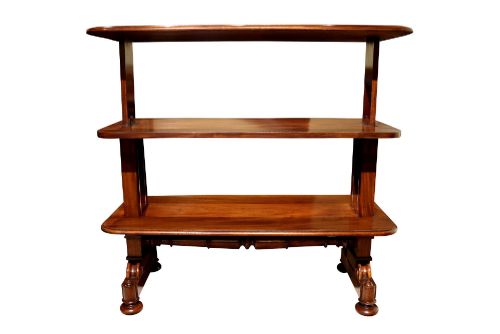
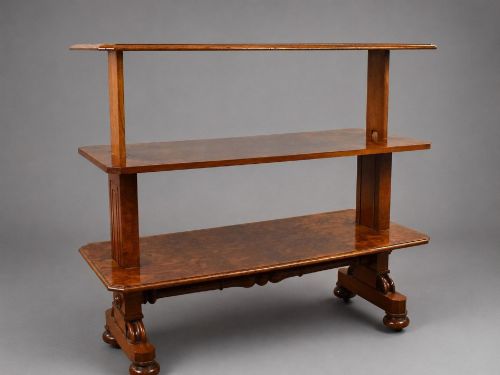
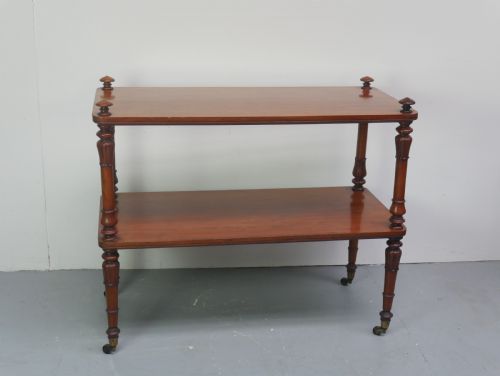
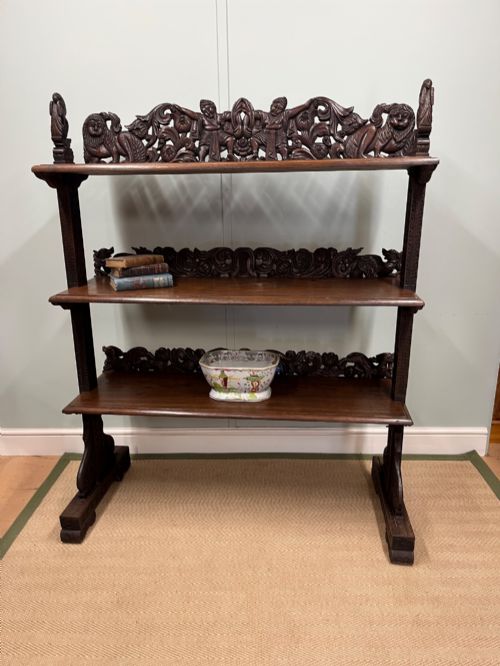
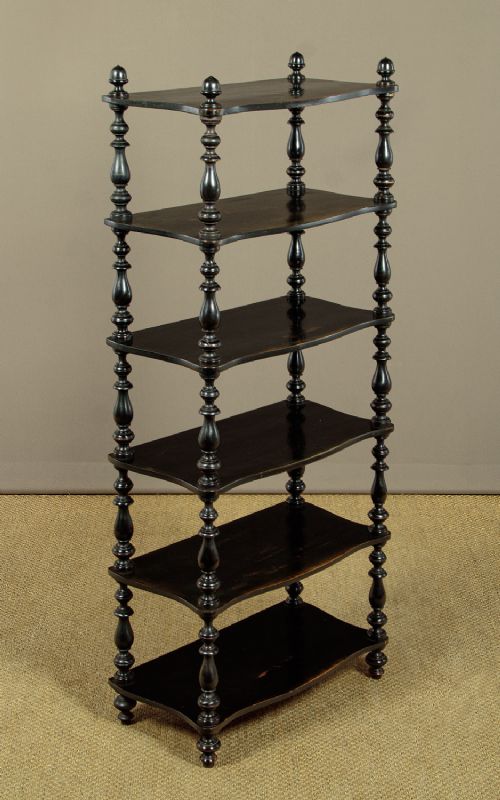
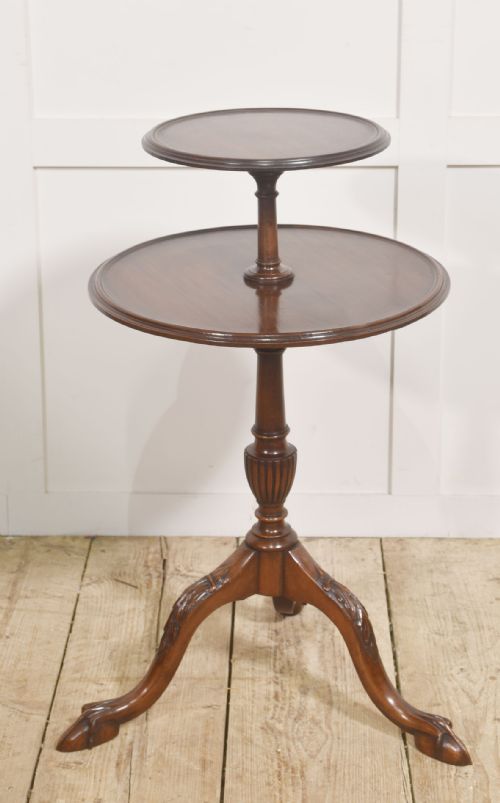
Buyers meet revolving wine tables and multi-tiered etageres on this page, alongside rise and fall or telescopic buffets that adjust in height. The formatting varies from compact two-tier tripod stands to substantial three-tier and six-tier serving tables fitted with original castors.
The form developed to manage dining room service efficiently, appearing as folding variants or fixed pedestals with graduated graduated tiers. Pieces frequently cross over with side tables and serving buffets, retaining the stacked platform arrangement essential to the type.
Materials and construction methods
Cabinetmakers constructed these pieces primarily using solid and veneered timbers such as mahogany, burr walnut, oak, and teak, frequently selecting fiddleback mahogany for decorative grain pattern. Turned central columns and tripod pedestal legs provide structural support for the weighted graduated tiers above.
Hardware details incorporate brass fittings, hinges for folding mechanisms, and brass castors that permit movement across dining room floors. Telescopic and rise and fall actions rely on threaded wooden or metal shafts concealed within the central pillar.
Listings feature items built from mahogany, walnut, oak, teak, and satinwood, spanning the Georgian, Regency, and Victorian periods.
Assessing quality in tiered serving furniture
Quality rests in the precision of the turning on the central pedestal, the stability of the tier joints, and the selection of figured timber veneers like burr walnut or fiddleback mahogany. Superior examples maintain smooth operation in mechanical parts, such as rising actions and revolving mechanisms, without wobble in the stacked trays.
Proportion and execution of carved tripod legs or brass mounts distinguish standard utility pieces from finer items made for formal dining rooms. Original surfaces, retainable patina, and intact castors carry greater weight than later alterations or replacement hardware.
The Antique Tiered Dumbwaiter Glossary
- Dumbwaiter
- A multi-tiered piece of dining room furniture designed to hold food, wine, and utensils without servant assistance. These items appear with revolving circular trays or stacked fixed shelves.
- Etagere
- A set of open shelves for displaying or serving objects, constructed with multiple tiers supported by columns. The term often overlaps with tripod dumbwaiters and tiered side tables.
- Rise and fall
- A mechanical adjustment system allowing shelves or buffets to alter in height using a central column mechanism. This permits flexible usage during dining service.
- Tripod
- A three-legged base providing stable support on uneven dining room floors. This configuration underpins many Georgian and Victorian circular dumbwaiters.
- Fiddleback
- A decorative figure in mahogany timber showing ripple marks resembling the back of a violin. Cabinetmakers utilised this grain for high-status serving furniture.
Antique Tiered Dumbwaiter: Frequently Asked Questions
What is an antique tiered dumbwaiter?
An antique tiered dumbwaiter is a multi-level serving stand with stacked circular trays or shelves supported by a central column. Originating in the eighteenth century, it held food and drink during meals without requiring constant attendance from staff.
Today, these pieces function as side tables or display stands in dining rooms and living spaces. Their stacked design provides generous surface area while occupying a modest floor footprint.
How do I use a dumbwaiter at home?
These pieces suit living rooms, dining spaces, and hallways as decorative and functional display surfaces for books, plants, or glassware. Revolving tiers allow items to be reached easily from seating areas.
Adjustable or folding variants can be adapted to different spaces when entertaining or repositioned against walls. Their sturdy timber construction handles everyday placement of decorative objects safely.
What woods were used for dumbwaiters?
Mahogany served as the primary timber throughout the Georgian and Regency periods, valued for its strength and rich deep colour. Figure varieties such as fiddleback mahogany appear on finer items.
Victorian makers expanded material choices to include burr walnut, oak, teak, and satinwood, occasionally combining ceramic inserts or brass mounts. These varied timbers dictate the visual weight and period style of each piece.