
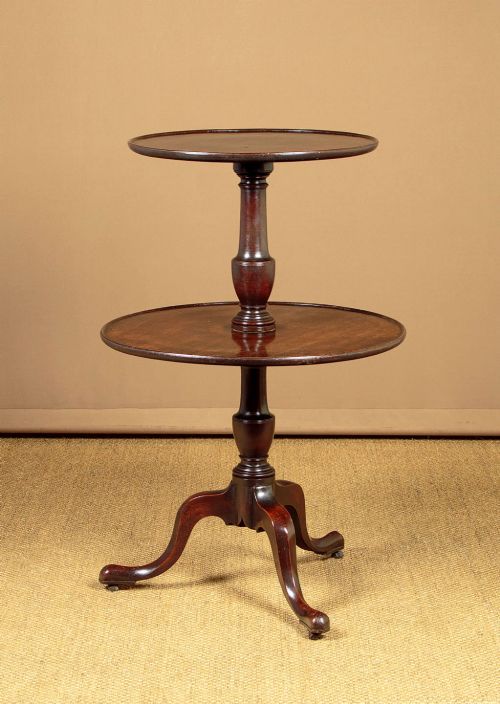
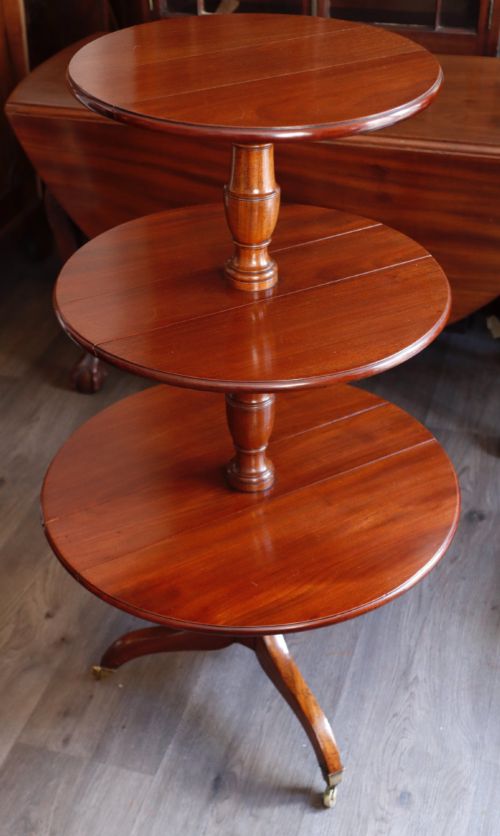
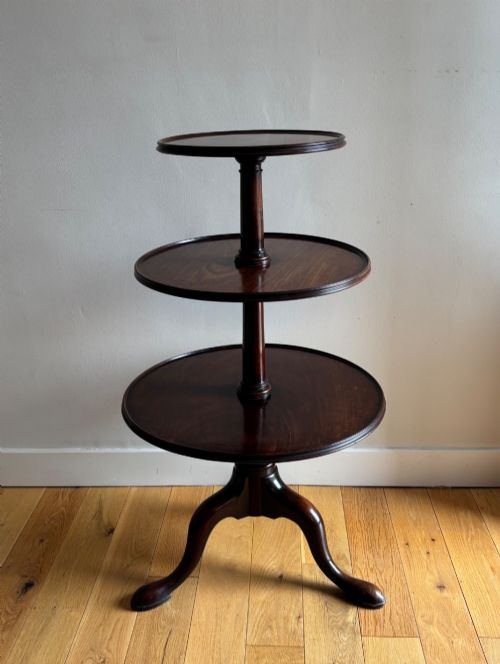
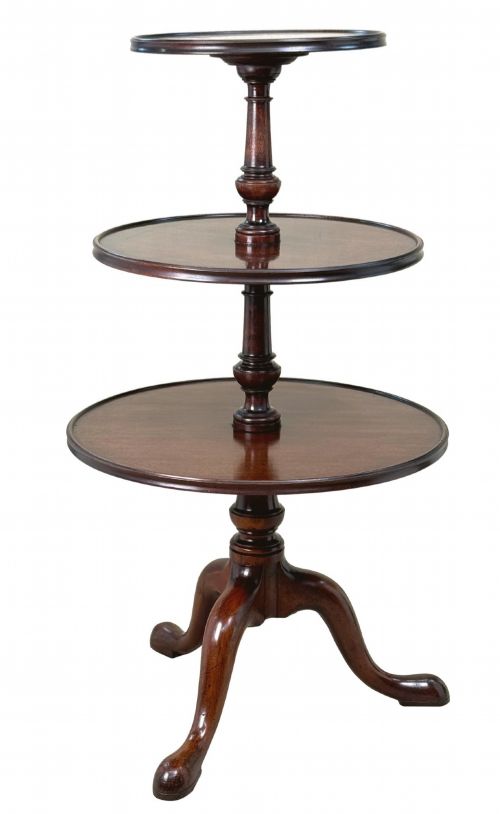



Georgian Mahogany Buffet Stand
A georgian mahogany buffet stand brings tiered serving space and architectural timber to the dining room.
Georgian Mahogany Buffet Stand
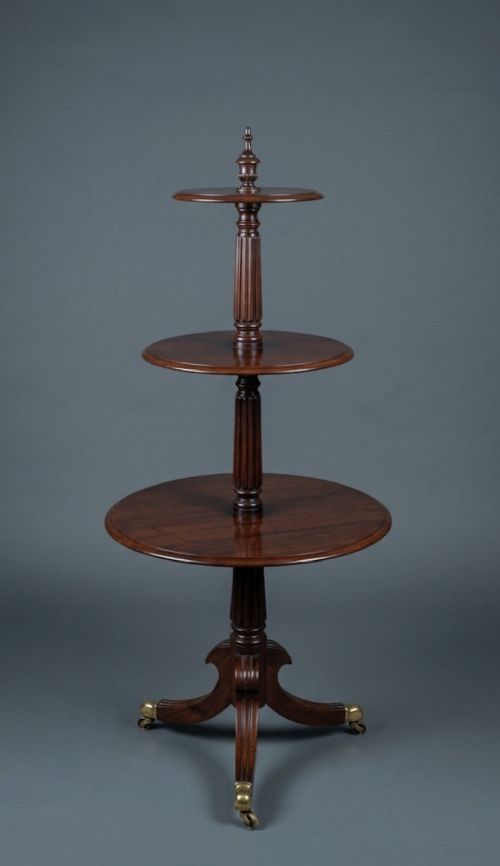
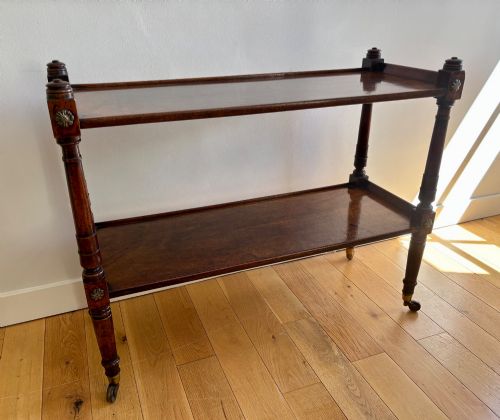
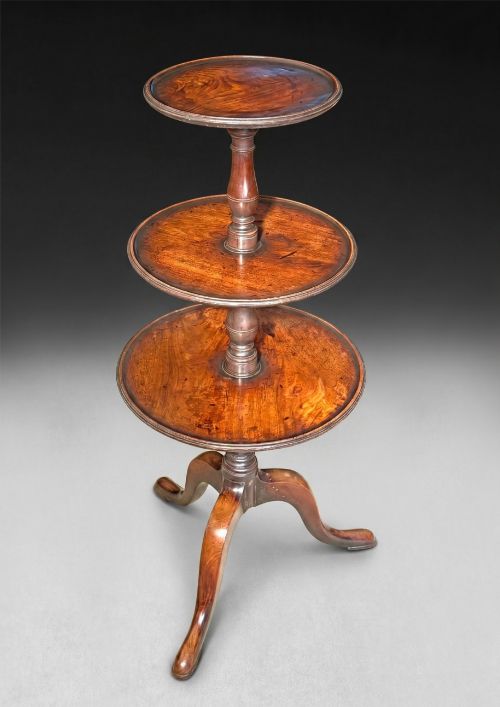
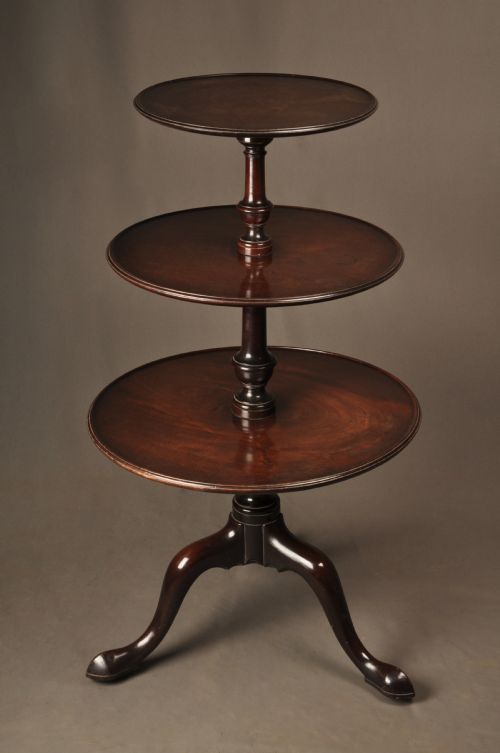
When you search for a georgian mahogany buffet stand, you encounter tiered serving pieces primarily catalogued as dumb waiters, dumbwaiters, and occasional side tables. The pieces on this page span the eighteenth century, the regency era, and the nineteenth century, reflecting formal dining traditions of the past.
You will most frequently meet circular tiered examples featuring two or three graduated trays supported on turned central columns. Some variants incorporate folding leaves, drop leaves, or galleried edges designed to secure glassware and porcelain during service.
The objects originate predominantly from georgian and regency workshops, with george iii period pieces forming a substantial portion of the current selection. Occasional later iterations from the nineteenth and early twentieth centuries also appear among the offerings.
How they were made
Cabinet makers utilised dense mahogany, including figured cuban mahogany and solid stock, to construct these robust serving stands. The primary timber is frequently paired with turned brass components, castors, and subtle inlay work on select surfaces.
Construction techniques involve turning central pillars on a lathe and joining them securely to tripod or quadruped spade-foot bases. Tiers are designed to revolve or fold down on hinged mechanisms, requiring precise joinery to ensure stability across multiple levels.
Listings span the eighteenth century through to the regency and victorian eras, uniting solid mahogany, brass, and inlay work.
What varies in quality
The degree of figuration in the mahogany timber and the crispness of the turned column profiles separate standard examples from finer productions. Master cabinet makers selected richly grained wood and executed delicate mouldings that catch the light effectively.
Mechanical execution also defines the upper tier of pieces, particularly the smooth operation of revolving tiers and folding drop leaves. Original brass hardware and well-fitted joints indicate superior workshop origin.
The Georgian Mahogany Buffet Stand Glossary
- Dumb waiter
- A tiered serving stand designed to hold dishes and glassware beside a dining table without requiring servants. These pieces typically feature rotating circular shelves.
- Cuban mahogany
- A dense, richly figured variety of swietenia mahogani imported from the caribbean during the eighteenth century. Cabinet makers prized it for its deep colour and durability.
- Tripod base
- A three-legged support structure commonly found beneath the central column of circular tables and dumb waiters. This configuration ensures stability on uneven floors.
- Drop leaf
- A hinged flap on a table or shelf that can be raised to increase surface area or lowered when space is restricted. Folding mechanisms on these leaves vary by period.
Georgian Mahogany Buffet Stand: Frequently Asked Questions
What is a georgian mahogany buffet stand?
A georgian mahogany buffet stand is a tiered piece of dining room furniture used to serve food and display tableware without a servant present. These stands feature multiple graduated shelves mounted on a central pillar.
Most examples date from the eighteenth and early nineteenth centuries, constructed from dense mahogany timber with revolving or folding tiers.
How were dumb waiters used?
Dining rooms utilised these stands to hold extra plates, wine bottles, and side dishes within arm's reach of the diners. The tiered design maximised surface area while occupying minimal floor space.
Guests or hosts could rotate the shelves to access items without interrupting the meal or conversation.
How do I identify a george iii piece?
George iii pieces typically display characteristic eighteenth-century proportions, refined mahogany grain, and classical column turning. Details such as tripod cabriole legs or spade feet often point to this era.
Construction methods visible beneath the tiers, including hand-cut joinery and period fixings, help confirm the date.
Where should I place a tiered stand?
These stands suit dining rooms, drawing rooms, or hallways where they can function as display surfaces for decorative objects or serving pieces. Their compact footprints allow them to fit into corners or beside seating.
Pieces with folding leaves offer flexibility for rooms with limited space.