


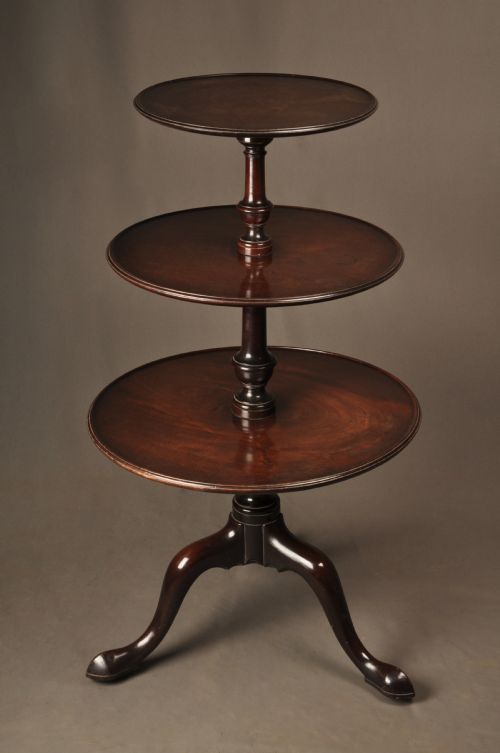


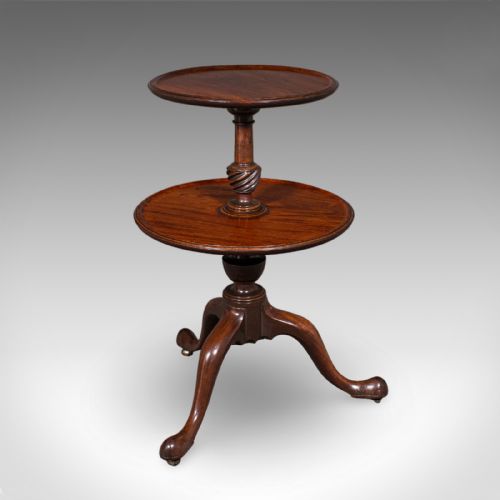

Tripod Dumb Waiter Table
A tripod dumb waiter table stands ready with graduated tiers to serve drinks and dishes without servants at hand.
Tripod Dumb Waiter Table
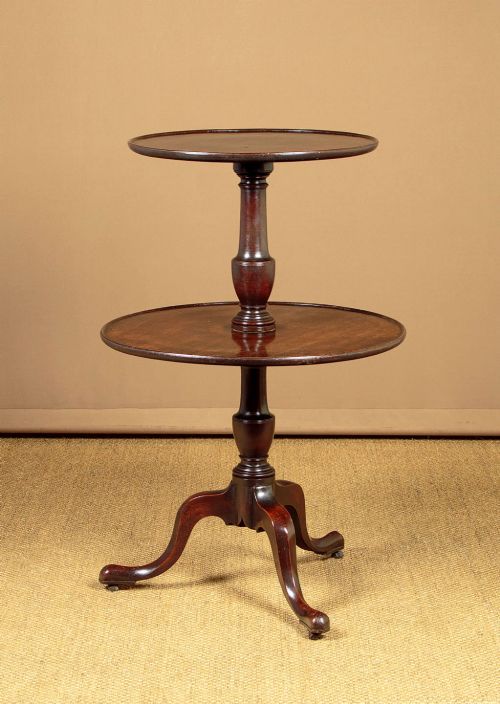
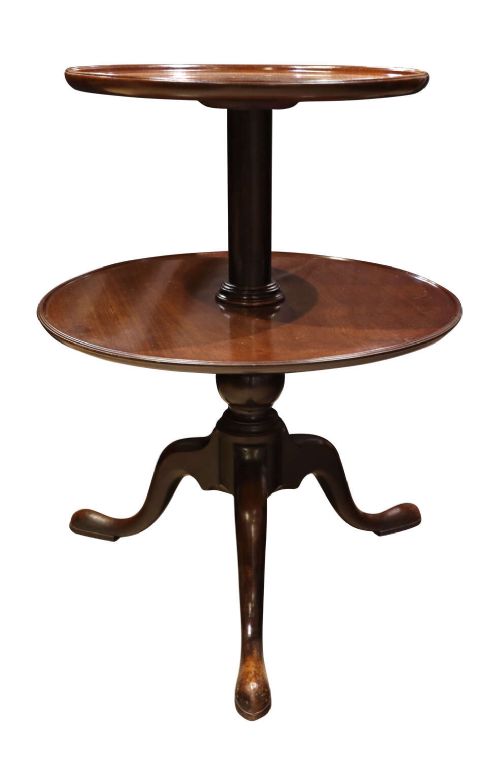
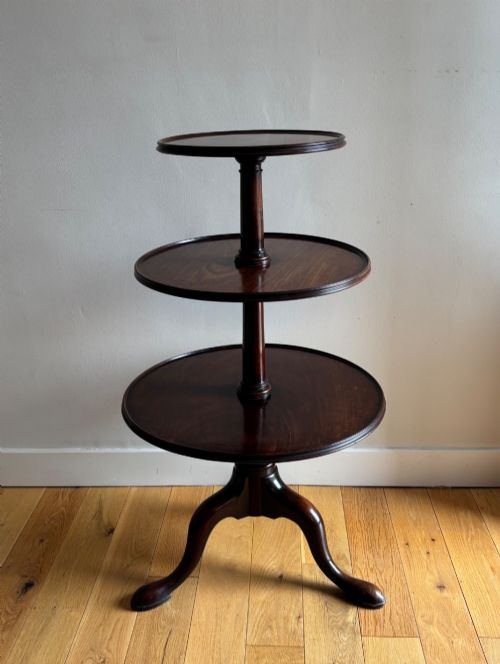
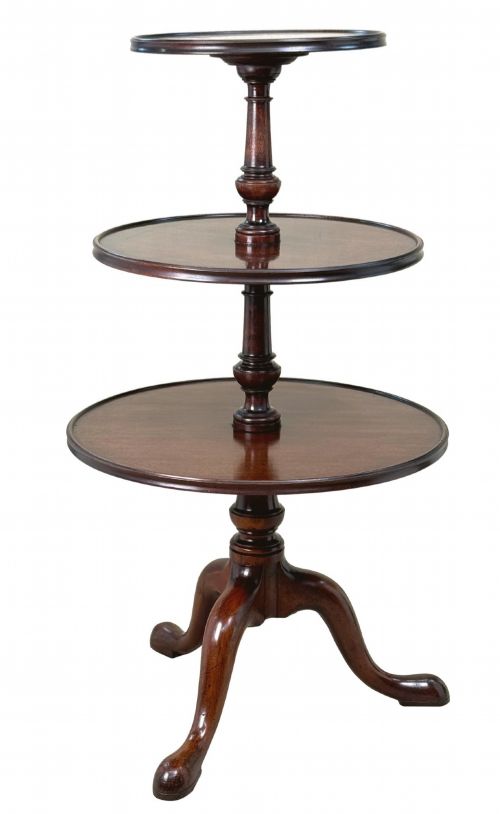
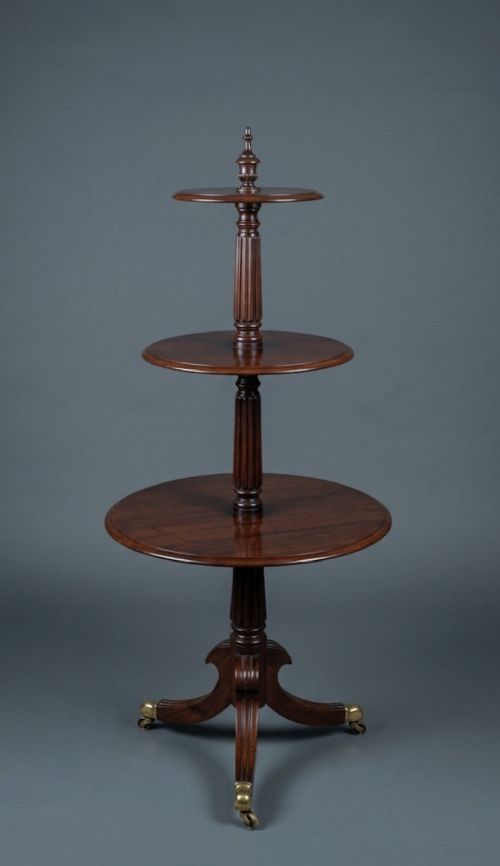
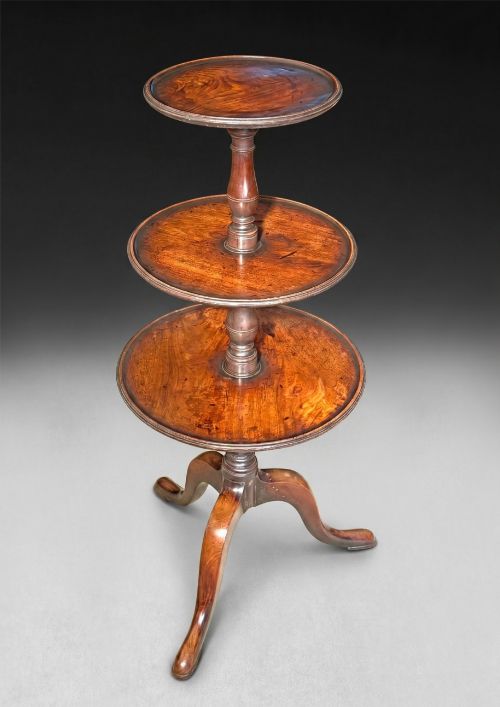
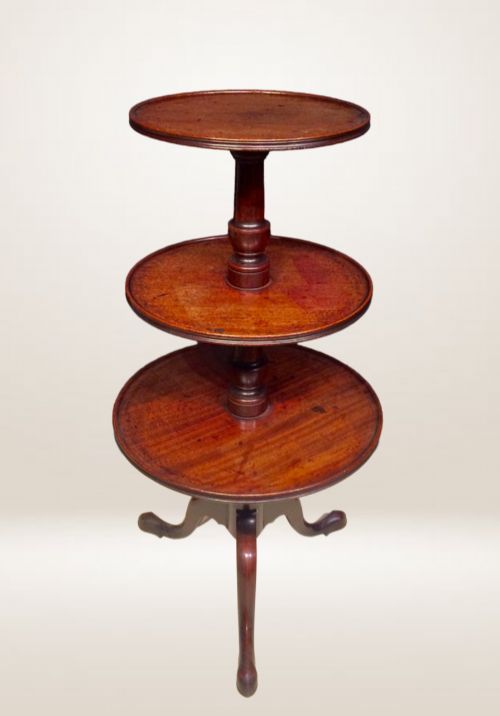
A tripod dumb waiter table combines tiers of graduated circular trays supported by a central pillar and three splayed legs. These tiered tables appear predominantly in mahogany from the eighteenth century, Georgian, and Regency periods.
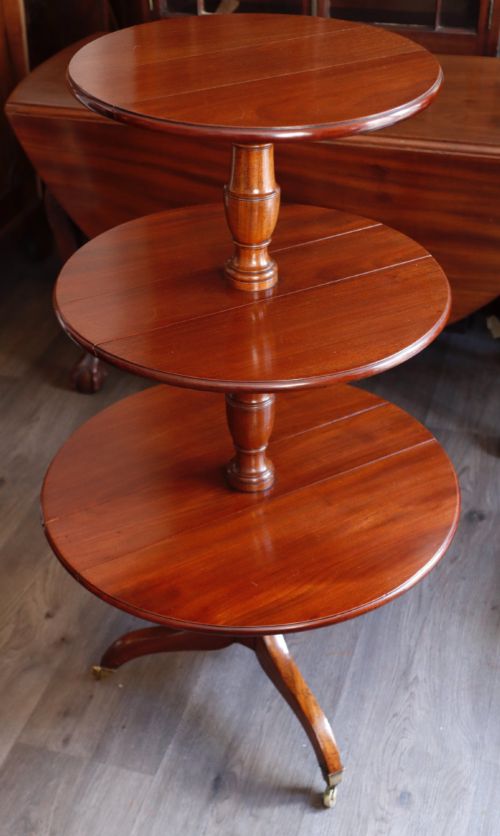
Makers designed these serving stands with two or three revolving tiers to hold bottles, glasses, and plates during dining. Examples span from simple two-tier forms to substantial three-tier variations standing on brass castors.
How They Were Made
Joiners constructed these stands primarily using solid mahogany and Cuban mahogany, sometimes selecting figured timbers like fiddleback mahogany or rosewood for decorative impact. Brass mechanisms enabled the circular trays to revolve smoothly around the central pedestal.
The stable tripod base utilised three shaped legs, frequently terminating in brass castors to allow easy movement across the dining room floor. Carpenters turned the central column from single pieces of hardwood to support the heavy graduated tiers securely.
Common alternative forms in the inventory include etageres, decanter tables, and afternoon tea serving stands.
What Varies in Quality
Quality rests upon the selection of timber and the proportion of the graduated tiers relative to the turned pedestal. Dense Cuban mahogany and finely figured grains distinguish superior examples from plain domestic stock.
The engineering of the revolving mechanism defines the standard of a piece, alongside the crispness of the turned column and the elegance of the splayed tripod legs.
Gillows
The Tripod Dumb Waiter Table Glossary
- Tripod base
- A three-legged support structure designed to provide stability on uneven dining room floors. This configuration keeps heavy tiered tables balanced.
- Tiered table
- Furniture built with multiple levels stacked vertically on a single central pillar. Each level typically decreases in diameter toward the top.
- Cuban mahogany
- A dense, dark timber harvested in the Caribbean and prized for cabinet making during the Georgian era. It yields a rich patina and crisp carved detail.
- Revolving mechanism
- The internal pivot allowing individual tiers to spin freely for access during meals. This permits diners to reach items without standing.
Tripod Dumb Waiter Table: Frequently Asked Questions
How were tripod dumb waiter tables used?
These pieces stood beside the dining table to hold extra wine bottles, glasses, and serving dishes during meals. Diners rotated the tiers to help themselves without relying on domestic staff.
Later adaptations served as afternoon tea stands, plant holders, or general display tables in the drawing room.
How do I date a tripod dumb waiter table?
Look to the timber species, leg profiles, and the turning of the central pillar. Georgian and George III pieces typically utilise dense Cuban mahogany with slender legs and delicate urn turnings.
Victorian and later variations display heavier proportions, sometimes incorporating rosewood or added decorative carving that reflects nineteenth-century taste.
Do the tiers always revolve?
Most period examples feature a clever pivot or brass mechanism that allows the circular trays to spin independently. This design ensured guests could access items on lower or middle tiers with ease.
Fixed-tier versions exist, though revolving variants remain the standard form found across Georgian and Regency production.
How do I care for mahogany surfaces?
Maintain the timber by applying natural beeswax sparingly and buffing with a soft cloth to nourish the grain. Avoid placing pieces near direct heat sources or strong sunlight to prevent the mahogany from drying out.
Keep brass castors clean and dry to protect the surrounding wood from tarnishing marks.