

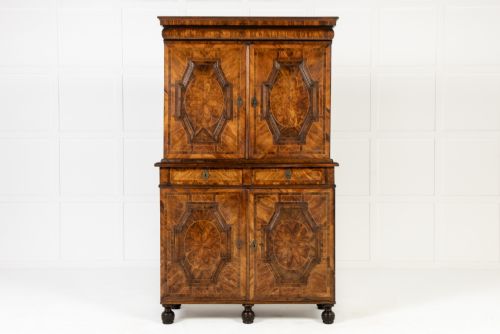


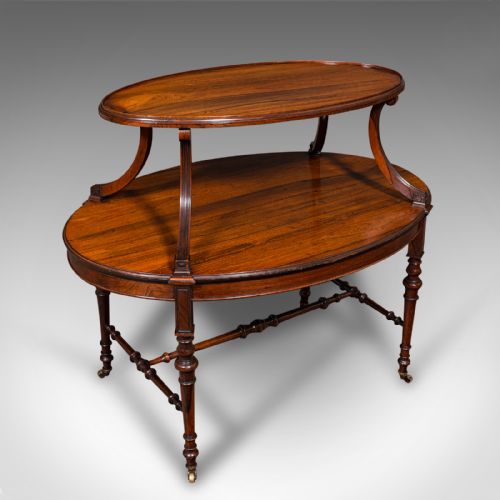


Antique Wooden Buffet Stand
An antique wooden buffet stand brings functional display and service into a room, offering tiered tiers and storage crafted in traditional timbers.
Antique Wooden Buffet Stand
An antique wooden buffet stand encompasses multi-tiered dumb waiters, serving tables, and cabinets designed for dining service and display. These pieces originate from periods spanning the seventeenth through the nineteenth centuries, featuring Georgian, Regency, and Victorian aesthetics.
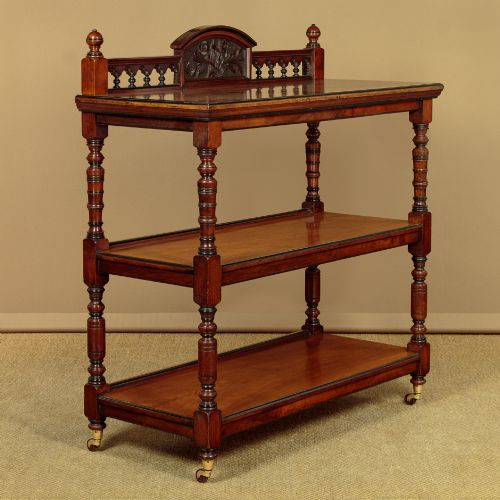
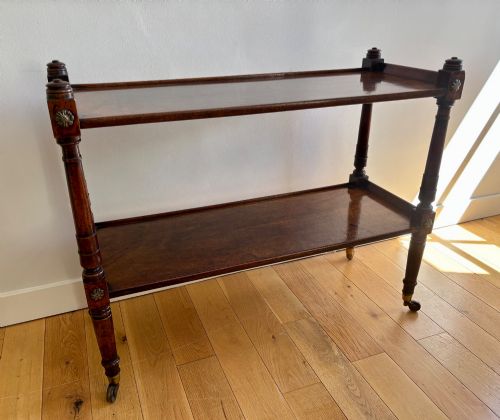
The most common examples encountered in this category are three-tier mahogany dumb waiters and serving stands. Makers utilised woods such as walnut, teak, pollard oak, and padauk alongside traditional forms like console tables and whatnots.
Materials and construction methods
Joiners and cabinet makers built these stands using dense hardwoods including mahogany, walnut, and teak, often selecting burr or pollard veneers for decorative surfaces. Structural elements incorporate brass hardware, glass panels, and occasional bone inlay.
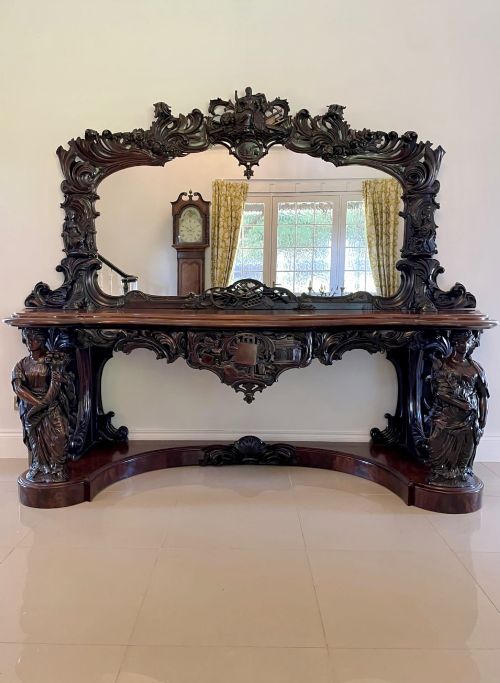
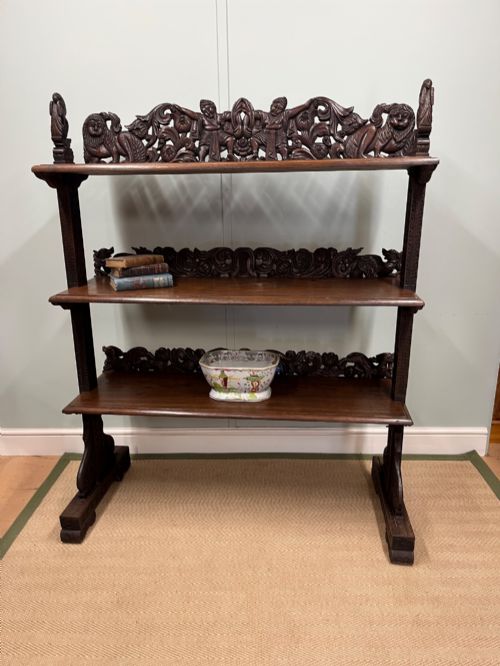
Construction techniques vary from heavy carved ornamentation, as seen in Victorian Rococo Revival and Burmese padauk examples, to the tiered rotating trays supported on tripod or column bases characteristic of Georgian dumb waiters.
Materials span mahogany, walnut, teak, burr walnut, pollard oak, padauk, and ebonised wood, alongside brass and bone details.
Distinctions in standard and execution
The standard of an antique wooden buffet stand depends upon the selection of timber, the crispness of hand carving, and the sophistication of the mechanism. Pieces featuring exhibition-quality relief work, figured timbers, and adjustable or folding tiers represent finer craftsmanship.
Proportion, stability, and the integration of secondary woods dictate the overall integrity of a piece. Simpler utility stands reflect straightforward domestic joinery, whereas grander console and cabinet forms demonstrate advanced architectural detailing.
Maple And Co
The Antique Wooden Buffet Stand Glossary
- Dumb waiter
- A tiered stand with revolving or fixed circular trays used for holding food and tableware during dining. These forms appear frequently in mahogany and walnut across the Georgian and Victorian eras.
- Whatnot
- An open set of shelves used for displaying ornaments and books. This form shares similarities with multi-tiered buffet stands.
- Ebonised wood
- Timber treated to resemble ebony, a technique utilised during the Victorian and Aesthetic Movement periods. This dark finish provides contrast against brass mounts and lighter woods.
- Padauk
- A heavy tropical hardwood valued for its rich colour and dense grain. Burmese examples demonstrate deep carving and substantial weight.
Antique Wooden Buffet Stand: Frequently Asked Questions
What is an antique wooden buffet stand?
An antique wooden buffet stand is a multi-tiered piece of furniture designed for serving food, displaying tableware, or holding decorative items. They encompass dumb waiters, serving tables, and cabinets.
These items date from the seventeenth to the nineteenth centuries and reflect periods such as the Georgian, Regency, and Victorian eras.
How were dumb waiters used?
Dumb waiters were placed in dining rooms to hold dishes, glasses, and cutlery without the need for constant attendance by servants. The tiered trays allowed diners to help themselves during meals.
Many examples feature revolving shelves or folding mechanisms to save space and facilitate easy access to food and drink.
How do I identify a Georgian buffet stand?
Georgian buffet stands typically feature solid mahogany construction with simple, elegant lines, tripod bases, and tiered circular trays. They emphasise proportion and practical function over heavy ornamentation.
Later Victorian versions often introduce more elaborate carving, ebonised finishes, or adjustable tiers influenced by subsequent design movements.
Where should I place a buffet stand?
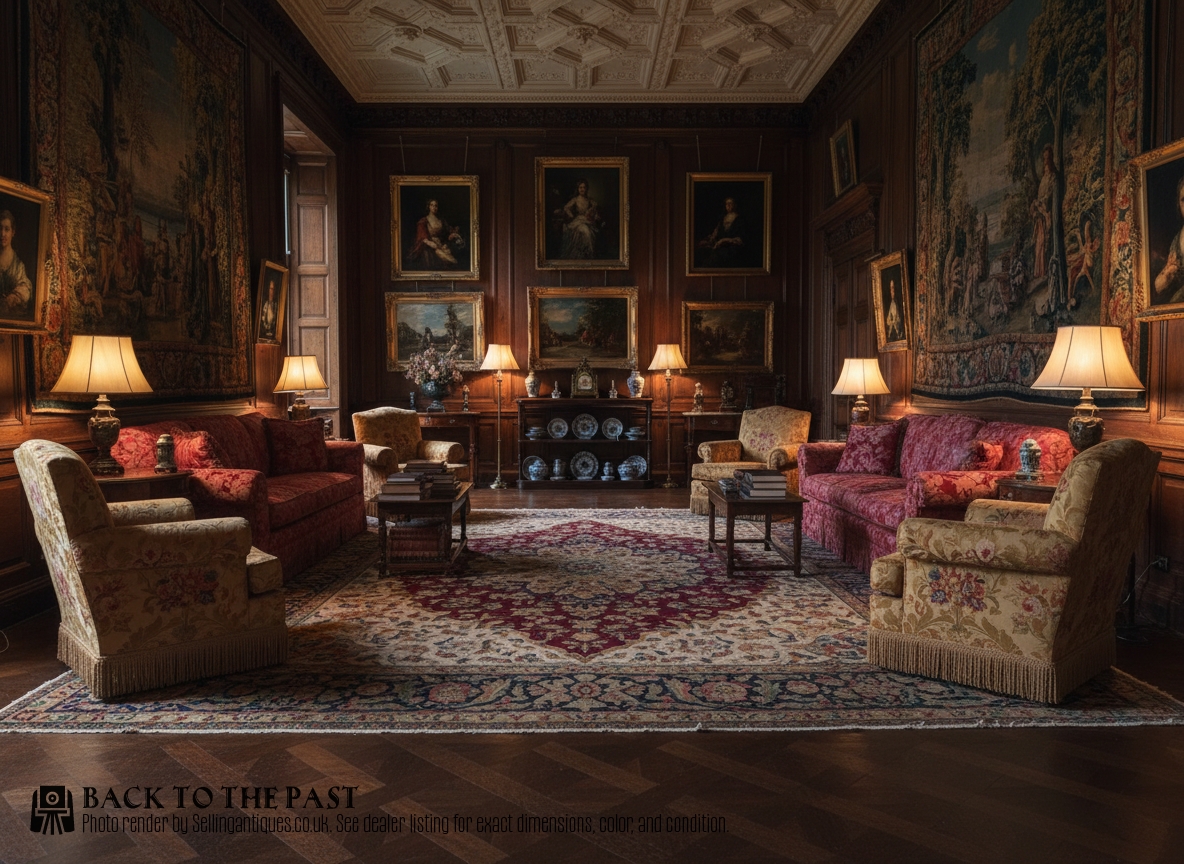
A buffet stand suits dining rooms, hallways, or living spaces as a surface for lamps, books, or decorative objects. Multi-tiered versions make effective display furniture for collections of ceramics or glass.
Ensuring the piece has adequate floor clearance and stable placement prevents tipping, particularly on tiered or tripod designs.