
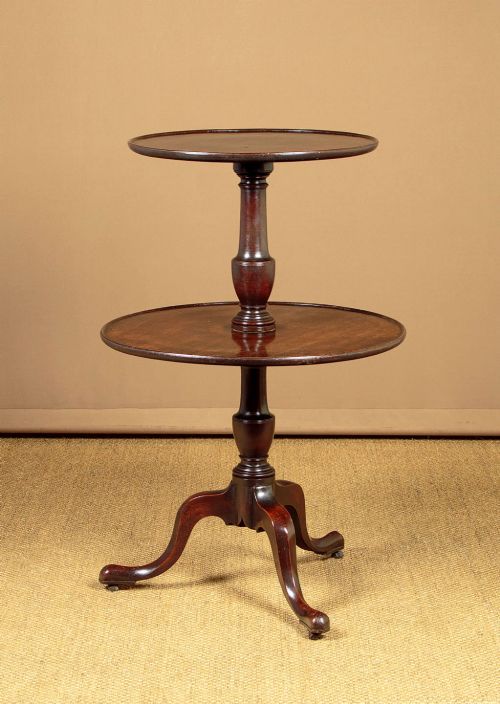


Tripod Base Dumbwaiter
These tripod base dumbwaiter pieces are tiered serving tables built for the dining room, offering multiple rotating shelves that hold dishes without a servant.
Tripod Base Dumbwaiter
A tripod base dumbwaiter stands on a central column supported by three legs, holding graduated circular tiers that revolve for access during dinner. The form appears primarily in mahogany across the Georgian and Regency periods, dating from the late eighteenth century into the nineteenth century.
Most examples found here feature two tiers of round trays, though folding variations and revolving configurations also occur within the recorded stock. These pieces function as tiered tables or side table servers, designed to stand beside the dining table.
Makers and craftsmen of the eighteenth and nineteenth centuries built these serving stands to hold glassware, bottles, and plates during extended meals. The survival rate of these tables shows their enduring utility in domestic spaces.
How They Were Made
Cabinet makers constructed these dumbwaiters predominantly using solid and veneered mahogany, a dense timber chosen for its stability and rich grain. Turned central columns support the tiers, rising from three splayed legs that form the tripod base.
Brass fittings appear as castors on the foot of each leg or as mechanical hinges on folding tier designs. Joinery techniques connect the revolving mechanisms securely to the central shaft while allowing smooth rotation of the circular shelves.
These polite wooden assistants held the claret and the biscuits, standing quietly by while the dining room gossip flowed freely.
What Varies in Quality
Quality in a tripod base dumbwaiter rests upon the proportion of the turned column and the crispness of the timber carving on the legs. Superior pieces display finely figured mahogany grain across the circular tiers and retain original brass castors.
The engineering of the revolving mechanism defines the upper tier of craftsmanship, ensuring the trays turn smoothly without wobble. Attribution to documented workshops, such as Gillow, elevates certain examples through refined joinery and material selection.
Gillow
The Tripod Base Dumbwaiter Glossary
- Tripod base
- A support structure comprising three legs radiating from a central vertical column. This configuration provides stable footing for tall tiered furniture on uneven dining room floors.
- Dumb waiter
- A multi-tiered serving table used in dining rooms to hold food and drink without the presence of servants. The revolving shelves allow diners to help themselves.
- Tiered table
- A piece of furniture featuring multiple horizontal surfaces arranged vertically on a single shaft. Each level decreases in diameter toward the top.
- Regency
- A British design period spanning the early nineteenth century, characterised by classical restraint and refined proportions. Furniture from this era often incorporates bold mahogany veneers and brass detailing.
- George III
- The stylistic period covering the long reign of the third British monarch during the eighteenth century. Pieces from this time demonstrate restrained classical ornamentation and robust joinery.
Tripod Base Dumbwaiter: Frequently Asked Questions
What is a tripod base dumbwaiter?
A tripod base dumbwaiter is a multi-tiered serving table that stands on three legs and a central column. The circular shelves rotate to allow easy access to food and drink.
Craftsmen built these pieces in mahogany during the Georgian and Regency eras for use beside the dining table.
How were dumbwaiters used?
These tables held dishes, bottles, and glassware during meals when diners preferred privacy from household staff. Guests turned the revolving tiers to reach what they needed without asking a servant to pass items.
Over time, these serving stands moved from active dining service into general living spaces as decorative side tables.
What wood are they made from?
Mahogany is the primary timber found in these serving tables, selected for its strength and deep colour. Cabinet makers used solid cuts and matched veneers for the circular tiers.
Brass hardware often appears on the feet as castors or within the rotating mechanisms of the shelves.
How do I date a dumbwaiter?
Dating relies on stylistic details from the eighteenth and nineteenth centuries, including the shape of the tripod legs and the turning of the central column. George III examples display different proportions compared to later Regency pieces.
Construction methods and the specific grain of the mahogany also help establish the approximate period of manufacture.