
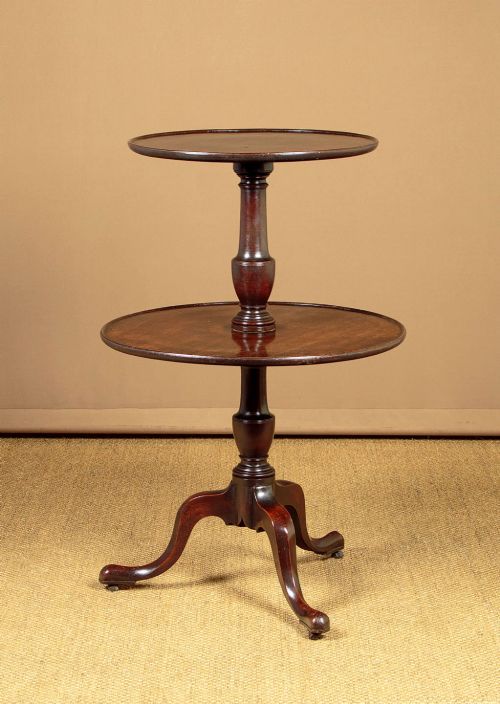

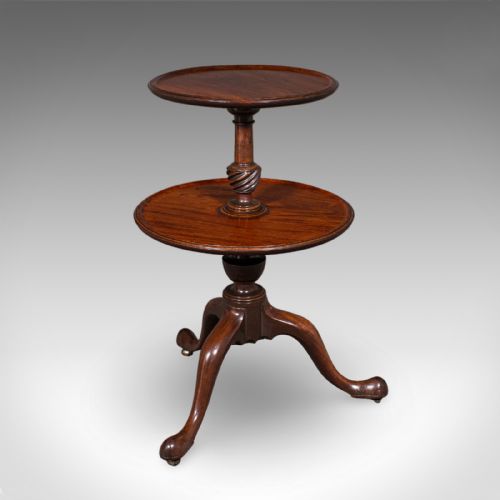


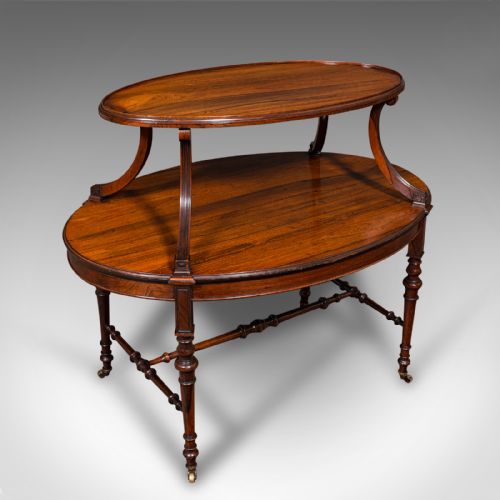


Two Tier Serving Stand
A two tier serving stand brings tiered elevation and practical surface space to a room, drawing on centuries of dining and entertaining history.
Two Tier Serving Stand
When you examine a two tier serving stand, you encounter pieces that historically served dining rooms and parlours as dumb waiters, etageres, and tiered tables. The selections available span from the Georgian and Regency periods through the Victorian and Edwardian eras up to the nineteen-twenties.
Originating primarily from English workshops, these items offer dual levels for presentation, functioning traditionally to hold dishes, afternoon tea, or display items without crowding the main table.
What varies in quality
The distinction between tiers rests upon the choice of timber figure, such as the richness of the mahogany grain or the complexity of amboyna veneer. Superior examples display refined turning on the central column and precise fitting of drop-leaf hinges that operate smoothly.
Proportion and form define the upper tier of quality, with octagonal tops or scarce folding mechanisms commanding attention above standard circular designs. The integration of brass mounts and parcel gilt detailing further separates standard utility pieces from exceptional decorative achievements.
Listings span the Georgian, Regency, Victorian, and Edwardian periods, featuring mahogany, amboyna veneer, and ebonised wood.
The Two Tier Serving Stand Glossary
- Dumb waiter
- A multi-tiered freestanding piece of furniture designed to hold food, tableware, or tea service near a dining table. These items remove the need for constant servant attendance.
- Etagere
- A piece of furniture consisting of a set of open shelves or tiers for displaying small objects or serving items. They appear in various woods and decorative styles.
- Drop-leaf
- A tabletop or tier featuring hinged flaps that fold down when not in use. This mechanism allows the stand to save space.
- Parcel gilt
- A decorative technique where specific carved or raised details are highlighted with gold leaf. It adds contrast against dark timbers like mahogany or ebonised wood.
- Amboyna veneer
- A highly prized decorative wood grain applied in thin sheets to furniture surfaces. It yields a distinctive swirling pattern with rich warm tones.
Two Tier Serving Stand: Frequently Asked Questions
What is a two tier serving stand used for?
These pieces functioned historically as dumb waiters to hold dishes, silverware, or tea services during meals without crowding the main dining table.
Today, they serve equally well in living spaces for displaying decorative objects, books, or plants across their multiple tiers.
How do I identify a Georgian two tier stand?
Georgian examples typically feature solid mahogany construction with turned central columns and circular tiers, dating from the eighteenth century.
Look for traditional joinery, rich timber patination, and functional elements such as folding drop leaves or revolving tiers.
Are these stands stable with two tiers?
The weight distribution relies on a solid central pillar and a sturdy tripod or pedestal base designed to keep both tiers balanced.
While suitable for serving items and display, heavier objects should be placed evenly on the lower level to maintain optimal equilibrium.
How do I care for mahogany serving stands?
Maintain the wood by dusting regularly with a soft cloth and applying appropriate wax polish periodically to preserve the finish.
Keep the stand away from direct heat sources and strong sunlight to prevent timber warping or veneer drying over time.