
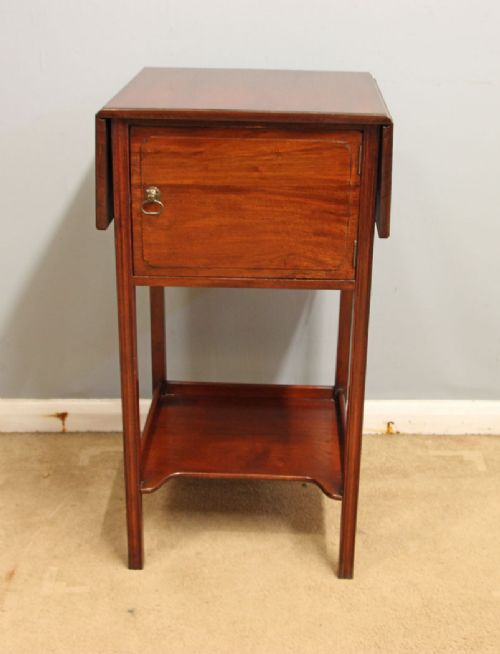


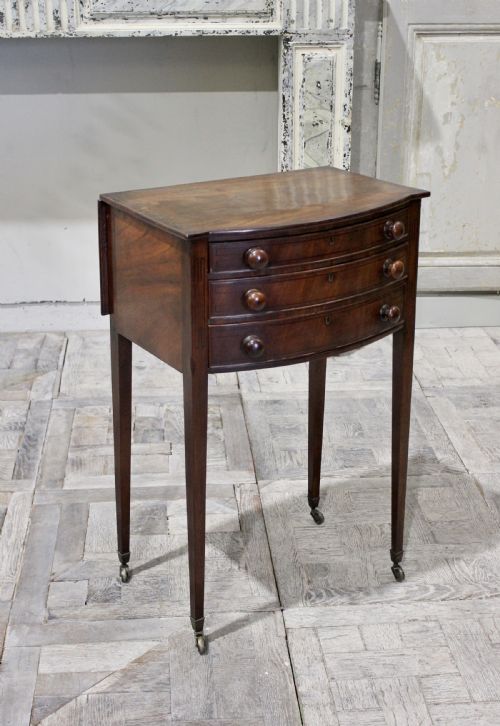


Georgian Drop Leaf Stand
A georgian drop leaf stand is a clever multi-tiered serving piece or table designed to save space with folding flaps.
Georgian Drop Leaf Stand
A georgian drop leaf stand encompasses various forms such as dumb waiters, side tables, occasional tables, bedside tables, sofa tables, and tiered tables. These pieces emerge from the Georgian, Regency, and 18th century periods, showcasing practical design tailored for dining and entertaining.
The versions most commonly met on this page include multi-tiered dumb waiters featuring drop-leaf sides, flaps, or folding shelves. Alongside these stand occasional tables and bedside cabinets, representing the domestic furniture of the period.
Makers of the era constructed these stands primarily as functional items for the home, employing tiered shelves and folding mechanisms to manage dining rooms and drawing rooms efficiently. The survival of these pieces highlights the enduring utility of 18th-century and 19th-century cabinet making.
How they were made
Makers utilised mahogany as the primary timber, often enhanced with brass hardware and inlay work. The wood provides both structural strength and a rich surface grain suited to the cabinet maker's art.
Construction techniques focus on movable components, including drop leaves, folding shelves, and tiered revolutions. Hinges and brass fittings allow circular, rectangular, and octagonal tiers to fold down compactly when not in use.
Some dumb waiters fold down entirely, proving that space-saving flat-pack furniture was mastered long before the modern era.
What varies in quality
Quality reveals itself in the sophistication of the folding mechanism and the precision of the timber joints. Pieces with well-engineered drop leaves and smoothly operating folding tiers demonstrate superior construction.
The choice of materials and decorative details, such as inlaid mahogany or unusual octagonal forms, distinguishes standard utility pieces from finer examples. The handling of the wood grain and the integrity of the brass elements indicate the standard of the workshop.
The Georgian Drop Leaf Stand Glossary
- Drop-leaf
- A table or stand with a fixed central section and hinged flaps that fold down to save space. This mechanism defines many dumb waiters and occasional tables on this page.
- Dumb waiter
- A tiered piece of furniture used to hold dishes or serving items without the need for a servant present. These stands often feature multiple circular or rectangular folding shelves.
- Sofa table
- A type of table designed to stand in front of or beside a sofa, typically featuring drop leaves at either end. They date to the Georgian and Regency periods.
- Tiered table
- A piece comprising multiple levels or shelves stacked vertically to maximise display or storage surface area. These are frequently seen in dumb waiters and buffet servers.
Georgian Drop Leaf Stand: Frequently Asked Questions
What is a dumb waiter?
A dumb waiter is a multi-tiered stand used in dining rooms to hold plates, glasses, and serving dishes. They often include folding leaves to reduce their footprint when not in use.
These pieces allowed diners to serve themselves without attendants present during meals.
How do I use a drop leaf stand today?
These stands function well as side tables, lamp tables, or bedside cabinets in modern rooms. The folding leaves allow you to adjust the surface area depending on the space available.
They bring period character and practical surface space to living rooms, bedrooms, or hallways.
What styles are common in these stands?
The pieces predominantly reflect George III, Georgian, and Regency styles from the late 18th and 19th centuries. They showcase classic cabinet making traditions of the era.
Design details include circular and octagonal tiers, inlaid mahogany, and brass fittings.
Are all these stands made of mahogany?
Mahogany is the dominant timber recorded across the listings for these stands, valued for its durability and grain. Brass is also present in the hardware and fittings.
This combination of materials typifies fine furniture production of the Georgian and Regency periods.