

19th Century Lounge
A 19th century lounge brings together nineteenth-century armchairs, chaise longues, and sofas crafted for parlour and drawing room comfort.
19th Century Lounge
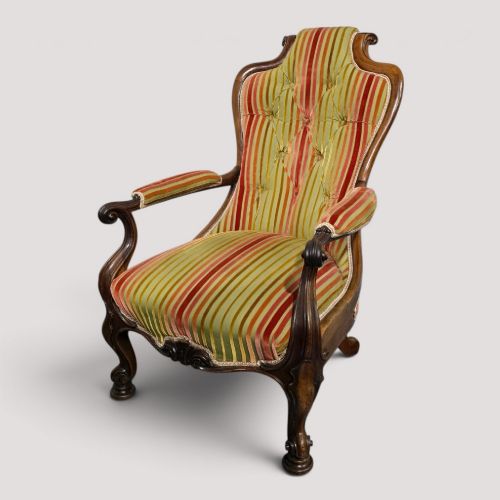
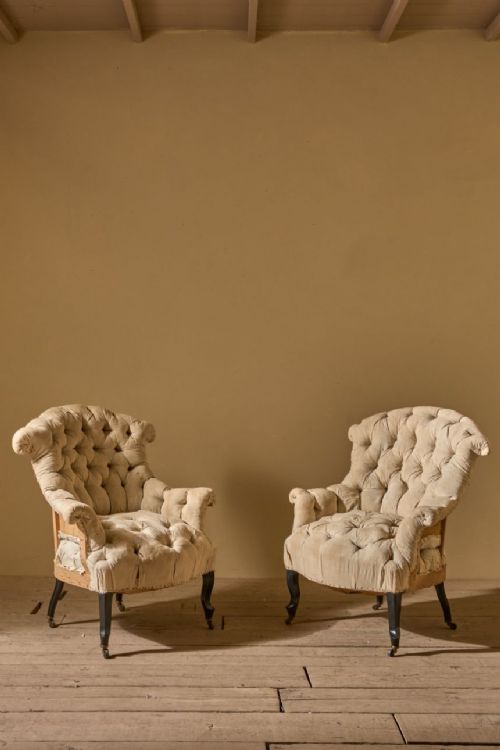
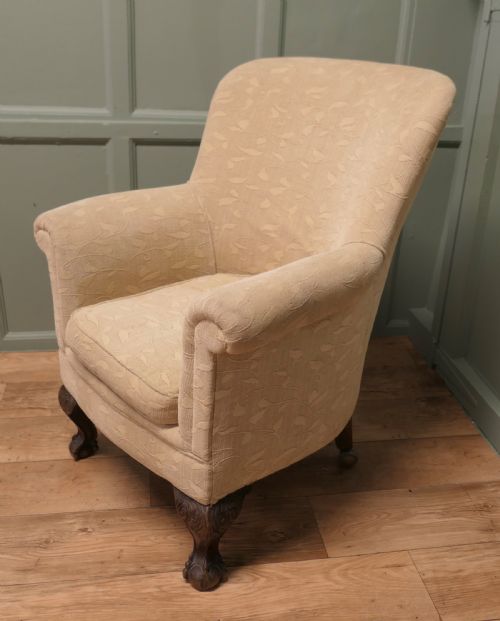
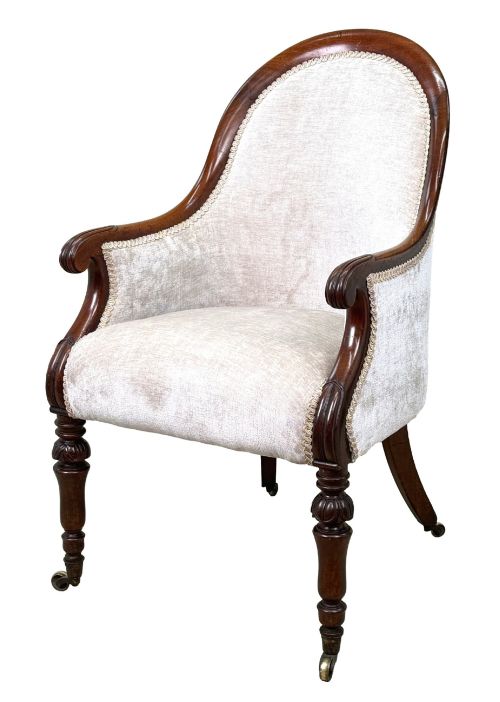
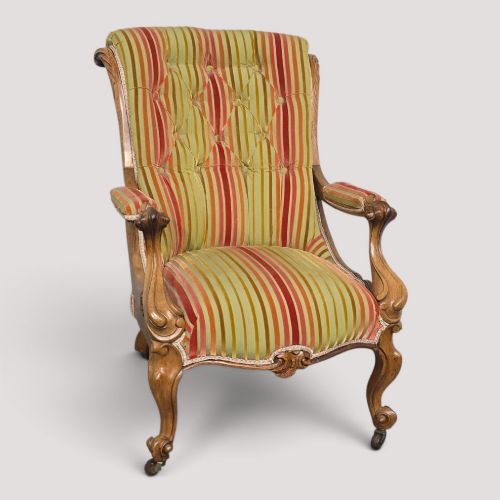
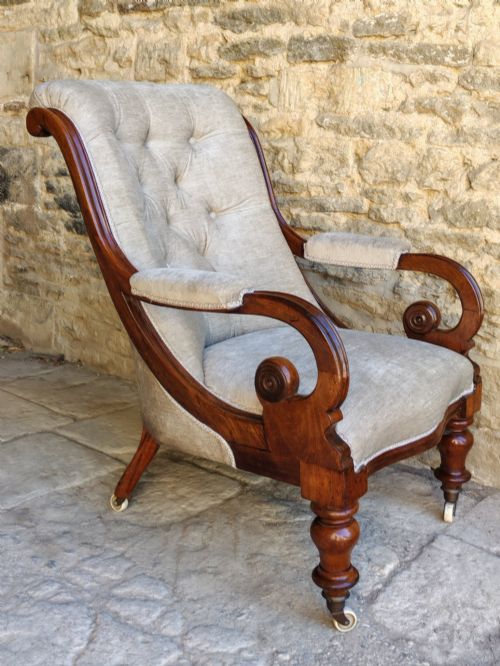
A 19th century lounge spans large Victorian chesterfields, button-back armchairs, and timber-framed chaise longues designed for reclining. The selection relies heavily on pieces originating from English country houses and French salons, capturing varied domestic functions.
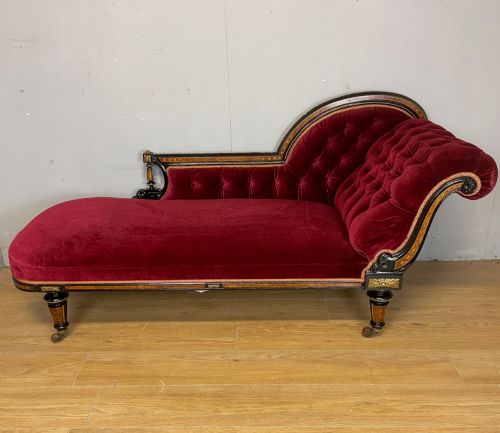
The common form met on this page is the chaise longue, constructed in mahogany, rosewood, or walnut, alongside library armchairs and nursing chairs. These items reflect the shifting seating habits of the Victorian and Regency periods, prioritising padded upholstery over rigid frames.
How they were made
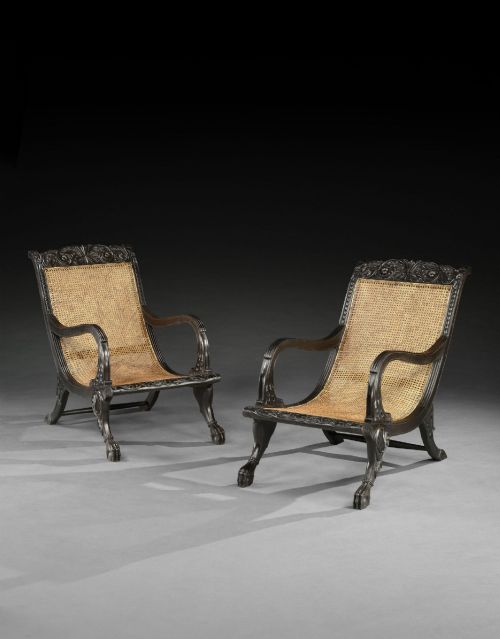
Frames rely on hardwoods like mahogany, walnut, oak, and ebony, frequently joined by brass inlays, ormolu mounts, or intricate ebonising. Timber selection dictated the structural integrity of large armchairs and long daybeds.
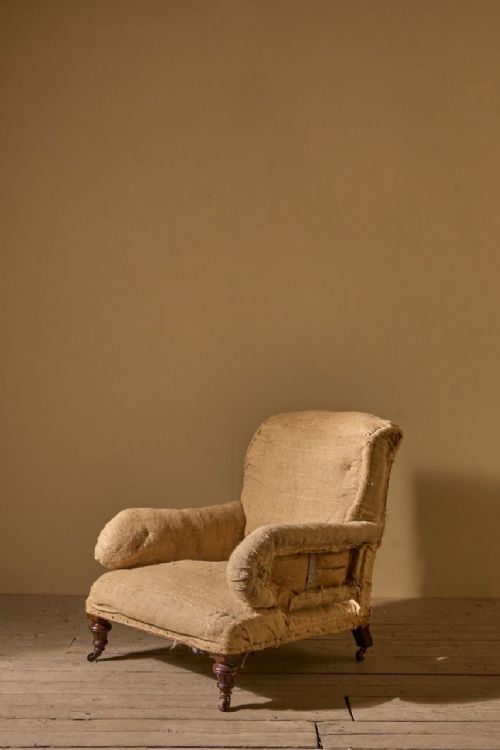
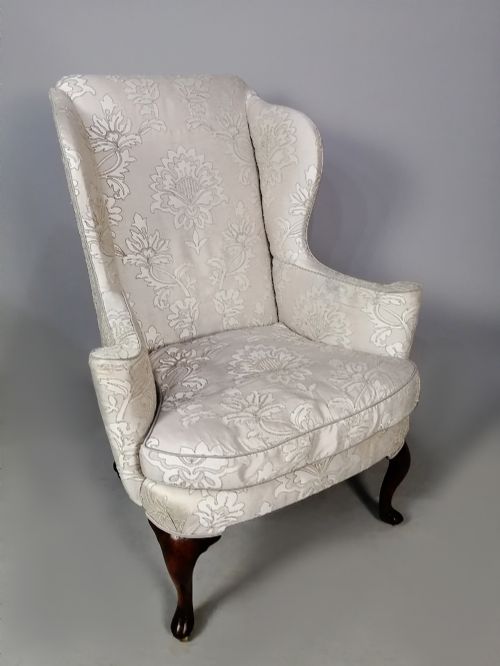
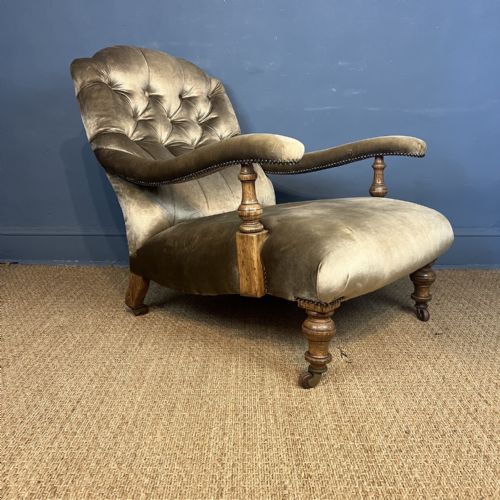
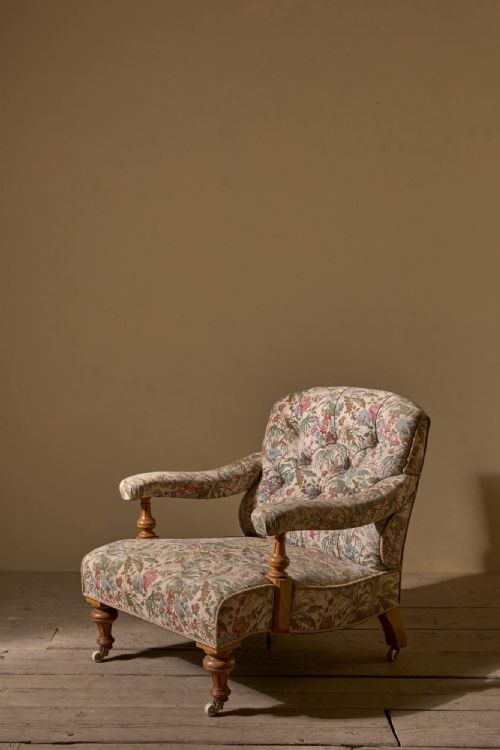
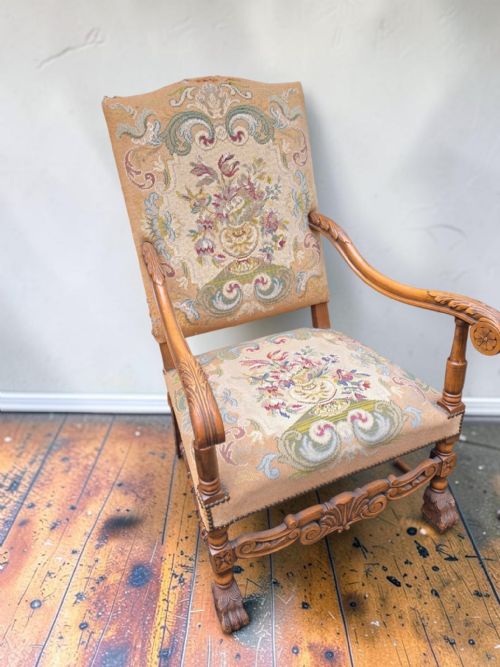
Upholstery techniques combined traditional stuffing with secondary linings of hessian and calico before applying top layers of velvet, leather, wool tapestry, or fabric. Button-backed cushioning required deep internal ties to maintain tension across the curves of sofas and wing chairs.
Listings feature 19th century styles spanning Victorian, Regency, Napoleon III, and Anglo-Indian designs executed in mahogany, walnut, and rosewood.
What varies in quality
The refinement of timber carving and the precision of joinery separate standard production seating from high-end commissions. Workshop attribution to makers such as Howard and Sons or Gillows elevates the standing of a piece.
Proportion and material retention define the upper tier, where original show wood, uncompromised giltwood, and period-correct textile coverings remain intact. Secondary woods and structural modifications shift examples down the scale.
Howard and Sons·Gillows·Jacob Desmalter·George Jack For Morris Co
The 19th Century Lounge Glossary
- Chesterfield
- A large deep-buttoned sofa traditionally upholstered in leather or fabric with scrolled arms of the same height as the back.
- Ormolu
- Gilt bronze ornamentation applied to furniture mounts during the eighteenth and nineteenth centuries. It adds metallic contrast to dark woods like walnut and ebonised frames.
- Hessian
- A coarse woven fabric utilised as foundational sacking beneath the final upholstery layers. It provides internal support for stuffing materials.
- Fauteuil
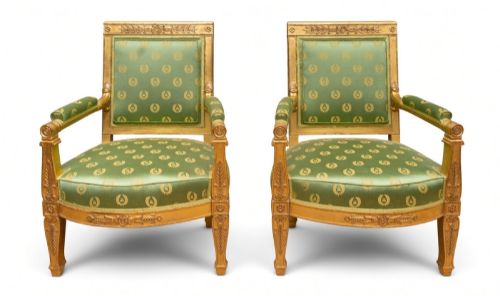
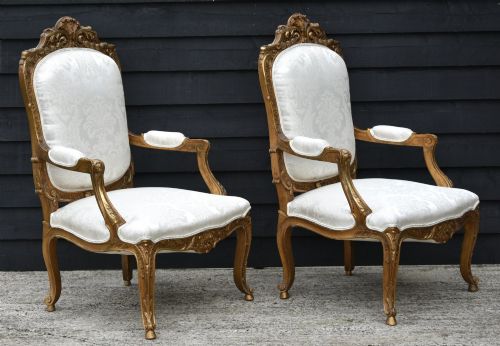
- An open-armed wooden armchair with upholstered arm pads and an exposed frame. Originating in France, it frequently displays carved giltwood or walnut details.
19th Century Lounge: Frequently Asked Questions
What is a 19th century lounge?
A 19th century lounge encompasses period seating designed for relaxation, including daybeds, chaise longues, and large library armchairs.
These pieces emerged from English country houses and French salons, reflecting the Victorian and Regency focus on comfortable domestic interiors.
How do I identify a Victorian chaise longue?
Victorian examples typically feature rich timbers such as mahogany or walnut, curved frames, and deep button-backed upholstery.
They frequently display scrolled ends and turned legs fitted with castors for ease of movement across carpeted drawing rooms.
What materials were used for upholstery?
Original pieces employed internal foundations of hessian and calico to support horsehair stuffing and deep spring systems.
External coverings varied from heavy leather and wool tapestry to velvet and patterned fabric, secured with tight rows of studs or piping.
How do I style a period lounge today?
A nineteenth-century armchair or daybed functions well as a focal point in a contemporary living space, paired with neutral walls to highlight the wood frame.
Placing an antique chaise longue in a study or bedroom maintains its historical purpose as a dedicated place for reading and resting.