
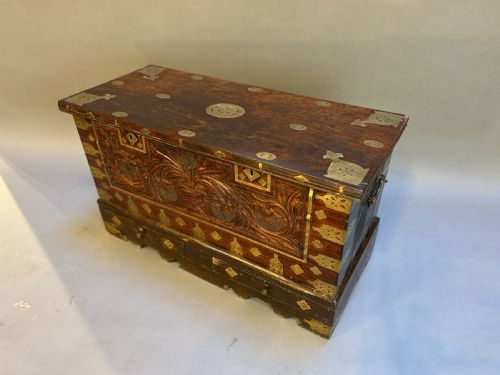
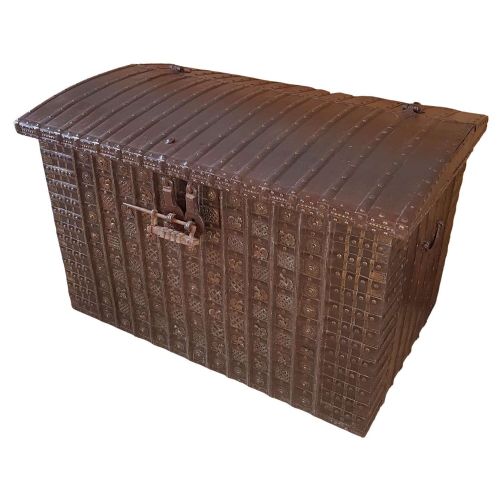


19th Century Indian Trunk
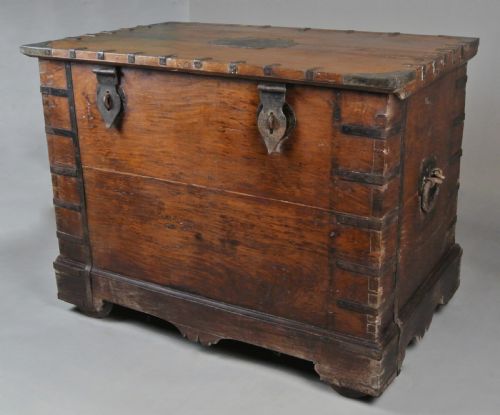
These pieces are a 19th century indian trunk, built for travel and storage and prized for their robust timber and decorative metalwork.
19th Century Indian Trunk
A 19th century indian trunk encompasses substantial storage chests, dowry coffers, and campaign boxes made during the 19th century. Buyers frequently encounter robust Zanzibar traders chests, teak campaign trunks, and lacquered dowry chests originating from regional workshops.
Dated examples span the period from the early decades through to eighteen ninety, often displaying specific regional characteristics like brass studding or carved panels. These forms served domestic storage, maritime travel, and formal dowry displays.
How They Were Made
Construction relies heavily on durable tropical timbers such as teak, camphor wood, padouk, rosewood, and elm. These dense woods resist humidity and wear, making them practical for long-distance transport and domestic use.
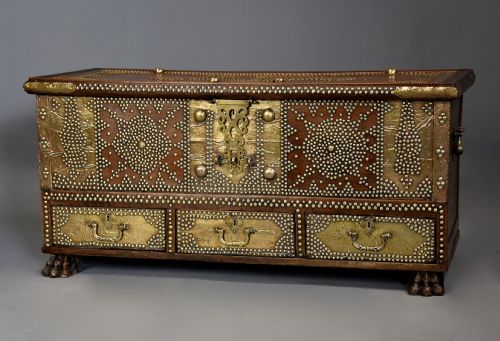
Metal reinforcement is integral to the construction, utilising iron banding, bronze handles, and intricate brass stud work. Such elements protect the corners and edges while adding decorative geometry to the exterior.
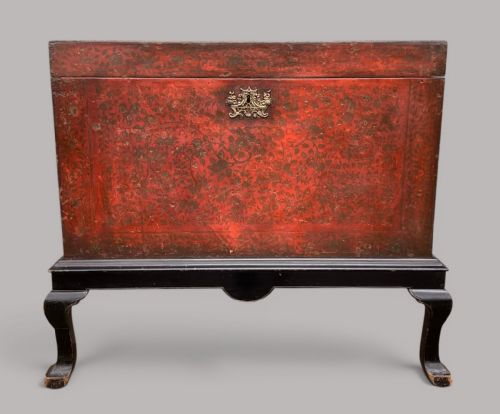
Surface treatments range from natural polished grain to red lacquer and Chinoiserie finishes. Carved elements, bone inlay, and specialised locks complete the construction of these substantial pieces.
Materials documented in the collection include teak, rosewood, padouk, camphor wood, brass, iron, lacquer, and bone.
What Varies In Quality
The caliber of a piece depends on the integrity of its timber selection and the complexity of its metal mountings. Dense hardwoods like teak and camphor paired with heavy brass binding represent the more robust end of production.
Surface preservation dictates much of the appeal, particularly the condition of applied lacquer, carved panel work, and original locking mechanisms. Intact decorative studding and specialised locks elevate the standing of a trunk.
The 19th Century Indian Trunk Glossary
- Zanzibar chest
- A heavy storage trunk featuring elaborate brass stud work and strapwork, often associated with trade routes linking India and East Africa. These pieces typically utilise dense hardwoods like teak or rosewood.
- Campaign chest
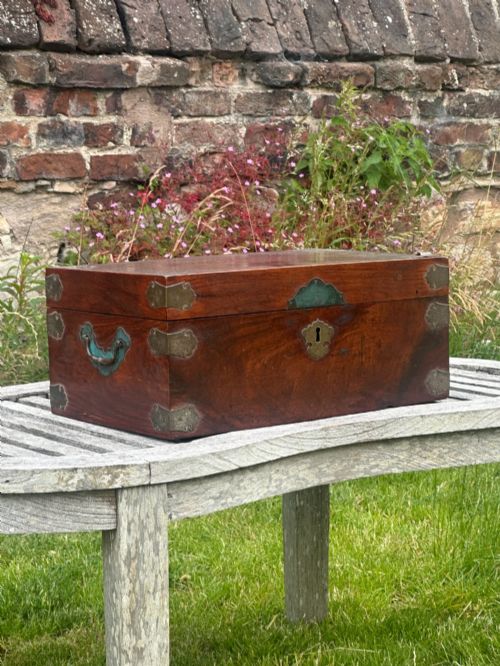
- A modular or portable trunk designed for military officers and travellers, constructed with recessed handles and reinforced corners. They prioritize strength and ease of transport during transit.
- Dowry chest
- A ceremonial coffer used to transport bridal goods and household valuables, frequently decorated with carved panels or bright lacquer. Examples from regions like Rajasthan often incorporate intricate iron banding and specialised locks.
- Anglo-Indian
- A descriptive term for furniture made in India during the British colonial period, combining traditional local craftsmanship with European forms. These items often display carved elephant motifs or hybrid architectural details.
19th Century Indian Trunk: Frequently Asked Questions
How were these trunks used?
These pieces served multiple practical roles including maritime travel, military transport, and domestic storage. Families also utilised dowry chests to hold valuable household goods and wedding linens during ceremonial transitions.
Over time, many functioned as stationary storage furniture within colonial households. Their robust construction protected contents from dust, dampness, and insects during long journeys.
What woods were commonly used?
Maker workshops favored dense tropical hardwoods capable of withstanding humid climates and rough handling. Teak, camphor wood, rosewood, and padouk appear frequently across the surviving inventory.
Camphor wood was particularly valued for its natural insect-repellent properties, making it ideal for storing textiles. Secondary elements occasionally incorporate elm or ebony for contrast and structural reinforcement.
How do I identify a Zanzibar chest?
Zanzibar chests are distinguished by dense hardwood construction and extensive brass stud decoration. They typically feature heavy metal strapwork framing the lid and front panels.
Many examples also incorporate concealed interior compartments and specialised compartmentalized storage for valuables. Their physical weight and maritime association set them apart from standard domestic coffers.
Are campaign trunks different from standard chests?
Campaign trunks are specifically engineered for portability, featuring flush-mounted hardware to prevent snagging during transit. They often utilise sturdy timbers like teak combined with protective iron or brass binding.
Standard storage chests focus less on modular transport and more on stationary decorative display. Regional variations in lacquer or carving further separate fixed domestic coffers from travel-oriented campaign pieces.