


Indian Dowry Trunk
These heavy wooden Indian dowry trunk pieces are built to hold a bride's worldly goods, offering robust storage with centuries of character.
Indian Dowry Trunk
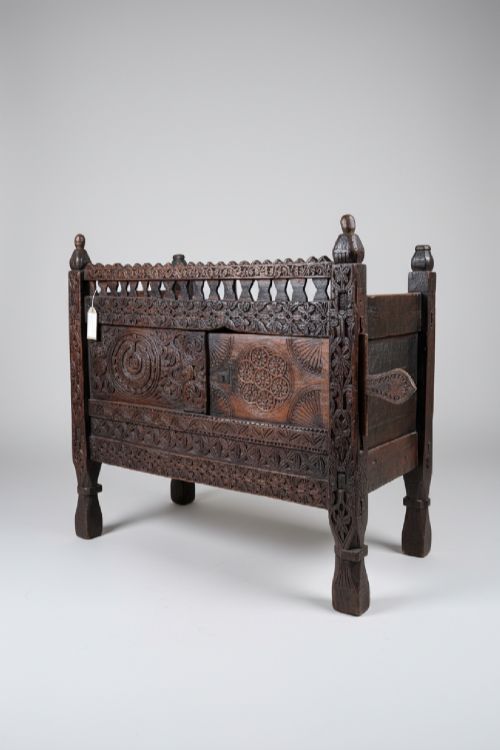
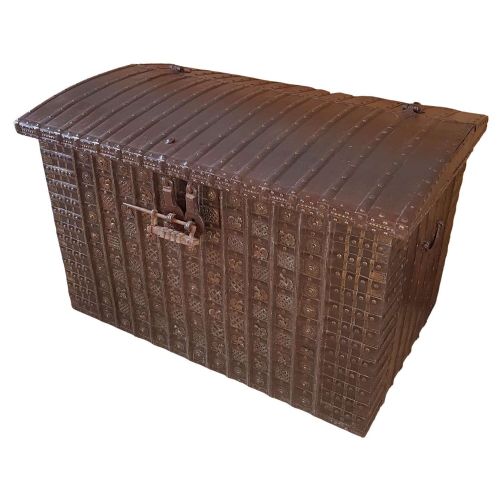
An Indian dowry trunk takes several forms, including marriage chests from Jaisalmer, Swat Valley folk art pieces, and Rajasthan damchiya trunks. These heavy storage pieces served a practical function in traditional households before entering the antique market.
Most examples found here date from the nineteenth century, including pieces from eighteen-ninety and around nineteen hundred, alongside occasional early twentieth century items. They appear in teak, cedar wood, and general hardwood constructions.
Regional styles vary widely across the selection, taking in Anglo-Indian, colonial, traditional Indian, and Zanzibar traders chest designs. Alongside standard chests and coffers, buyers encounter decorative boxes and occasional cabinet formats.
Materials and construction
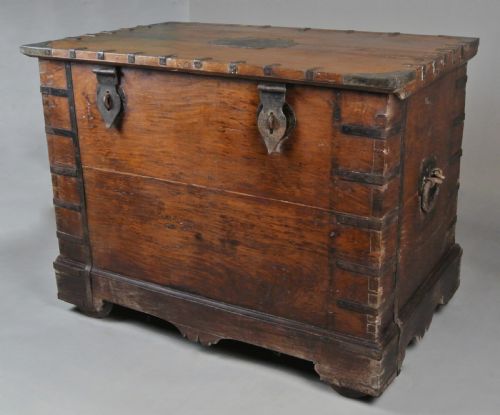
Makers constructed these trunks using sturdy timbers like teak, cedar wood, and dense hardwood to ensure long-term durability. Iron banding and heavy iron mounts reinforce the wooden bodies against structural strain.
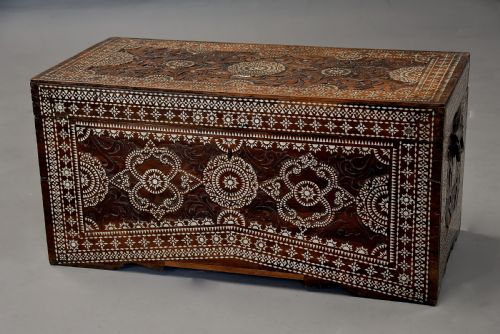
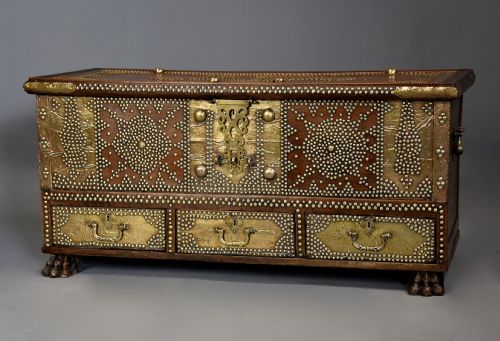
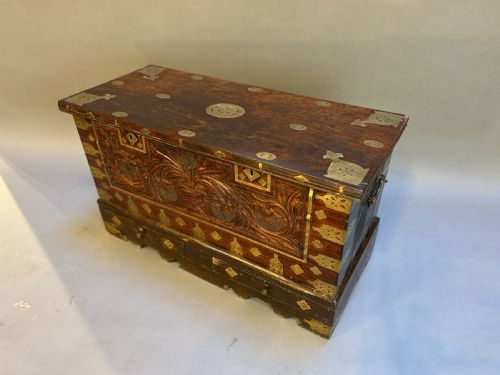
Surface decoration relies on brass studwork, brass mountings, and intricate inlays of mother of pearl. These metal and shell additions transform utilitarian storage boxes into highly decorative furnishing pieces.
Materials across the selection include iron, teak, brass, hardwood, mother of pearl, and cedar wood.
Judging the quality
Quality rests in the intricacy of the surface embellishment, such as dense mother of pearl inlay work or complex brass stud patterns. Plain timber constructions sit at the simpler end, while heavily ornamented Zanzibar and Rajasthan examples represent finer work.
The Indian Dowry Trunk Glossary
- Damchiya
- A traditional low storage chest originating from Rajasthan, often featuring heavy iron banding and structural compartments. These pieces formed an essential part of regional domestic furniture.
- Zanzibar chest
- A distinct style of trading chest characterised by heavy brass studding, ornate metal mounts, and a flat lid. Their design reflects historic trade links between India and East Africa.
- Swat Valley folk art
- Decorative woodwork originating from the Swat Valley region, noted for carved geometric patterns and traditional regional motifs. Pieces from this area display a distinct sculptural character.
- Mother of pearl
- An iridescent inner shell layer used by craftsmen to create intricate inlaid patterns across hardwood surfaces. This material reflects light and adds tonal variation to the chest front.
Indian Dowry Trunk: Frequently Asked Questions
What is an Indian dowry trunk?
An Indian dowry trunk is a heavy wooden storage chest traditionally given to a bride upon her marriage. Families used these sturdy containers to transport and store household goods, textiles, and valuables.
Over time, these practical boxes evolved into decorative furniture items prized for their mixed timber construction, metal banding, and regional carving styles.
How do I style a trunk at home?
These trunks serve well as functional coffee tables in a living room, offering internal storage for blankets and books while providing a solid flat surface on top. Their dark timbers and metal mounts anchor a room visually.
Position a larger chest at the foot of a bed or place a smaller brass-studded box on a side table to display decorative objects.
How do I tell regional styles apart?
Regional origins reveal themselves through specific decorative techniques and hardware choices. Rajasthan pieces often feature heavy iron banding on damchiya chests, while Zanzibar designs rely on dense brass studwork.
Swat Valley items lean towards carved folk art motifs rather than metal mounts, and Middle Eastern influenced pieces frequently incorporate mother of pearl inlay.