
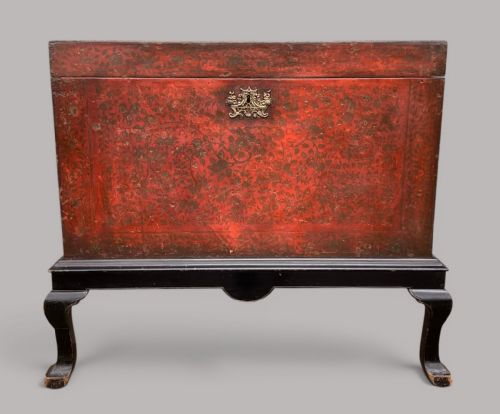


Antique Red Storage Trunk
An antique red storage trunk brings bold colour and heavy timber history straight into a room.
Antique Red Storage Trunk
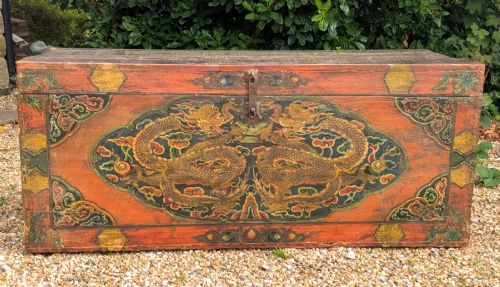
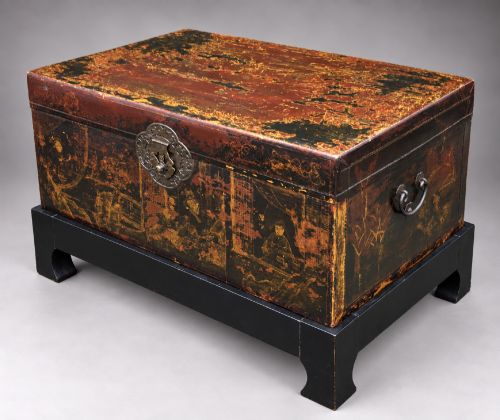
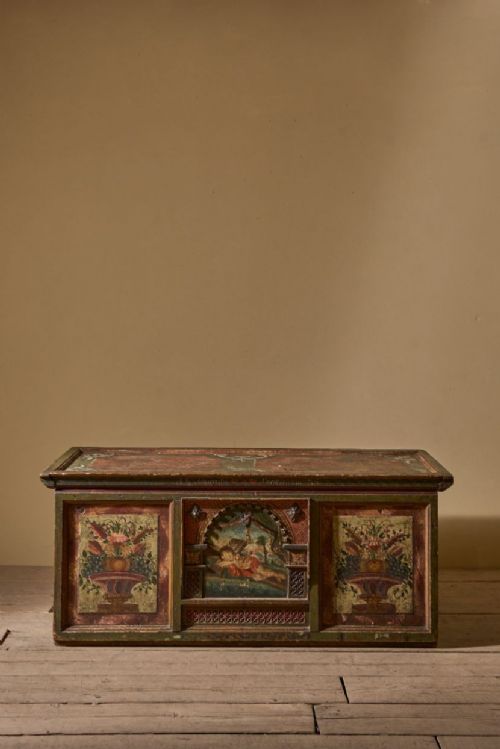
An antique red storage trunk encompasses heavy pine blanket boxes, leather travel cases, and lacquered chests originating from nineteenth-century workshops across Europe, Asia, and beyond. When searching for an antique red storage trunk, buyers typically encounter painted pine coffer boxes from Hungary or Scandinavia alongside Chinese export leather cases and Japanese lacquer work. These utilitarian containers served primarily for household storage, dowries, and long-distance travel before finding a place in modern domestic interiors.
The regional diversity within these listings spans Georgian and Victorian British pieces, Spanish blanket chests with Moorish decoration, and Swedish folk art strong boxes. Many examples retain their original surface pigment, ranging from deep crimson lacquers to weathered folk art floral brushwork on softwood. Their forms include dome tops, flat lids on bracket feet, and multi-tier configurations designed for practical utility.
Materials and construction
Makers constructed these trunks predominantly from solid pine, camphor wood, or mahogany, often reinforcing corners and edges with iron, brass, or metal banding to withstand travel. Joinery relied on traditional methods such as dovetailing for chest walls and sturdy framing for heavy lids, ensuring the wood accommodated seasonal humidity changes.
Surfaces received protective and decorative treatments including oil paint, red lacquer, and applied leather. Pigment was often applied directly to the bare softwood base, sometimes layered over preparatory grounds, while travel trunks featured stitched leather skins secured with brass tacks.
Listings feature nineteen-century pine, mahogany, and camphor wood trunks finished with original red paint, leather, and lacquer.
Separating top examples from ordinary ones
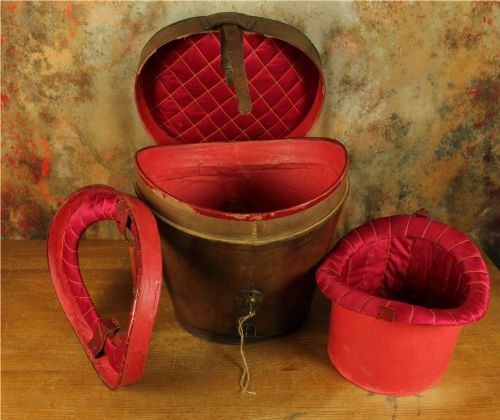
Quality rests significantly on the survival and integrity of the original surface finish, as untouched early paint or lacquer commands greater interest than later stripped or repainted surfaces. Pieces retaining their original interior linings, maker stamps, or period brass and iron hardware represent the upper tier of preservation.
Structural honesty and regional detail also divide the range, with crisp dovetail joints and untouched bracket feet setting apart bespoke or carefully made regional items from utilitarian replacements. The finesse of hand-painted floral decoration or intricate Moorish style motifs further distinguishes superior examples from standard workshop production.
Hallett & Sons
The Antique Red Storage Trunk Glossary
- Coffer
- A heavy wooden chest traditionally used for storing valuables, linen, or documents. These sturdy boxes often feature hinged lids and iron reinforcement.
- Mule chest
- A traditional storage chest featuring one or more drawers at the base beneath a primary lift-top compartment. This form bridges the gap between simple blanket boxes and chest of drawers.
- Lacquer
- A durable resin finish applied in multiple layers and polished to a hard sheen. It appears frequently on Asian export trunks and Qajar cashier boxes.
- Mafrash
- A type of woven or leather storage bag originating from the Caucasus. These rectangular containers were utilised for transporting household goods on pack animals.
- Tansu
- Traditional Japanese mobile cabinetry and storage chests constructed from woods such as cedar. They often incorporate multiple internal drawers and iron hardware.
Antique Red Storage Trunk: Frequently Asked Questions
What were antique red storage trunks used for?
These trunks served essential household and transit functions, holding blankets, family dowries, clothing, and valuables during long journeys. Merchants and travellers also utilised leather travel boxes and camphor wood chests to protect goods from moisture and pests.
Over time, these utilitarian boxes transitioned from functional storage in country houses and trade ships to decorative furniture items in domestic living spaces.
How do I care for a painted wooden trunk?
Protect antique painted surfaces by keeping trunks away from direct sunlight and maintaining stable indoor humidity levels to prevent timber movement. Dust gently with a dry, soft cloth and avoid chemical polishes that can lift original nineteenth-century pigments.
If the interior retains fabric or leather linings, air the compartment regularly and keep the environment dry to preserve the original materials.
Are these trunks suitable for daily living?
These robust pieces offer practical storage for living rooms and bedrooms while serving as coffee tables or blanket storage at the foot of a bed. Their sturdy pine and hardwood construction easily supports everyday domestic use.
Selecting a piece with a flat lid makes it straightforward to place books, lamps, or decorative objects on top without harming the historic finish.
How can I tell a folk art trunk's origin?
Regional origin is often identified through specific palette choices, brushwork styles, and native softwood construction. Hungarian and Scandinavian pieces frequently display distinct floral motifs and dated inscriptions painted directly onto pine.
Hardware styles, dovetail cuts, and regional carpentry traits also provide clear clues to whether a trunk originates from European folk workshops or Asian export trade routes.