
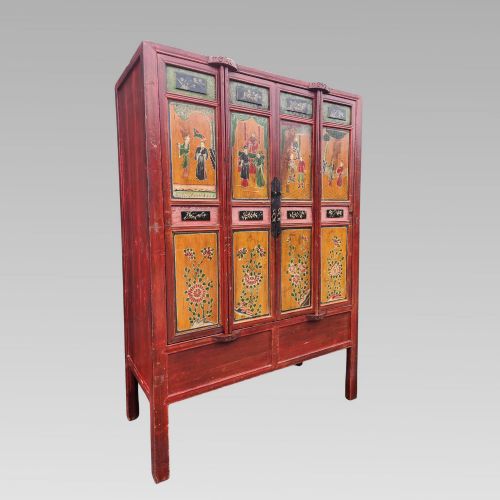


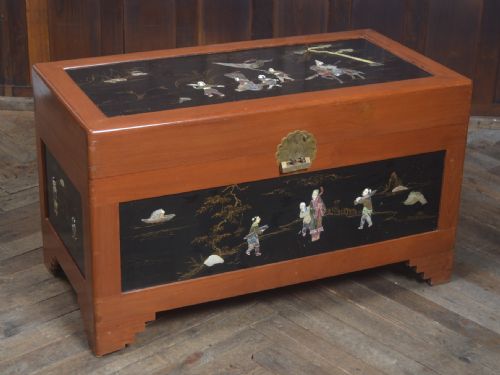


Red Lacquered Coffer
These red lacquered coffer pieces bring bold colour and historic storage into a room, offering both decorative presence and deep utility.
Red Lacquered Coffer
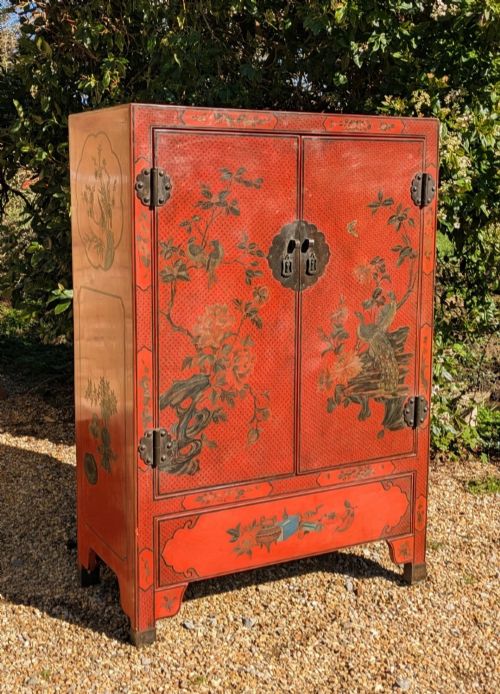
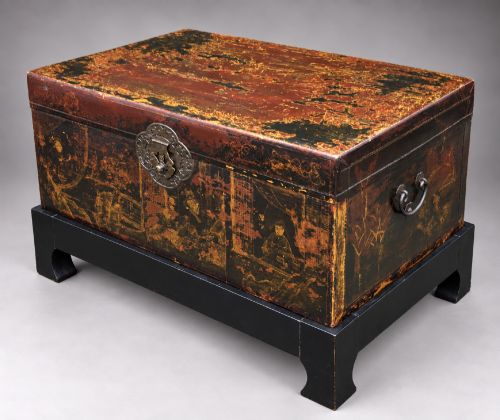
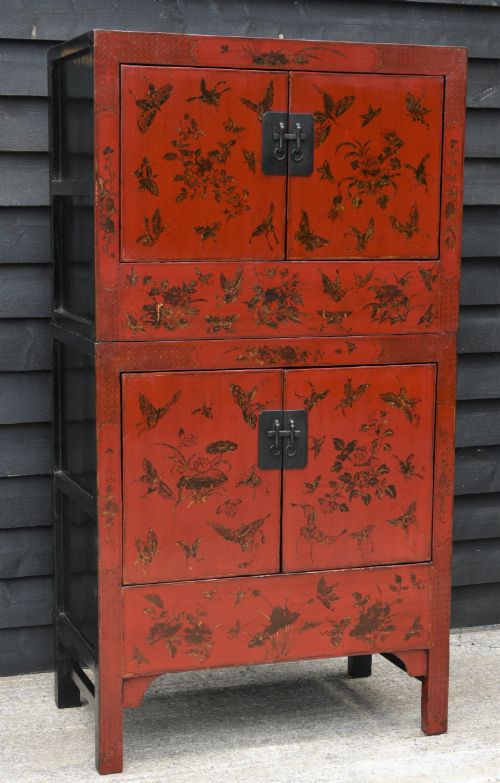
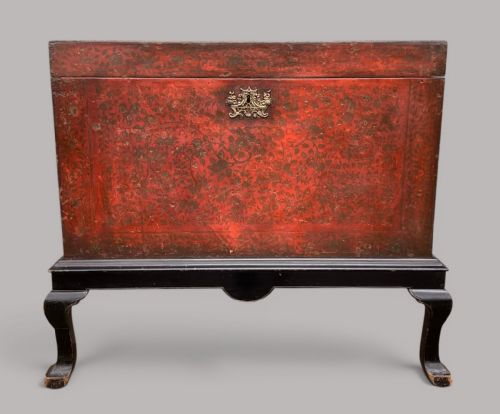
A red lacquered coffer provides substantial storage through large trunk and chest forms, appearing primarily in 19th-century and early 20th-century examples. These pieces emerge from traditional Chinese, Japanese Meiji, and Anglo-Indian traditions, spanning blanket boxes, marriage cabinets, and chests on stands.
The version most commonly met on this page is the 19th-century Chinese storage trunk or cabinet finished in striking red lacquer. Such items function practically as blanket boxes or writing desks while delivering intense visual warmth to an interior.
How they were made
Construction relies upon solid timbers such as elm and camphor wood, providing a sturdy carcase for heavy daily use. Artisans then applied multiple layers of red lacquer over the wood base to build up a resilient, smooth finish.
Materials recorded across the selection include elm, camphor wood, brass, iron, and gilt detailing applied over wood.
What varies in quality
The refinement of the lacquer work defines the upper tier of these pieces, separating simple utilitarian boxes from masterworks with deep, lustrous surfaces. Rich colour saturation and meticulous application indicate superior workshop standards.
The complexity of form and the integration of supporting elements also set pieces apart. Elaborate stands, integrated drawers, and substantial brass or iron mountings distinguish the most ambitious cabinets and chests from standard domestic storage.
The Red Lacquered Coffer Glossary
- Lactating tree sap
- Lacquer. A durable finish created from natural tree resin applied in successive coats and polished to a hard sheen.
- A heavy timber chest with a hinged lid, traditionally utilised for storing blankets, textiles, and personal valuables
- Coffer.
- A decorative style reflecting European interpretations of East Asian artistic traditions, frequently seen on 19th-century furniture
- Chinoiserie.
- A portable storage piece designed for travel, equipped with brass mounts and carrying handles typical of campaign furniture
- Campaign case.
Red Lacquered Coffer: Frequently Asked Questions
What were red lacquered coffers used for?
These pieces served primarily for storing valuable textiles, garments, and marriage documents within wealthy households. Their robust construction and secure lids kept precious items protected from dampness and pests.
Over time, larger cabinets and chests also functioned as prominent display pieces or central storage units in formal rooms, combining practical utility with strong visual authority.
How do I clean a red lacquered surface?
Dust the surface regularly with a soft, dry cloth to prevent particles from scratching the delicate lacquer finish. Avoid using chemical cleaners, abrasive pads, or excessive water.
If deeper cleaning is required, use a slightly damp cloth with mild soap, drying the wood immediately afterwards. Applying a gentle conservation wax can help maintain the sheen of the lacquer over time.
How do I date a red lacquered coffer?
Examine the underlying construction timber, such as elm or camphor wood, alongside the style of the brass and iron hardware. Hand-forged fixings and traditional joinery point towards 19th-century or earlier craftsmanship.
Compare the lacquer depth and colour tones with known periods like the Qing Dynasty or the Japanese Meiji era. Subtle shifts in decorative motifs and export styles also help narrow down the decade of production.
Where should I place a coffer at home?
Position a large trunk or chest at the foot of a bed or as a focal point in a living room for striking colour contrast. Ensure the piece sits away from direct sunlight and strong heat sources to protect the lacquer.
Smaller cabinets and desks fit well in hallways or studies where their storage compartments remain accessible. Their bold red finish allows them to anchor a neutral interior scheme effectively.