

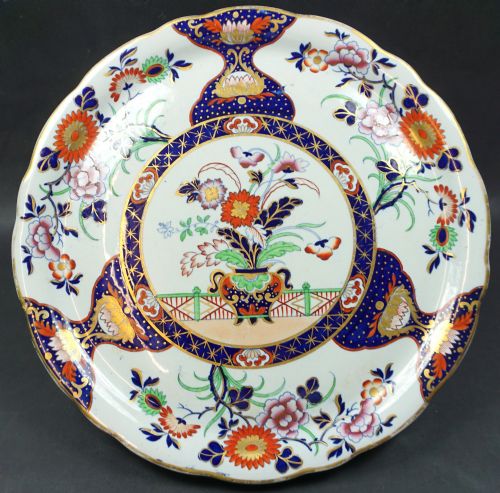
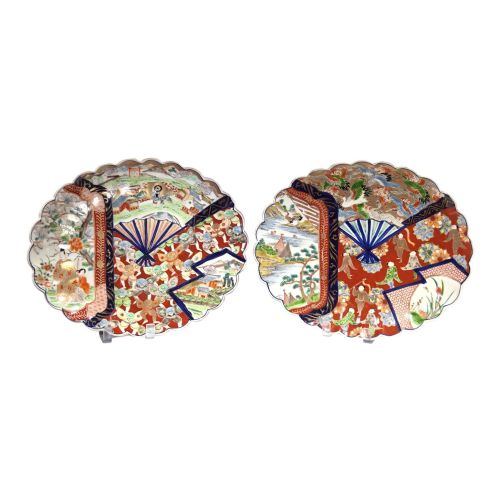


19th Century Imari Platter
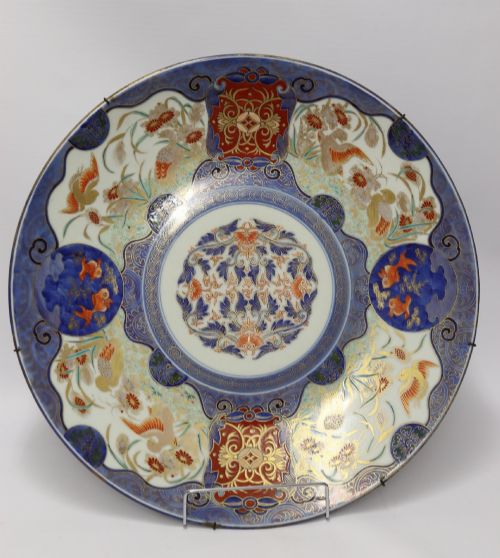
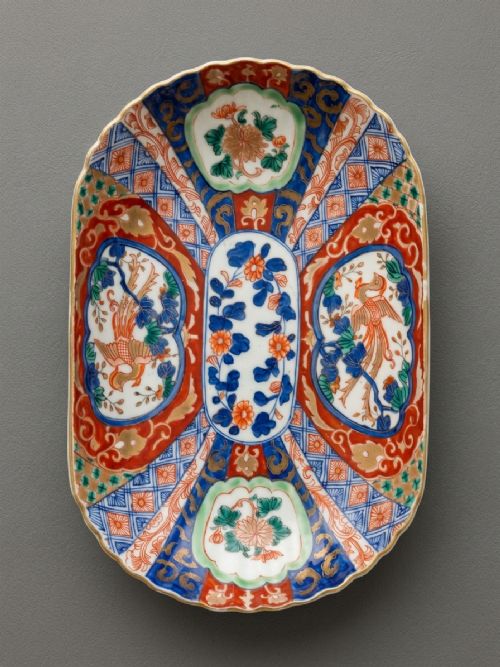
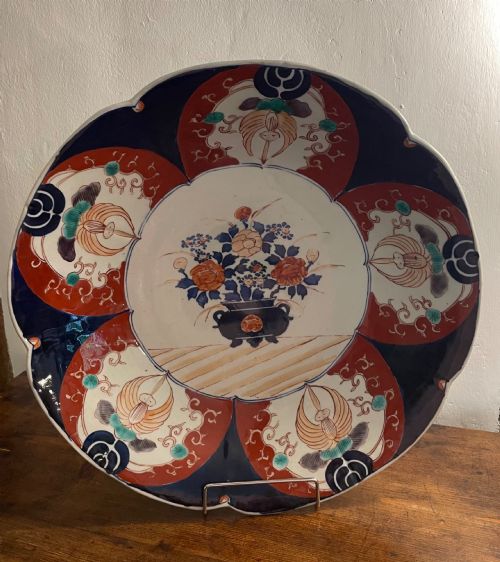
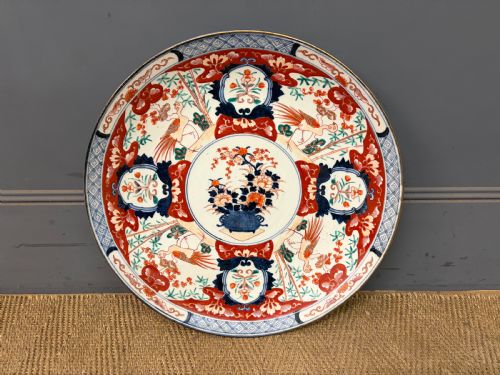
These large and decorative items are 19th century imari platters, offering bold colours and intricate patterns that anchor a dining table or display wall.
19th Century Imari Platter
A 19th century imari platter brings together striking Japanese Meiji aesthetics and traditional forms like chargers and decorative plates. Buyers browsing this selection encounter large plates and serving dishes intended for visual impact.
Most examples originate from the 19th Century, spanning Victorian interpretations and Japanese Arita Imari wares. These pieces vary from substantial wall chargers measuring over twenty inches to smaller dessert and serving shapes.
What varies in quality
The precision of the hand-painted enamel work dictates the refinement of each charger or plate. Crisp outlines and vibrant, well-preserved pigment layers separate finer examples from simpler production wares.
Scale and proportion also influence desirability, particularly among large wall chargers and matching pairs. The clarity of the glaze and the intact state of any gilt detailing complete the assessment of an individual piece.
19th Century Imari Platter Retail Price Guide 2026
Typical asking prices for 19th century imari platter among the pieces listed under this phrase on Sellingantiques today, from the lower quarter to the upper quarter. They describe what is for sale here now, not the wider market.
Hicks and Meigh·John Ridgway
The 19th Century Imari Platter Glossary
- Imari
- A style of Japanese porcelain decorated in underglaze blue, iron red, and gilt, which heavily influenced European ceramic production. This palette remains instantly recognisable on plates and chargers.
- Charger
- A large decorative plate traditionally used for service or display on sideboard tables and walls. These substantial dishes dominate most collections.
- Ironstone
- A heavy, durable type of ceramic developed in the nineteenth century to withstand robust daily use. It provides a dense, opaque body suitable for large serving dishes.
- Gilding
- The application of gold leaf or gold paint to ceramic surfaces to accent specific design elements. This technique adds warmth and contrast to the blue and red palette.
19th Century Imari Platter: Frequently Asked Questions
How do I hang a large charger?
Use a professionally coated wire wall hanger designed specifically for the weight and diameter of heavy ceramic plates. Ensure the fixing secures firmly into a wall stud to support the piece safely.
Avoid spring-loaded clips that lack protective rubber sleeves, as these can chip the glazed rim over time. Display the charger at eye level where the intricate patterns remain fully visible.
Are these platters safe for food?
Many nineteenth-century ceramic pieces contain lead in their glazes and enamel decorations, making them unsuitable for regular culinary use. Hand-washing is essential to preserve the delicate painted surfaces and any applied gilding.
Utilise these plates primarily for display, decorative serving, or dry presentation rather than wet or acidic foods. Gentle cleaning with a soft cloth maintains the integrity of the antique finish.
How do I tell Japanese from English imari?
Japanese examples typically utilise a finer porcelain body with characteristic spur marks on the unglazed base. The painting style follows traditional Meiji period motifs and distinct pigment depths.
English interpretations often employ ironstone or earthenware bodies with heavier construction and different base stamps. Comparing the weight and clay paste reveals the origin of the piece.
What size counts as a charger?
Plates measuring twelve inches or greater generally qualify as chargers or large serving dishes within nineteenth-century collections. Substantial examples can exceed twenty inches in diameter.
These generous dimensions were designed for impressive presentation on dining tables or sideboards. Measure your display space carefully before acquiring a particularly large wall piece.