
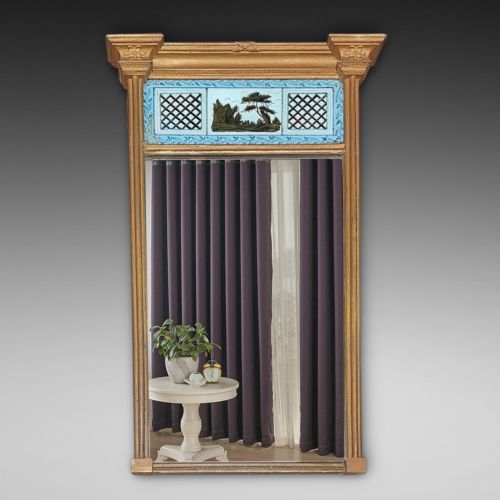
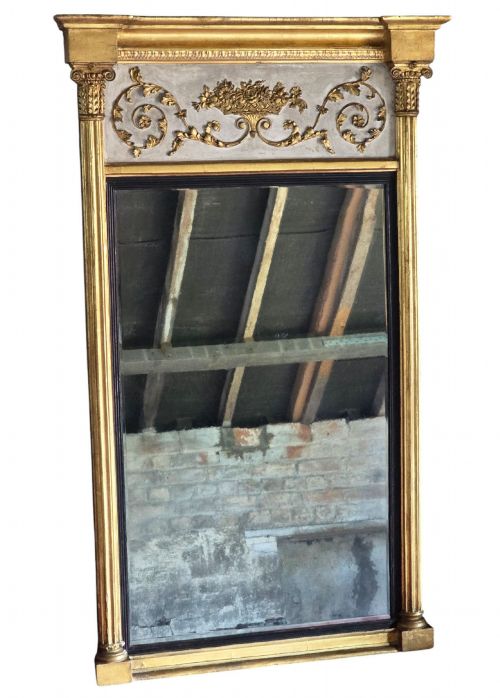


19th Century Giltwood Trumeau
A 19th century giltwood trumeau brings architectural presence and reflected light to a room through its combination of a mirror plate and an upper decorative panel.
19th Century Giltwood Trumeau
A 19th century giltwood trumeau combines wall mirror plates with decorative upper panels, often integrated into pier mirrors, overmantel mirrors, or console table sets. These pieces reflect French Chateau, Neoclassical, French Empire, and Egyptian Revival design vocabularies across the nineteenth century.
Buyers encounter variations ranging from tall narrow dressing and hall mirrors to wide overmantle formats designed for grand chimney breasts. Surviving examples incorporate painted wood panels, oil paint scenes, canvas elements, and verre eglomise alongside original mirror glass.
Materials and construction
Makers built these frames using wood and gesso, applying gold leaf or paint finishes to create the characteristic giltwood appearance. Layers of gesso provided a smooth surface for intricate mouldings, relief panels, and applied ornamentation.
Panels incorporate oil paint on canvas or wood, sometimes featuring verre eglomise reverse-painted glass details above the main mirror plate. Original mirror glass plates show the silvering and imperfections typical of nineteenth-century manufacture.
Bacchus and cherubs occasionally peer down from nineteenth-century relief panels, watching over everyday room activities with cheerful classical abandon.
Factors of distinction
Quality rests in the crispness of the gesso relief work and the preservation of the original gilding versus later regilding. Hand-carved or deeply moulded details on columns, capitals, and frames separate standard production from finer work.
The integrity of the upper panel, whether painted wood, oil on canvas, or verre eglomise, dictates much of the visual character. Original mirror plates that retain their early silvering and undistorted reflections add considerable desirability to a piece.
The 19th Century Giltwood Trumeau Glossary
- Trumeau
- An architectural mirror featuring an upper decorative panel paired with a lower mirror glass plate. This form originated in France to fit the pier wall between windows.
- Giltwood
- Timber finished with a thin layer of gold leaf applied over a prepared gesso ground. It provides a bright, reflective metallic surface across the carved ornament.
- Verre Eglomise
- A cold decoration technique where designs are painted and gilded on the reverse side of glass panels. It appears frequently in the upper sections of Regency and nineteenth-century mirrors.
- Pier Mirror
- A tall mirror designed specifically to hang on the narrow stretch of wall between two windows. These pieces often coordinate with console tables placed directly beneath them.
- Gesso
- A plaster-like mixture of binder and chalk applied to wood frames to create a smooth surface for gilding and relief moulding. Its depth allows for sharp architectural detail.
19th Century Giltwood Trumeau: Frequently Asked Questions
How do I hang a heavy trumeau mirror?
These large frames require secure fixing directly into wall studs or masonry using heavy-duty brackets suited to the weight of wood and glass. Professional installation is standard practice given the substantial dimensions and fragile nature of the antique plates.
Positioning the piece at the correct height ensures proper balance with surrounding furniture, particularly when paired with a matching console table below.
Are the mirror plates original?
Many surviving examples retain their original glass plates, which often display foxing, minor speckling, and slight distortion from nineteenth-century manufacturing methods. These age marks confirm the period authenticity of the mirror.
Replacement plates appear in some pieces where the original glass deteriorated beyond practical use over decades of domestic exposure.
How do I clean giltwood frames?
Dusting with a very soft, dry brush or feather duster prevents the accumulation of dirt without disturbing fragile gold leaf or aged gesso surfaces. Moisture and modern chemical cleaners damage the delicate metallic finish.
Glass cleaner applied directly to a cloth rather than the mirror prevents liquid from seeping behind the frame and staining the backing or the panel.
What is the difference between an overmantle and a pier mirror?
Overmantle mirrors are proportioned specifically to sit horizontally above a fireplace mantelpiece, often featuring landscape formats or decorative relief scenes in the upper section. Pier mirrors are taller and narrower, built to occupy wall spaces between architectural openings.
Both types utilise similar giltwood construction and painted trumeau panels but serve different spatial functions within a room scheme.