


19th Century Gilded Chairs
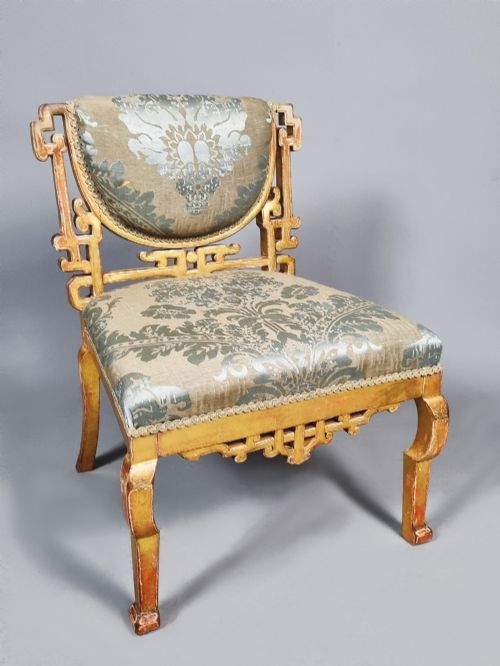
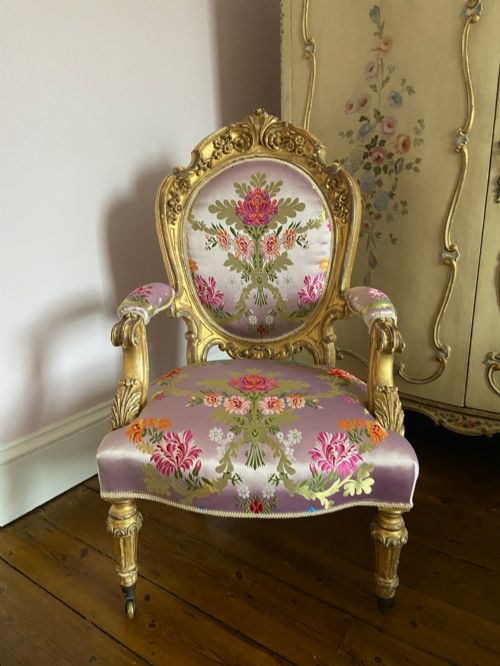
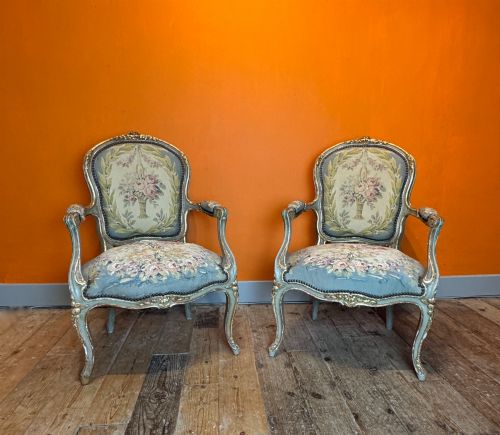
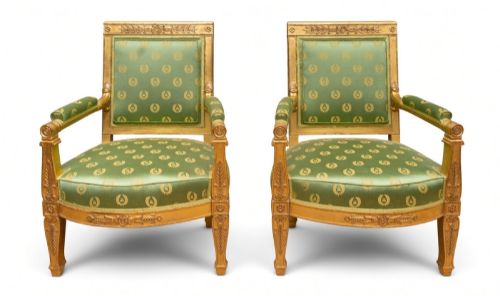
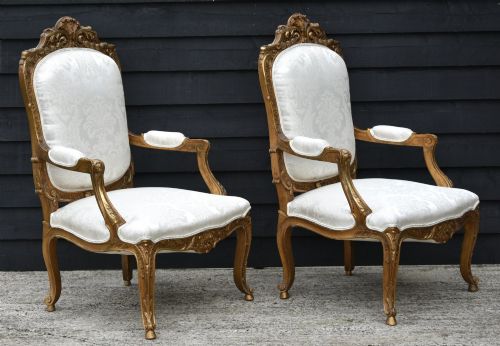
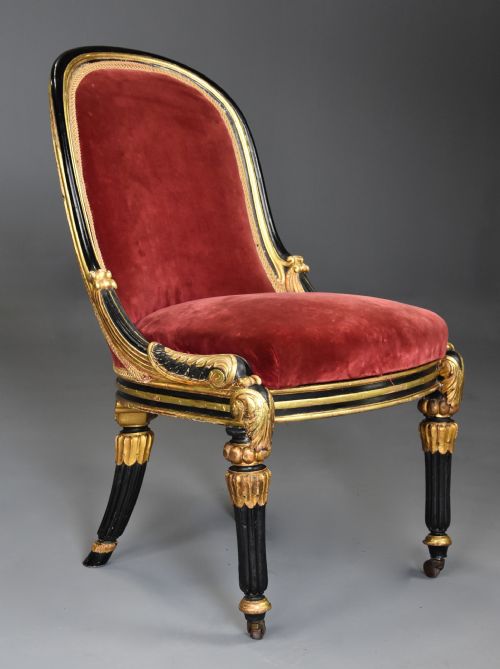
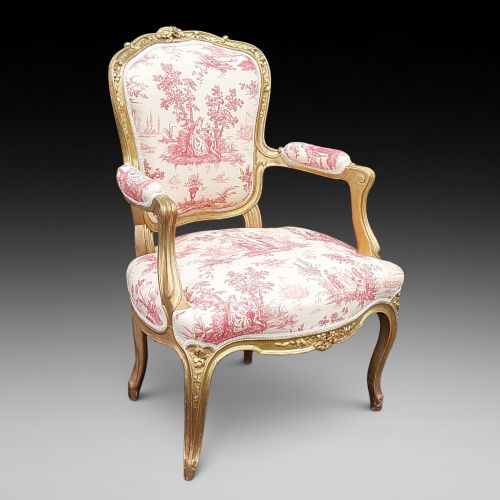
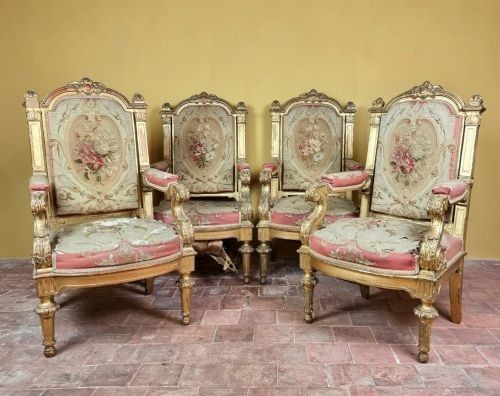
These 19th century gilded chairs bring French and English grandeur into a room through carved timber, giltwood, and silk.
19th Century Gilded Chairs
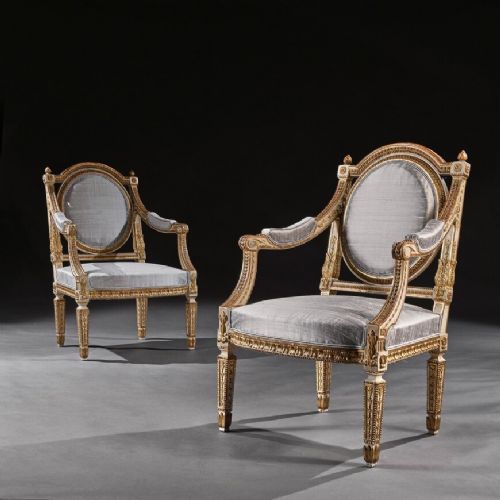
When searching for 19th century gilded chairs, collectors encounter a diverse array of seating designed for formal salons, bedrooms, and dining rooms. The pieces appearing in these listings span from Regency and Victorian periods to French Rococo Revival and Louis XVI styles.
The most common formats on this page are armchairs and open armchairs, accompanied by side chairs, salon suites, and occasional chairs. Many reflect continental origins, particularly French Napoleon III and Italian workshops, alongside English cabinet makers.
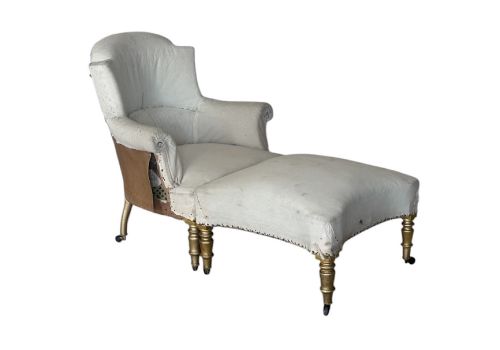
Forms range from grand throne chairs and setees down to nursing chairs, piano stools, and children's salon chairs. Buyers select them for their historic upholstery, painted details, and decorative presence in interior spaces.
Materials and Construction Techniques
The foundation of these seats relies predominantly on carved wood such as beech, walnut, and ebonised timber, providing a sturdy internal structure. Artisans applied gold leaf, parcel gilt, or paint directly onto the carved frames to achieve the signature metallic finish.
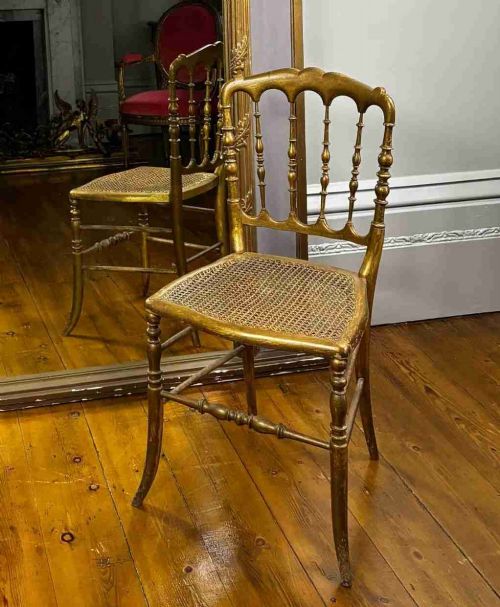
Upholstery techniques involve traditional textiles including velvet, silk fabric, tapestry, and caned seats. Brass accents and detailed carving define the ornamentation across both English Regency and French chateau designs.
Listings feature woods including beech, walnut, and ebonised timber, finished with gold leaf, paint, and parcel gilt.
Assessing Quality and Craftsmanship
Quality in these seating items rests upon the crispness of the wood carving and the integrity of the original gilding. Pieces retaining their early silk fabric, tapestry, or caned seating demonstrate higher preservation of their original state.
Attribution to documented makers and specific stylistic rigour, such as faithful interpretations of Louis XVI or Aesthetic Movement designs, elevate certain examples above standard commercial output. The depth of the carved giltwood and the balance of painted and parcel gilt surfaces distinguish finer commissions.
Waugh And Son·Jacob Desmalter·Holland And Sons·Bruce J Talbert·Lamb Of Manchester
The 19th Century Gilded Chairs Glossary
- Giltwood
- Timber that has been coated with gold leaf or a gold-coloured finish. This material forms the primary visual identity of formal 19th century seating.
- Fauteuil
- An open-armed wooden armchair with upholstered seat, back, and arm pads, typically associated with French seating design. These items frequently feature exposed carved wooden frames.
- Bergere
- A closed armchair featuring upholstered sides enclosed by wood or cane. The style offers deep, comfortable seating proportions.
- Parcel Gilt
- A decorative technique where only specific portions of a painted or ebonised wooden surface receive gilding. This method highlights carved details and architectural mouldings.
- Caned
- Woven rattan or cane material utilised for chair seats and backs. This technique provides a lighter texture compared to heavy textile upholstery.
19th Century Gilded Chairs: Frequently Asked Questions
How were these chairs used historically?
These seating pieces served primarily in formal spaces such as drawing rooms, salons, and bedchambers where entertaining took place. Armchairs and setees occupied prominent positions for receiving guests, while lighter side chairs and nursing chairs accommodated varied domestic uses.
Their ornate giltwood surfaces and silk upholstery reflected the social status and taste of the household. Owners placed them strategically to catch the light and complement the architectural style of the interior.
How do I live with them today?
Integrating these gilded seats into modern interiors works best by placing them as accent pieces rather than crowding a room with matching suites. Their reflective surfaces pair well with both traditional and contemporary surroundings.
Care involves keeping them away from direct sunlight and excessive moisture to protect the fragile gold leaf and historic fabrics. Gentle dusting preserves the carved wooden frames without disturbing the finish.
How do I tell periods apart?
Distinguishing between periods depends heavily on ornamental vocabulary and structural lines. Regency and early pieces show classical restraint, while later Victorian and Napoleon III items embrace exuberant Revival motifs.
French pieces often display distinct regional carving traits compared to English interpretations of the same styles. Examining the underlying wood and joining methods also clarifies the manufacturing era.
What defines a salon chair?
Salon chairs are lighter, highly decorative seats intended for formal reception rooms rather than heavy daily use. They frequently feature exposed giltwood frames, slender legs, and refined upholstery.
These pieces prioritise aesthetic elegance to suit polite society gatherings and musical evenings. Their compact proportions made them easy to rearrange within the room as needed.