



French Country Fauteuil Pair
A french country fauteuil pair brings symmetry and relaxed elegance to a room, offering matched seating rooted in traditional European craftsmanship.
French Country Fauteuil Pair
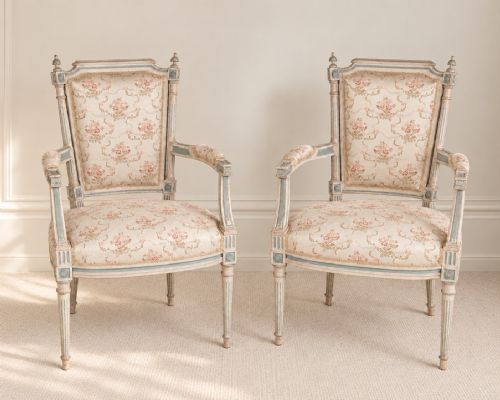
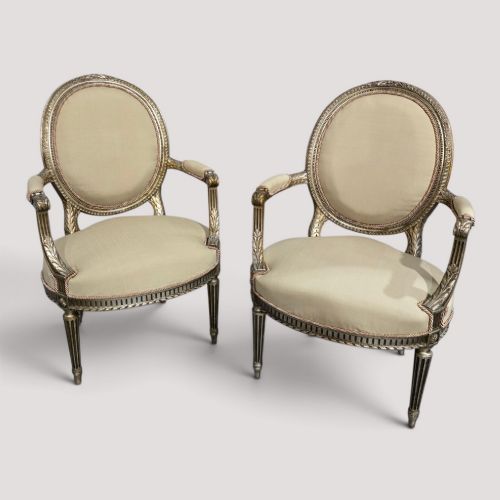
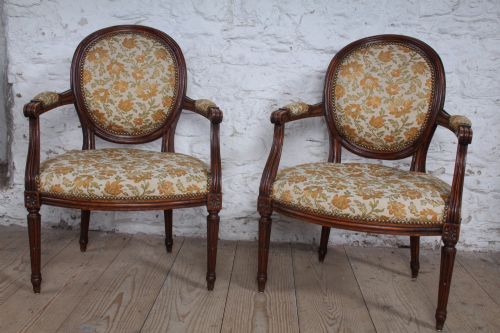
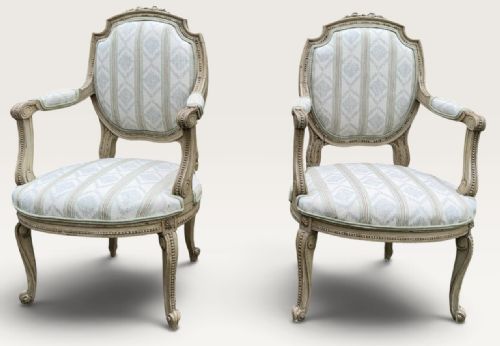
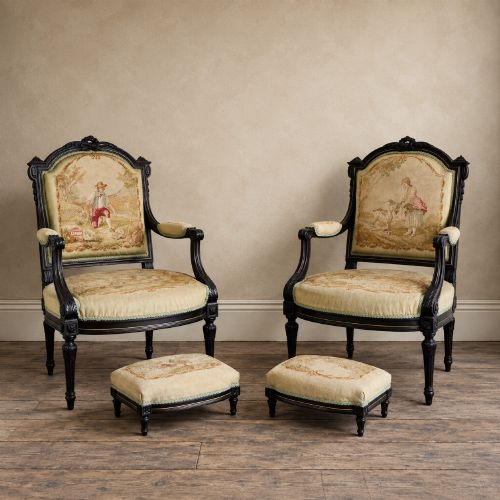
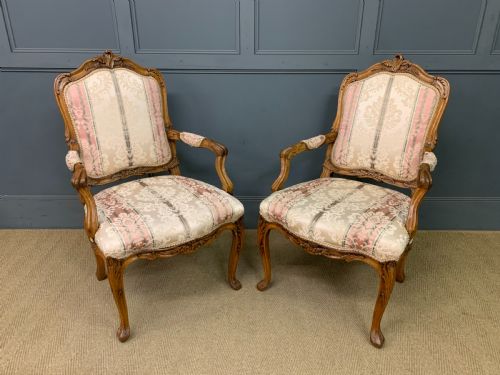
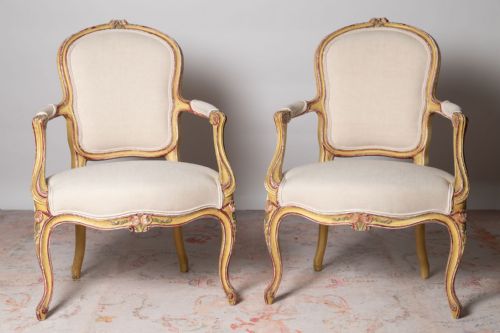
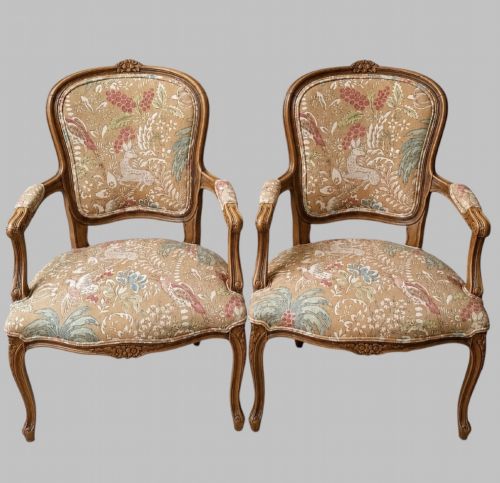
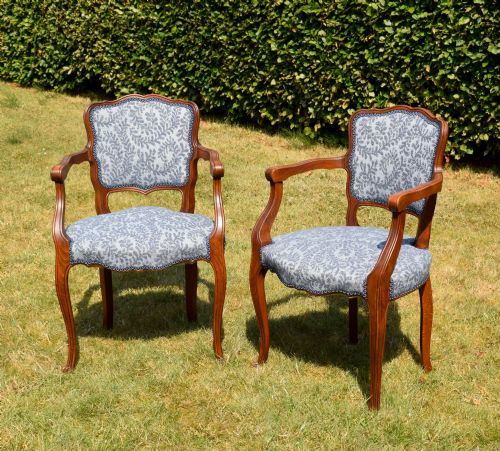
A french country fauteuil pair consists of two matched open-armed seating pieces designed for comfort and formal reception rooms. Buyers searching this phrase typically encounter nineteenth-century interpretations alongside early twentieth-century examples.
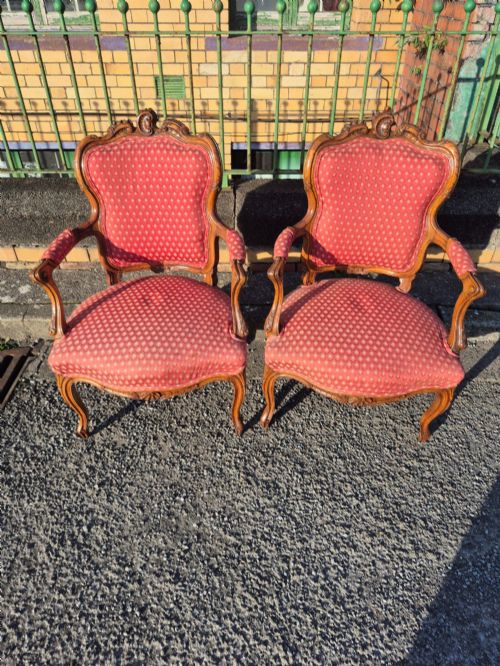
The selection ranges from restrained provincial models to elaborate revival pieces displaying rococo curves or neoclassical straight lines. Most items date from the nineteenth and early twentieth centuries, constructed in regional European workshops.
Makers frequently adopted classic forms such as the Louis XV or Louis XVI style, adapting court aesthetics for country houses and provincial salons. These pairs provide balanced placement flanking a fireplace or console table.
Materials and construction
Carpenters shaped structural frames from hardwoods such as walnut and beech, selected for strength and responsiveness to hand carving. Artisans embellished these timbers with floral motifs, fluting, or retained original painted surfaces.
Upholstery techniques combined traditional webbing, springs, and stuffing enclosed in textiles like tapestry fabric, woven upholstery, or cane panels. Brass tacks frequently secured the fabric edges along the wooden rails.
French Country Fauteuil Pair Retail Price Guide 2026
Typical asking prices for french country fauteuil pair among the pieces listed under this phrase on Sellingantiques today, from the lower quarter to the upper quarter. They describe what is for sale here now, not the wider market.
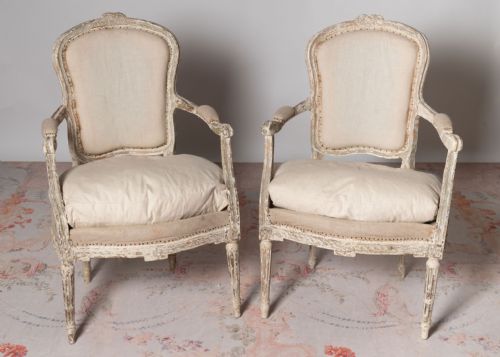
Some chairs retain traces of old paint layers under the dirt, offering a quiet archaeological dig for the domestic historian.
Distinctions in quality
Quality rests upon the crispness of the hand-carved ornamentation and the structural integrity of the timber joints. Superior frames demonstrate fluid lines without hesitation in the carving, whereas lesser examples appear rigid or heavy.
The preservation of original painted surfaces or period textile coverings elevates the desirability of a pair. Altered frames or unsympathetic redecoration diminish the historical coherence of the seating.
The French Country Fauteuil Pair Glossary
- Fauteuil
- An open-armed upholstered armchair with exposed wooden framing originating in France. These seats feature padded armrests and low profiles suited for social gatherings.
- Cane
- Woven rattan material used for chair backs and seats to provide lightweight ventilation. This technique appears frequently on provincial seating.
- Giltwood
- Timber coated with a thin layer of gold leaf applied over a prepared gesso ground. This finish denotes formal salon pieces rather than rustic country furniture.
- Tapestry fabric
- Heavy woven textile depicting pictorial or floral scenes utilised for upholstery. Such coverings add significant texture and traditional colour to a chair pair.
- Louis XV style
- An eighteenth-century design movement defined by asymmetric curves, cabriole legs, and organic scrollwork. Later revivals replicated these flowing contours.
French Country Fauteuil Pair: Frequently Asked Questions
How do I style a pair in my home?
Place the two chairs opposite a sofa or flanking a central fireplace to create a balanced conversation grouping. Their open arms maintain visual lightness in smaller rooms.
Ensure the wood tone or painted finish complements other furnishings in the space without demanding strict period surroundings.
What is the difference between walnut and beech frames?
Walnut offers a rich natural grain and deep brown colour that polishes to a warm sheen. It appears on higher-status seating.
Beech provides a dense, stable alternative that was frequently painted or gilded during production to conceal the plainer grain.
Are these chairs comfortable for daily sitting?
Traditional upholstery utilises sprung bases and padded armrests designed for relaxed sitting during conversation. The open framework accommodates upright posture rather than deep lounging.
Modern comfort depends upon the condition of the internal stuffing and webbing, which may require professional restoration.
How do I identify a revival piece?
Revival items display nineteenth or twentieth-century construction methods, such as machine-sawn timber marks or modern screws alongside traditional joinery. Stylistic proportions often lean slightly heavier than authentic eighteenth-century models.
Examine the wear patterns on the feet and arms to determine the true age of the finish.