
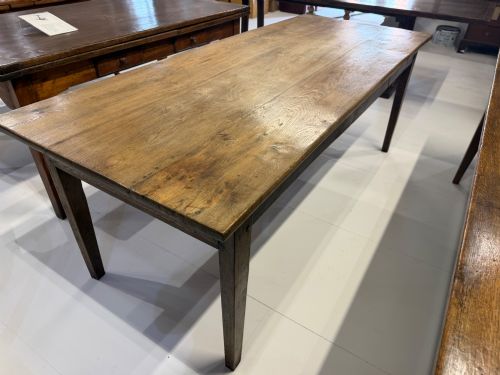
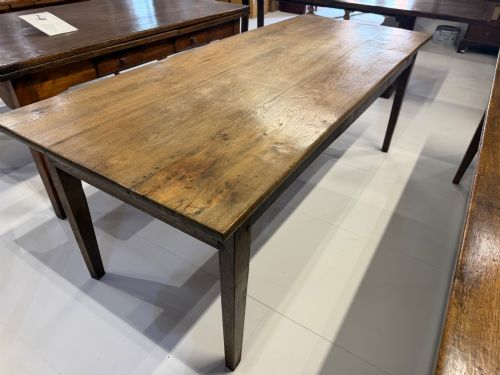
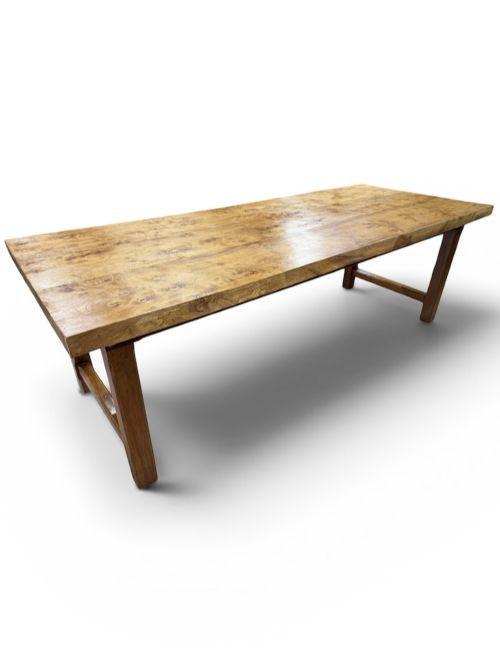
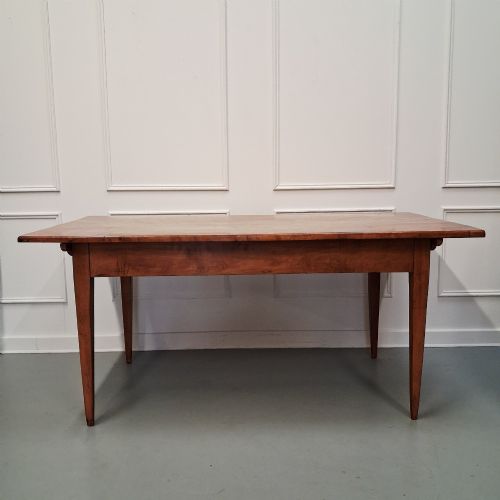
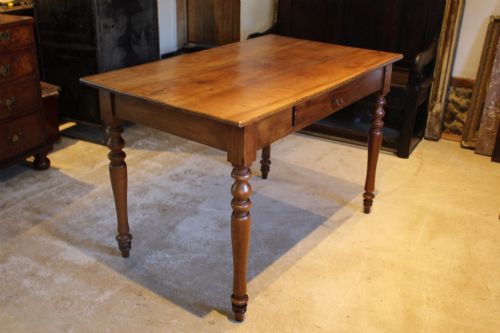
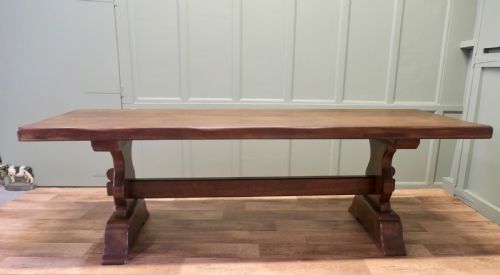
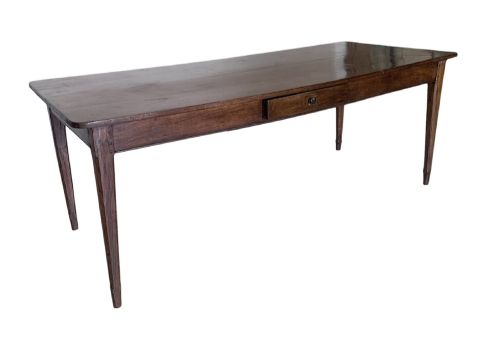
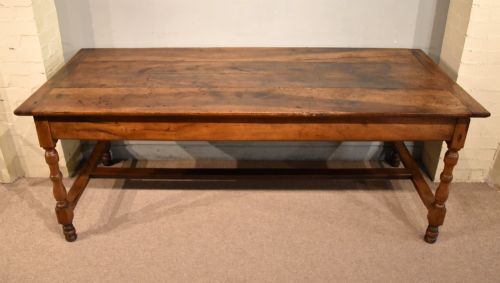
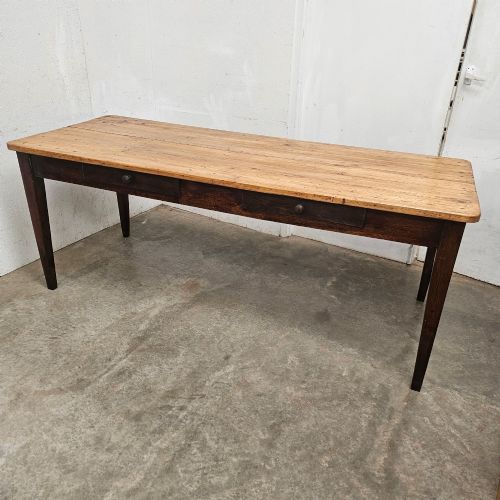
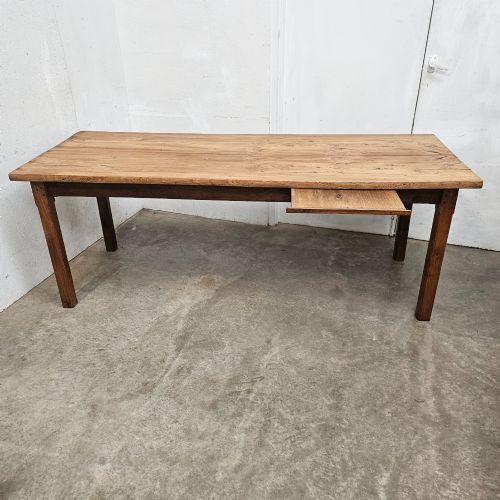
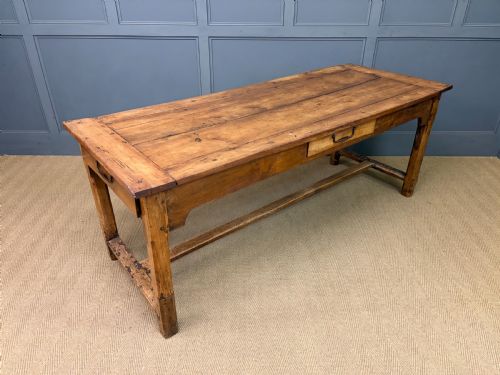
19th Century French Refectory Table
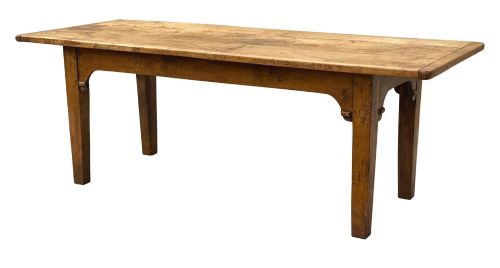
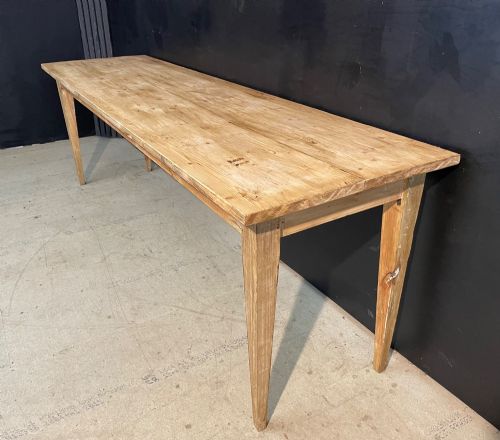
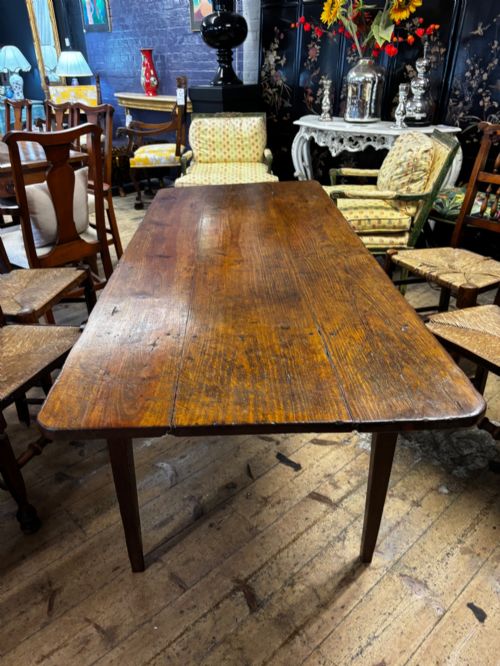
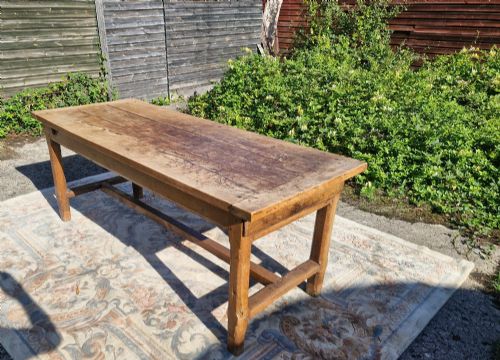
A 19th century french refectory table brings sturdy provincial utility and generous proportions to the modern dining room.
19th Century French Refectory Table
A 19th century french refectory table is a heavy dining or serving surface designed for communal meals in provincial kitchens and dining halls. These examples span the nineteenth century up to the early twentieth century, taking forms such as standard dining tables, extending tables, and serving tables.
The pieces appearing on this page originate from regional French traditions, often described through provincial, rustic, or country styles. They serve as central gathering places for daily domestic life.
Buyers most frequently encounter oak and fruitwood variations, alongside pine, cherrywood, walnut, chestnut, and elm. Many incorporate practical additions like end stretchers, draw leaves, sliding bread boards, and integrated drawers.
How They Were Made
Joiners constructed these tables using solid domestic hardwoods and softwoods, frequently pairing oak frames with fruitwood, cherry, walnut, or chestnut tops. Construction methods prioritise durability, utilising thick timber boards joined to withstand heavy daily use.
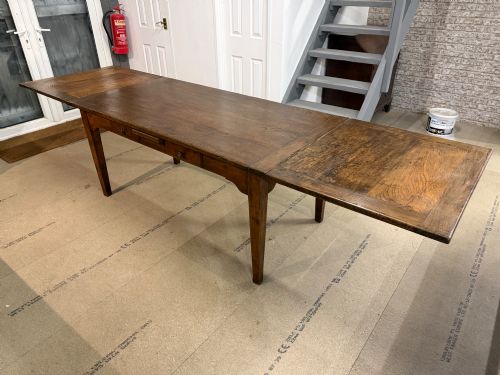
Many tables employ multi-board tops, sometimes limited to two boards, or utilise clever sliding mechanisms and draw leaves for extension. Iron elements occasionally appear in structural braces and hardware to reinforce the timber framework.
Listings feature oak, fruitwood, pine, cherrywood, walnut, chestnut, elm, and sycamore across the nineteenth and early twentieth centuries.
What Varies in Quality
Quality rests in the selection of timber and the integrity of the original construction, distinguishing simple utility pieces from finer provincial examples. Dense hardwoods like oak, walnut, and cherry display superior grain and longevity compared to softer pine or mixed-wood builds.
Proportion and scale dictate the visual weight of the table, with particularly long formats or unusual narrow widths commanding attention. The presence of functional additions, such as multiple drawers or sliding bread boards, alters the sophistication of the piece.
The 19th Century French Refectory Table Glossary
- Refectory table
- A long, narrow dining table traditionally built for communal dining halls. These surfaces provide substantial length for seating many guests.
- Draw leaf
- An extension mechanism featuring sliding leaves tucked beneath the main top. Pulling them out increases the overall table length.
- Stretcher
- A horizontal support beam connecting the legs of a table for added stability. End stretchers reinforce the lower framework against lateral movement.
- Fruitwood
- Timber milled from fruit-bearing trees such as cherry, pear, or apple. It develops a warm patina and smooth grain over decades of use.
19th Century French Refectory Table: Frequently Asked Questions
How are these tables cleaned?
Maintain the timber surfaces by wiping them gently with a damp cloth rather than soaking the wood. Apply natural wax periodically to nourish the grain and protect the finish.
Avoid placing hot dishes directly onto antique timber to prevent permanent marks. Proper moisture control in the room keeps the wood stable over time.
What woods were used?
Carpenters utilised local timbers available in French provinces, predominantly oak, fruitwood, cherry, pine, walnut, chestnut, and elm. Hardwoods provided robust frames and durable tops for daily kitchen work.
Combinations of pine and oak frequently appear in tables featuring storage drawers. Each timber species yields distinct colour tones and grain patterns.
Do extending mechanisms work?
Many tables incorporate draw leaves or sliding bread boards designed to expand the surface area. These mechanisms rely on wooden tracks fitted beneath the primary tabletop.
Smooth operation depends on the humidity and condition of the timber runners. Regular use keeps the sliding parts functioning properly without forcing the wood.
How do I measure for seating?
Account for the length of the table alongside the position of any structural stretchers or drawers underneath. Measure the chair height against the apron clearance to ensure comfortable legroom.
Refectory tables often accommodate larger gatherings due to their considerable length. Allow adequate clearance around the perimeter of the room for pulling chairs out.