

Large French Oak Dining Table
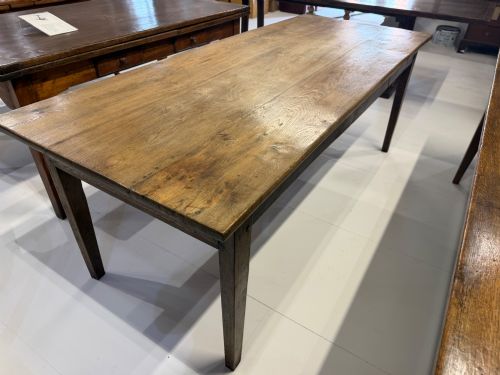
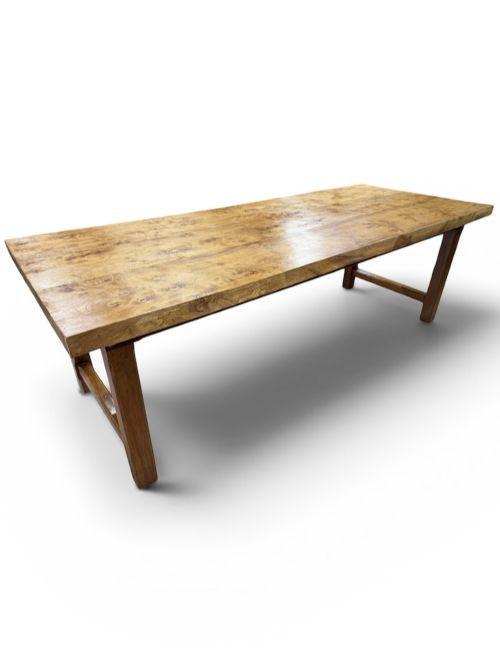
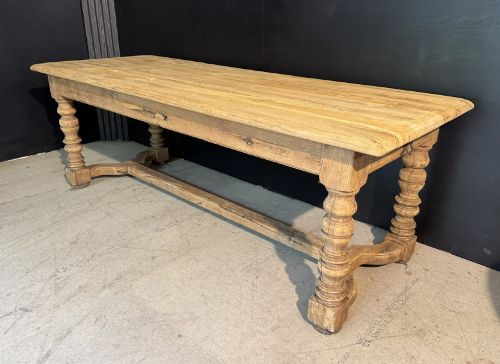
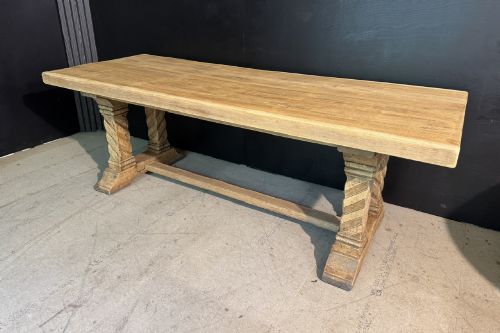
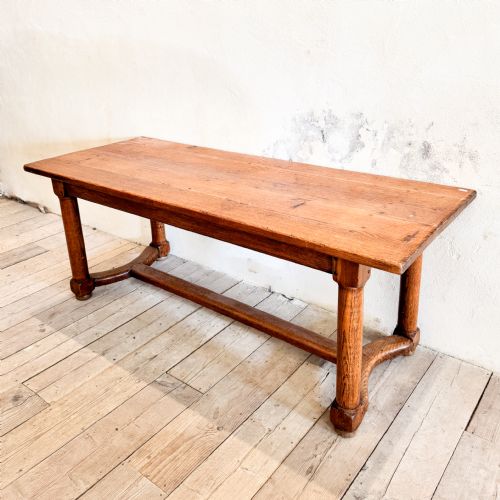
A large french oak dining table anchors a room with heavy timber and long boards built to seat many.
Large French Oak Dining Table
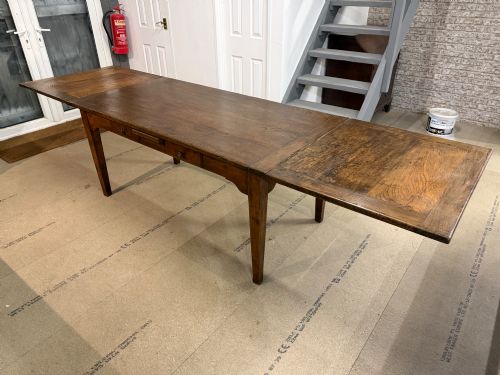
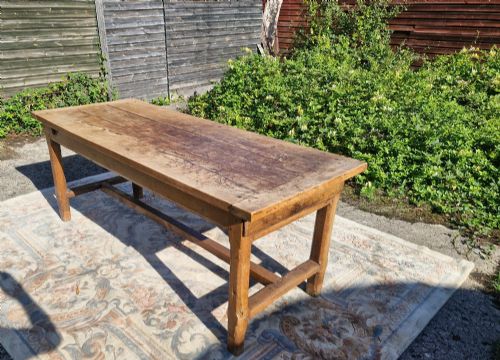
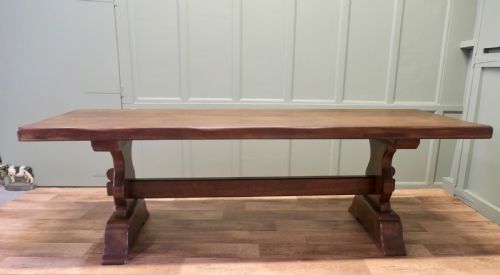
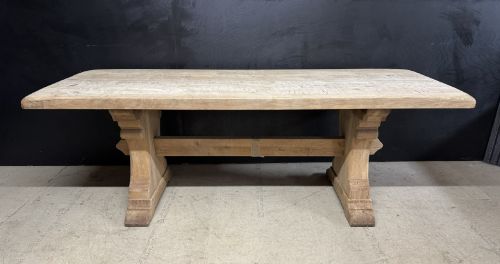
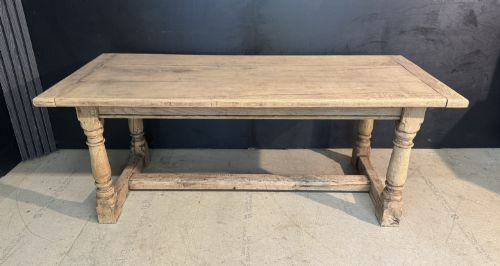
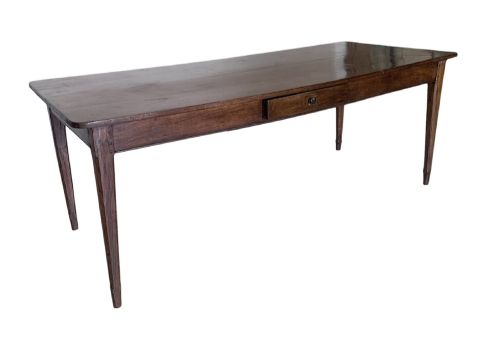
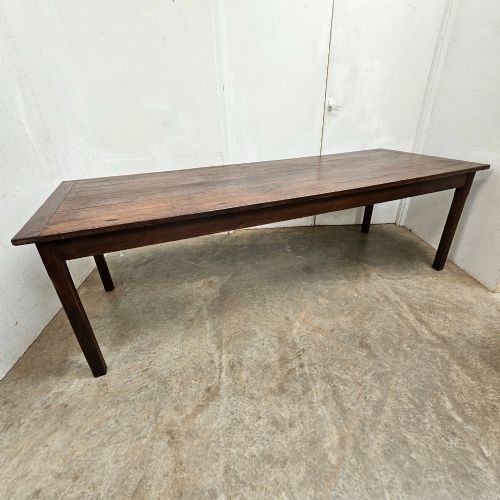
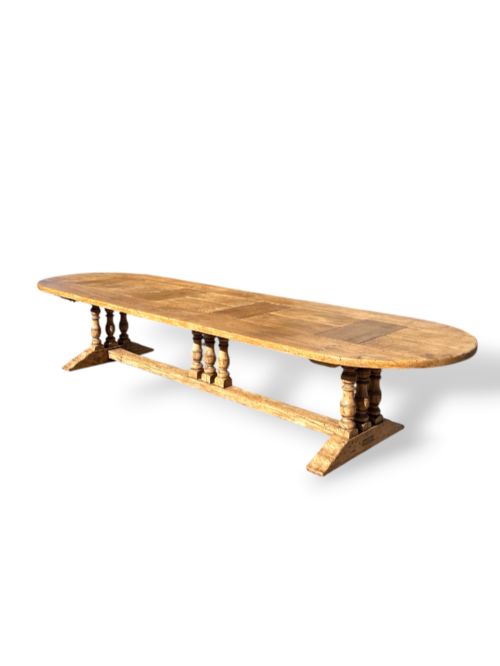
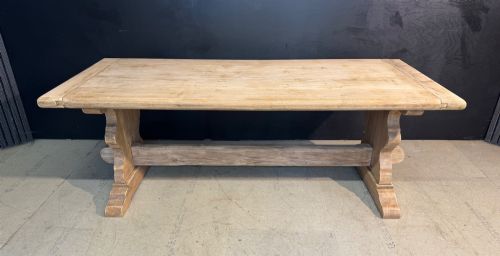
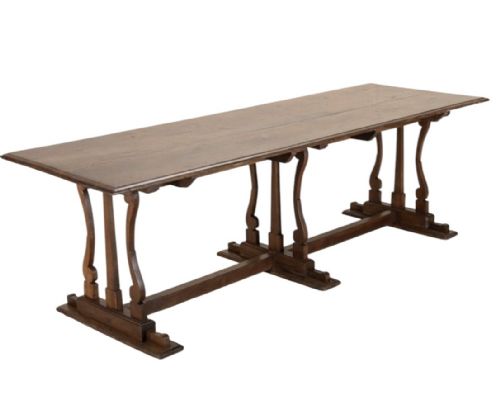
A large french oak dining table brings substantial seating capacity and rustic proportions to a dining space. These items include heavy refectory formats, farmhouse designs, and extending versions intended for daily communal use. Pieces seen here stretch across lengths reaching multiple metres to accommodate large gatherings comfortably.
The most common formats on this page reflect provincial domestic life and rural utility. Examples span nineteenth-century origins up through nineteen-twenties productions, often utilising bleached finishes or natural timber surfaces. The presence of side drawers, trestle supports, and gate leg mechanisms adds functional variety to the group.
Materials and construction methods
Construction relies heavily on solid oak, supplemented occasionally by fruitwood, pine, or walnut for specific components like plank tops and secondary framing. Joinery traditions emphasise stability, using thick timber boards joined to robust underframes, barrel legs, or trestle supports.
Surface treatments range from natural dark timber patinas to twentieth-century bleached oak finishes that lighten the visual weight of the wood. Iron brackets and fittings appear in select examples to reinforce joints and extend usability across long spans.
The listings span the nineteenth and early twentieth centuries, featuring solid oak, bleached oak, and fruitwood across refectory and farmhouse formats.
Distinctions in quality and execution
Quality separates pieces by the selection of timber and the integrity of the plank top construction. Superior examples utilise thick, stable oak boards with balanced grain patterns that maintain flatness across wide surfaces.
Execution shows in the refinement of the underframe, the proportion of the legs, and the subtlety of any carved details. Better items combine robust weight with balanced proportions, while simpler versions display heavier, unadorned utility.
The Large French Oak Dining Table Glossary
- Refectory table
- A long dining table historically used for communal meals in monastic or large domestic settings. These items are characterised by substantial length and heavy underframing.
- Bleached oak
- Timber treated to lighten its natural dark tone, creating a pale surface often seen on twentieth-century provincial furniture. This treatment preserves the grain while softening the colour.
- Vendange table
- A specific French harvest table traditionally used during grape-gathering seasons. These forms often feature narrower proportions or specific timber combinations.
- Draw leaf table
- An extending table equipped with leaves stored beneath the main top that pull out from each end. This mechanism increases surface area without removing the central section.
Large French Oak Dining Table: Frequently Asked Questions
How many people fit at these tables?
These large dining tables typically seat eight to twelve people comfortably depending on the overall length and leg placement. Refectory and farmhouse formats provide ample legroom along the sides.
Longer four-metre variations extend capacity further for large rooms. Benches or chairs fit easily beneath the open underframes.
What is a bleached oak finish?
Bleached oak involves treating the natural timber to achieve a lighter, paler appearance than traditional dark wood. This finish brightens the heavy grain of the oak.
Many examples from the early twentieth century utilise this style to fit lighter interior aesthetics. The underlying timber remains solid oak beneath the surface treatment.
Are these tables suitable for daily use?
These pieces are built from solid hardwood designed for heavy, continuous domestic service. The robust timber construction withstands regular family meals and gatherings.
Routine maintenance involves basic cleaning and care appropriate for historic wood surfaces. The sturdy underframes ensure stability over decades of daily dining.
How do refectory tables differ from farmhouse tables?
Refectory tables generally feature long, linear plank tops supported by trestles or heavy side stretchers derived from monastic dining traditions. Farmhouse tables often incorporate four legs, sometimes with storage drawers built into the apron.
Both styles utilise heavy oak timber but vary slightly in underframe geometry. Neither design compromises on overall length or seating capacity.