
19th Century French Pot
Choosing a 19th century french pot brings domestic utility and provincial character into modern rooms through glazed earthenware, heavy copper, and glass vessels.
19th Century French Pot
A 19th century french pot encompasses earthenware confit jars, copper preserving pans, and glass apothecary vessels originating from French workshops and provincial kitchens. These utilitarian objects served practical purposes for food storage, apothecary display, and household maintenance during the Victorian and later periods.
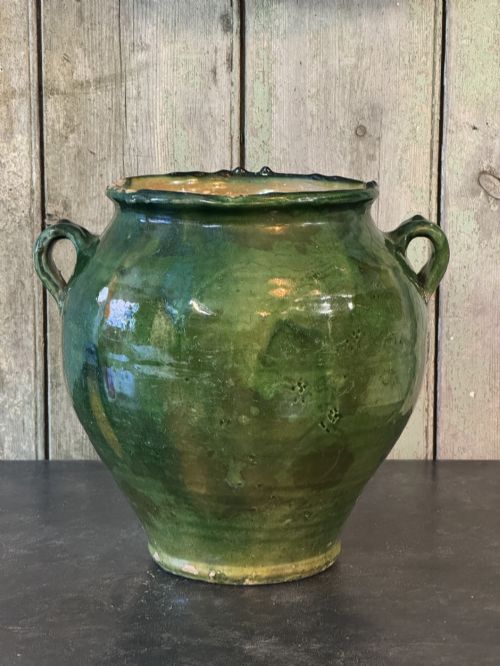
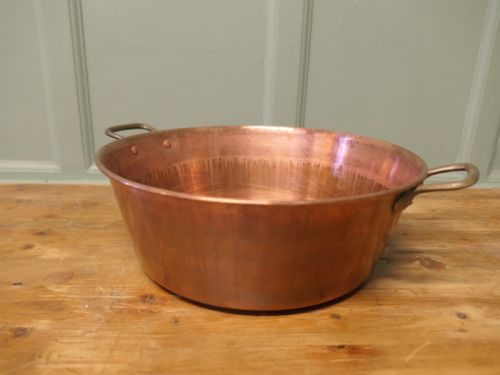
Confit pots dominate selections, displaying lead-glazed earthenware surfaces in green, red, or terracotta tones designed for storing preserved meats. Alongside these, glass apothecary jars and heavy copper jam pans appear frequently in archival and current selections.
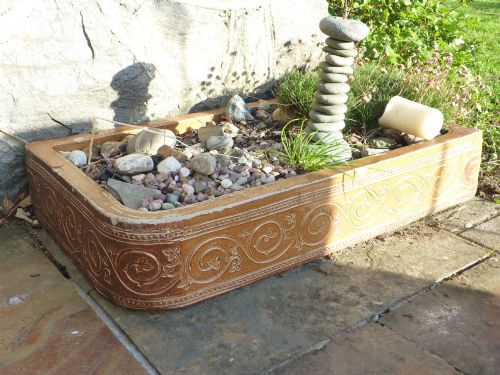
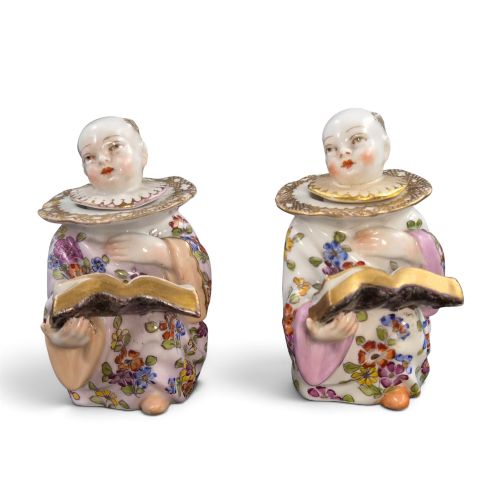
Regional variations span from Provençal terracotta jars with aged patina to salt-glazed window planter troughs and porcelain potpourri containers. Each item reflects the vernacular craftsmanship of 19th century French domestic life.
How they were made
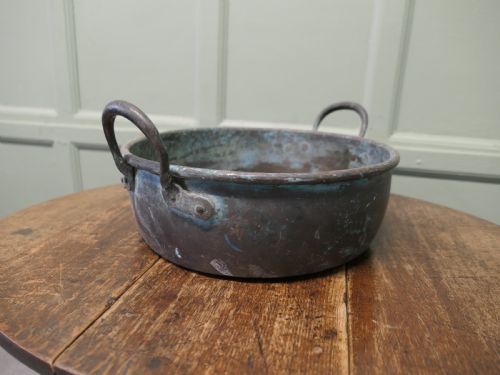
Earthenware and terracotta pots were thrown on wheels by regional potters, then partially or fully glazed in green, amber, or clear finishes to seal the porous clay. Copper preserving pans and saucepans were beaten from sheet metal, featuring folded rims and riveted handles designed for heavy kitchen use.
Glass apothecary jars and dressing table items utilised blown glass techniques, often paired with etched labels, enamel decoration, or gilt detailing. Cast iron and bronze components involved traditional sand casting methods, seen in garden urns, inkwells, and door handles.
Bronze snake door handles and emu inkwells bring unexpected wildlife into nineteenth century desk spaces.
What varies in quality
Quality depends upon the integrity of the original glaze, the weight of the metal, and the preservation of hand-finished details. Earthenware vessels with intact, even glazes and minimal kiln flaws sit at a different level from heavily weathered examples.
Copper pans vary according to metal thickness, handle attachment strength, and evidence of hand-beating marks. Glass apothecary jars diverge based on the crispness of acid-etched lettering and the depth of colour in amber, turquoise, or Bristol blue specimens.
Edmé Samson·Guichard Carriès
The 19th Century French Pot Glossary
- Confit Pot
- A traditional earthenware jar used in rural France for storing preserved duck or goose confit. These vessels typically feature two loop handles and partial green or yellow lead glazing.
- Ormolu
- Finely ground high-carat gold applied to a bronze base using a mercury amalgamation process. This technique gives decorative mounts a rich metallic lustre.
- Biot Jar
- A large terracotta storage vessel originating from the Provençal town of Biot. They were traditionally utilised for holding olive oil, water, or grain.
- Apothecary Jar
- A vessel designed to hold medicinal herbs, pills, or liquids in a pharmacy. 19th century examples frequently incorporate etched glass labels and ground glass stoppers.
- Jardiniere
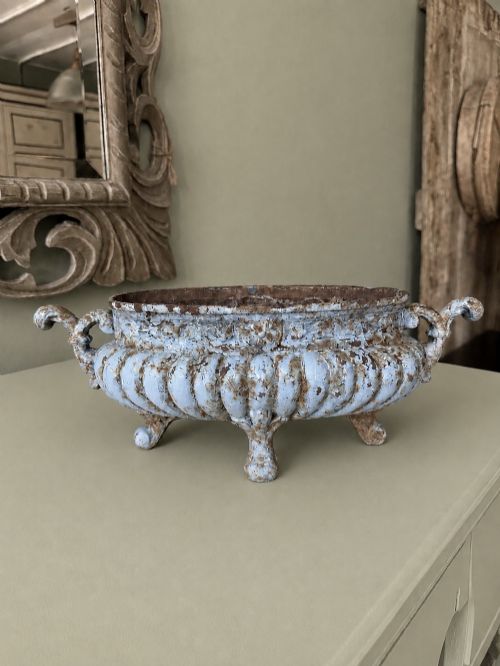
- An ornamental receptacle or stand for holding growing plants or flowers. These items appear in cast iron, ceramic, and ormolu during the 19th century.
19th Century French Pot: Frequently Asked Questions
What were confit pots used for?
Confit pots were utilised in French country kitchens to store preserved meats like duck or pork under a seal of fat. Their glazed interiors kept the contents secure during long periods in cool cellars.
Over time, these utilitarian storage jars found a second life as decorative planters and rustic interior accents.
How do I clean an antique copper pan?
Copper preserving pans require gentle cleaning with mild soap and warm water to preserve their historic surface patina. Harsh abrasive cleaners strip away the natural ageing accumulated over a century.
Displaying these pans involves simply keeping them dry and letting the metal age naturally in home interiors.
Are apothecary jars safe for liquids?
Nineteenth century apothecary jars were manufactured to hold dry medicines, herbs, or chemical compounds rather than modern drinking liquids. The historical glass and etched labels can degrade if exposed to frequent washing.
Displaying them empty on shelves or tables preserves both the glass and the delicate enamel or gilt detailing.
How can I date a terracotta pot?
Dating terracotta relies on observing tool marks, the consistency of the clay body, and the presence of natural wear or mineral deposits. Handmade 19th century examples often display subtle asymmetries from wheel throwing.
Comparing the patina and manufacturing traits against documented regional styles helps confirm the nineteenth century origin.