
19th Century French Nightstand
A 19th century french nightstand brings continental bedside storage to a room through varied revival styles and rich timber construction.
19th Century French Nightstand
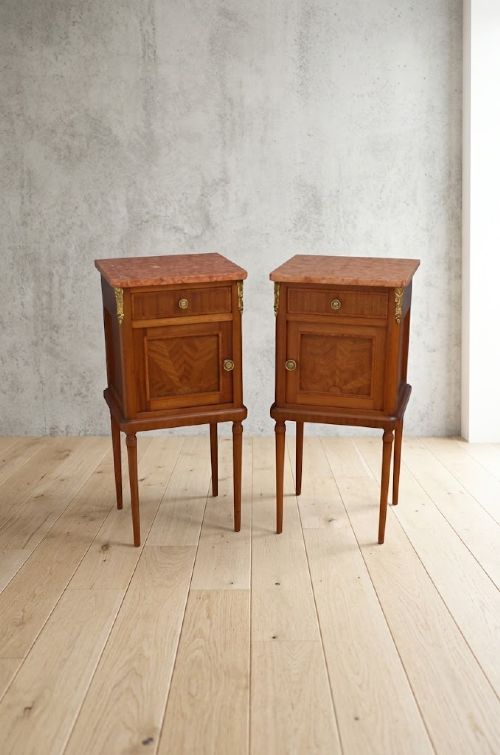
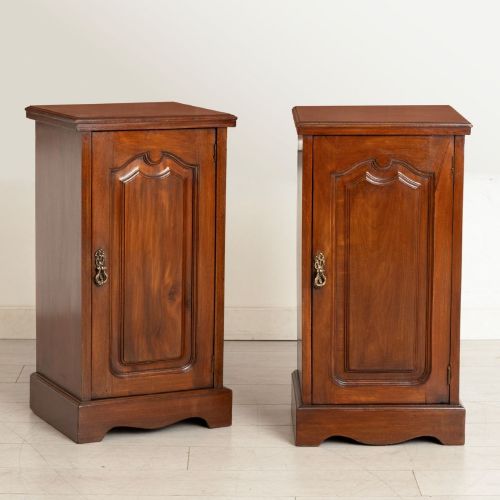
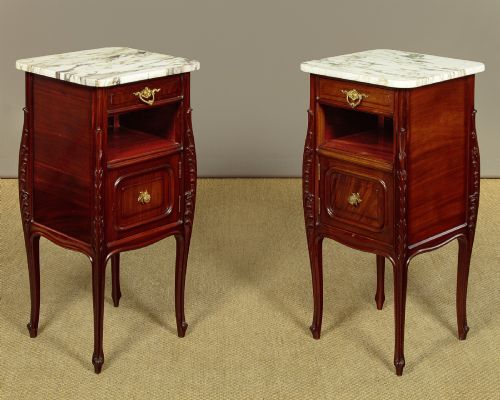
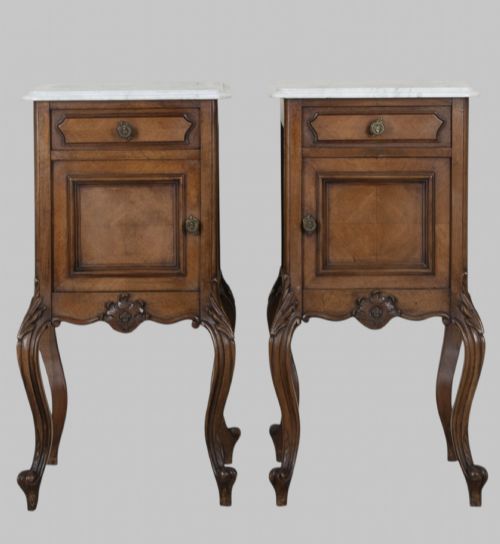
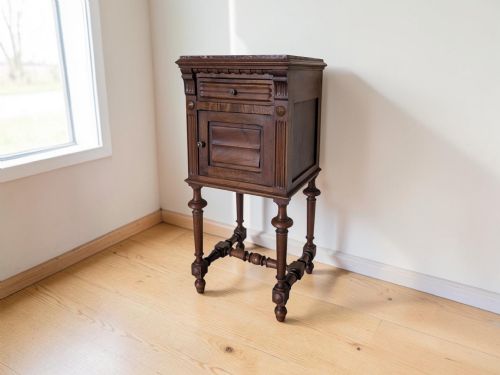
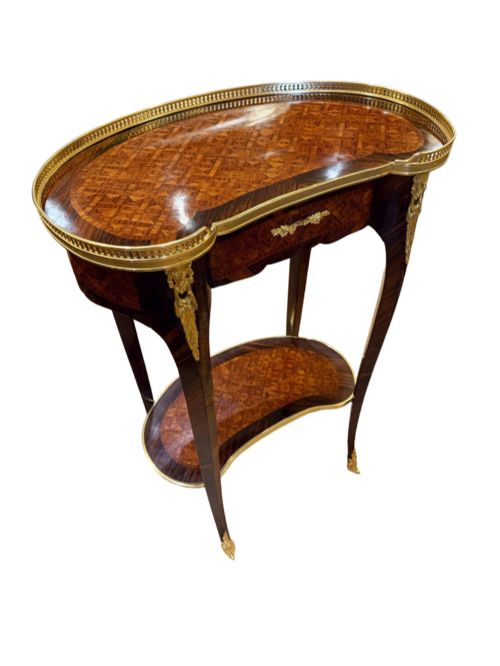
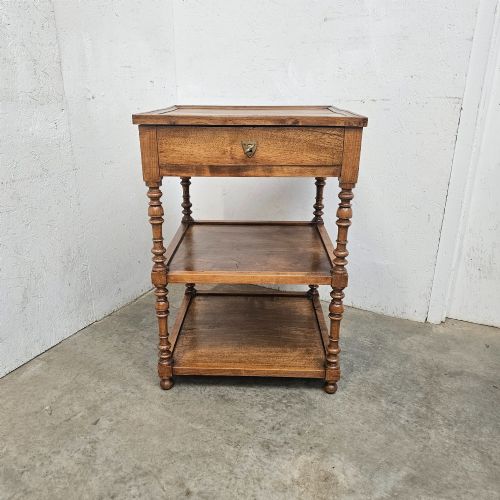
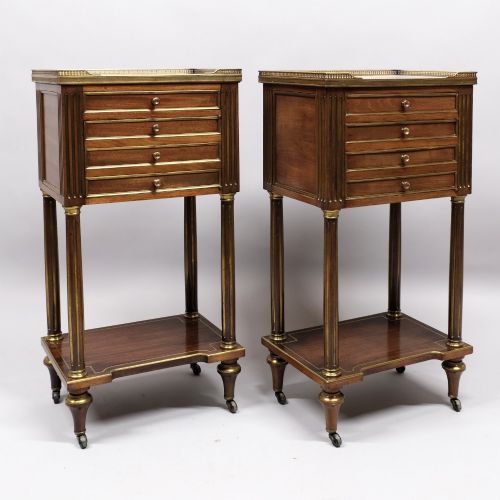
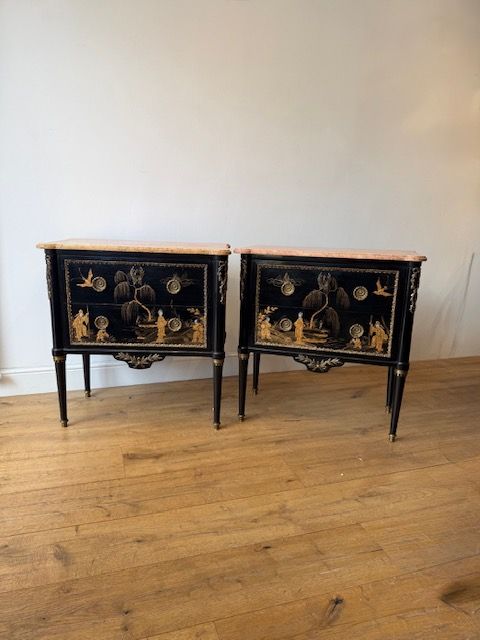
A 19th century french nightstand encompasses bedside tables, cabinets, and small commodes designed for French interiors across the nineteenth century. The selection leans heavily toward walnut, mahogany, and kingwood examples shaped by Louis XV and Louis XVI revivals, alongside Empire and Provincial designs.
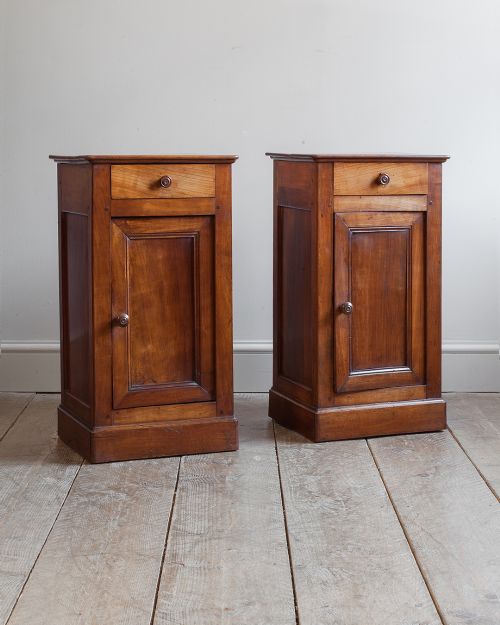
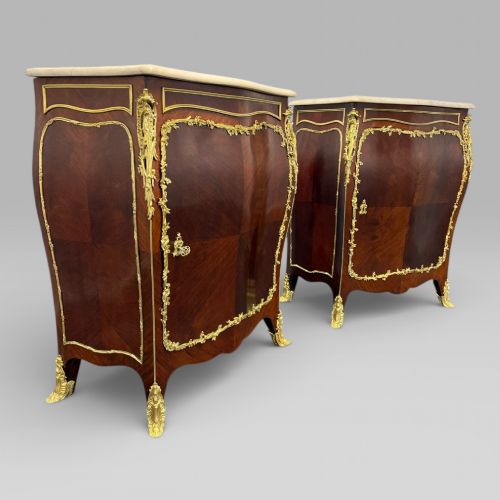
Forms range from simple single-door cupboards and open bedside tables to serpentine bombe chests and marble-topped cabinets. Many emerge as matched pairs, reflecting the domestic arrangements of the period.
The material palette embraces exotic timbers alongside cherrywood and oak, often paired with stone tops and gilt mounts. These pieces served practical bedside functions while displaying the decorative tastes of nineteenth-century cabinet makers.
How They Were Made
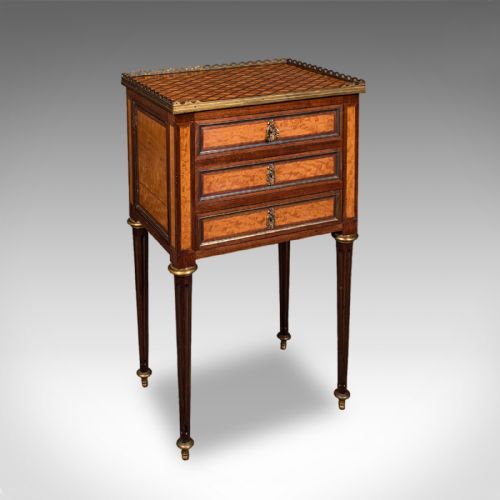
Cabinet makers utilised dense hardwoods like walnut, mahogany, and kingwood as carcase foundations, frequently applying intricate marquetry and parquetry patterns in contrasting timbers such as satinwood and rosewood.
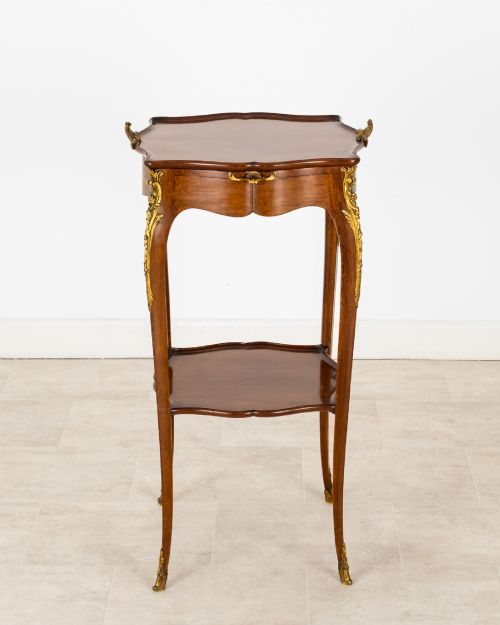
Marble slabs, particularly white and variegated varieties, were fitted to table tops to provide durable, decorative surfaces. Cast or chased ormolu and brass mounts edge corners, drawers, and handles.
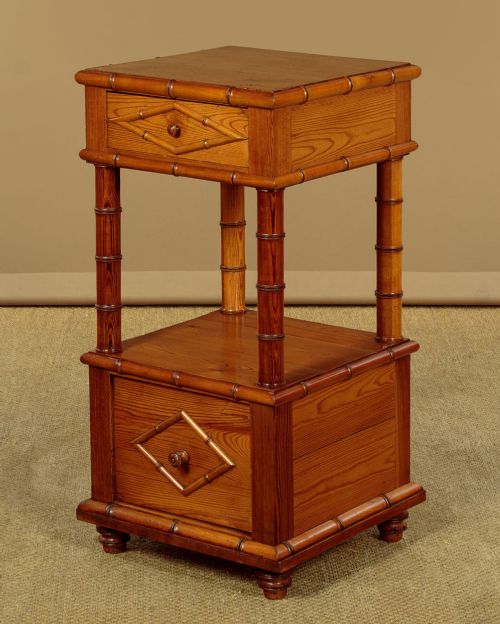
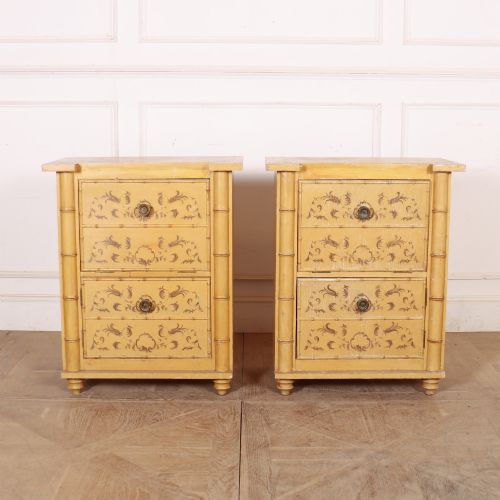
Structural elements incorporated turned legs, faux bamboo turnings, and brass detailing, uniting functional storage with decorative revival aesthetics.
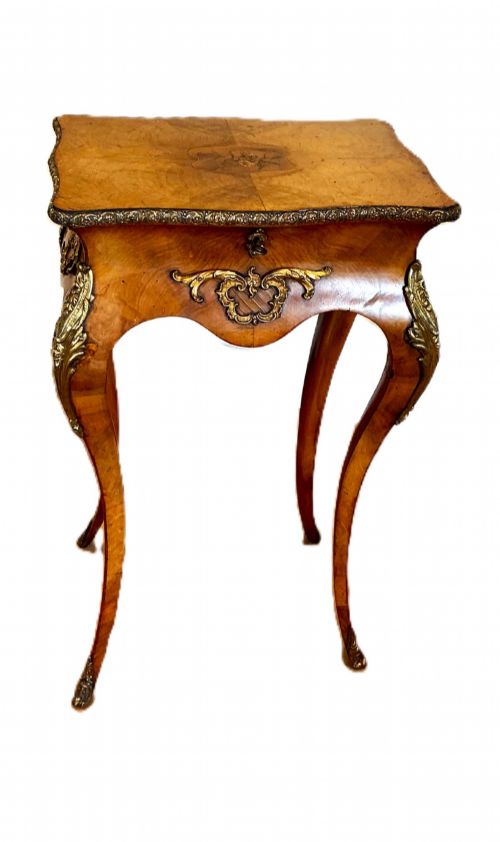
Some nineteenth-century tables cleverly disguise themselves as work tables or poudreuses until opened.
What Varies in Quality
The distinction between standard production and superior work rests on the precision of timber selection and inlay execution. Finer examples display meticulous matching of grain patterns in kingwood or walnut veneers across curved surfaces.
Mount quality separates baseline utility pieces from high-end commissions, with cast ormolu mounts showing sharper chisel work and heavier gilding compared to simpler brass pressings.
The integration of fitted marble tops and the fluidity of bombe or serpentine carcase shaping determine the refinement of the finished piece.
E. Kahn·François Linke
The 19th Century French Nightstand Glossary
- Bombe
- A swelling or outwardly curving convex shape used on the front and sides of furniture carcases, prominent in Louis XV revival pieces. This contour requires advanced woodworking skill to veneer successfully.
- Ormolu
- Gilded bronze mounts applied to furniture for decorative accent. The technique involves coating cast bronze with a mercury-gold amalgam and heating it to bond the gold.
- Marquetry
- The art of applying decorative veneer pieces of different woods, metals, or shells to a structure to form pictorial or geometric designs. It differs from parquetry through its more pictorial and flowing compositions.
- Parquetry
- Geometric wood inlay patterns such as cubes, lozenges, or chequers applied to a furniture surface. This technique creates structured, repeating surface textures.
- Petit commode
- A small chest of drawers or bedside cabinet. The term frequently applies to French decorative bedside pieces with multiple drawers or cupboard doors.
19th Century French Nightstand: Frequently Asked Questions
What is a 19th century french nightstand used for?
These small cabinets and tables provided bedside storage for personal items, chamber pots, and nighttime essentials in nineteenth-century bedrooms. Their enclosed cupboards and drawers kept utilitarian objects hidden from view.
Today, they function as bedside tables or occasional side storage units in living spaces and bedrooms, pairing compact footprints with decorative timber surfaces.
How do I identify Louis XV and Louis XVI styles?
Louis XV revival pieces, often associated with Rococo tastes, feature asymmetric curves, cabriole legs, and sweeping bombe contours. Ormolu mounts on these items emphasise natural, flowing lines.
Louis XVI revival pieces introduce neoclassical restraint, displaying straight tapered legs, fluted columns, and geometric parquetry patterns. The overall silhouette shifts from curving grace to structured symmetry.
Are these pieces usually found in pairs?
Many bedside cabinets and tables from this period survive as matched pairs, intended originally to flank a double bed in a substantial French bedroom. These matched sets remain sought after for symmetrical bedroom placement.
Single pieces also appear frequently, often functioning as standalone occasional tables, side cabinets, or isolated bedside stands.
What wood types are common?
Walnut and mahogany form the foundation of many nineteenth-century pieces, offering rich dark tones and dependable structural strength. Kingwood, rosewood, and satinwood appear frequently as decorative veneers.
Regional and provincial examples incorporate cherrywood, pine, and painted finishes, reflecting local material availability across different French departments.