


19th Century Flower Art
19th century flower art brings botanical study and vibrant floral still life painting into domestic spaces through watercolours, oils and decorative objects.
19th Century Flower Art
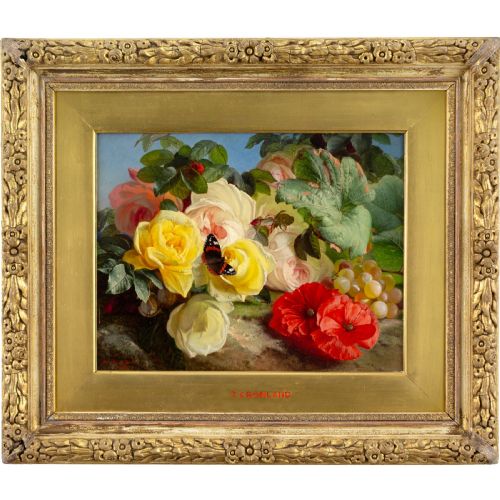
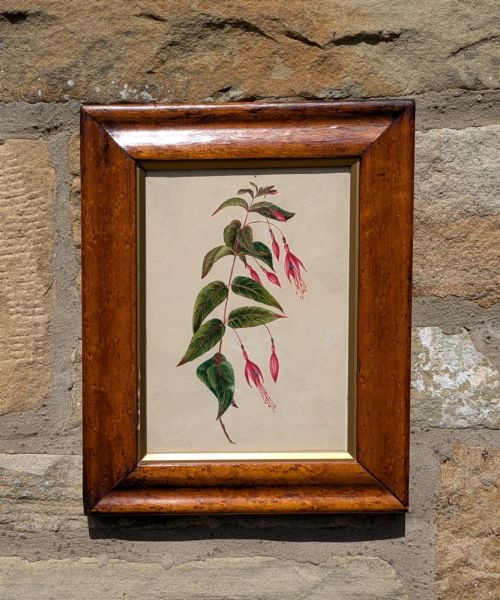
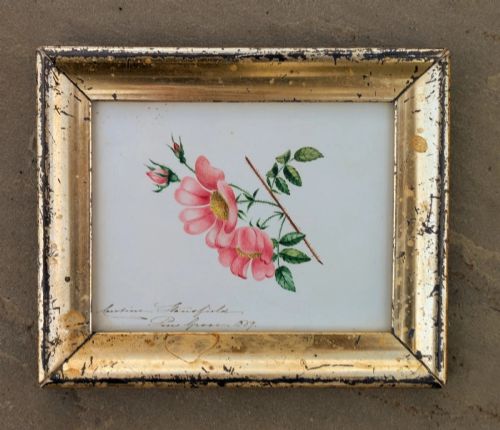
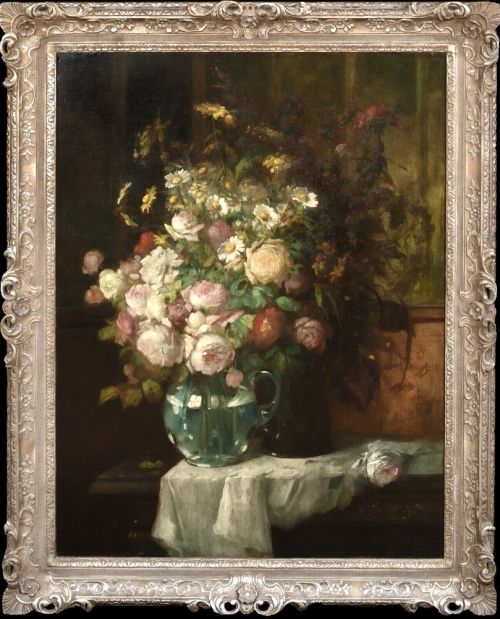
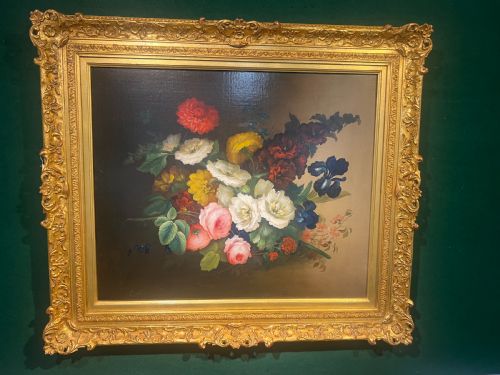
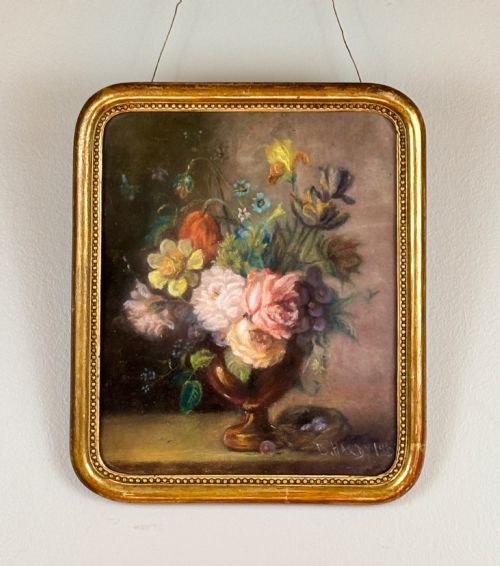
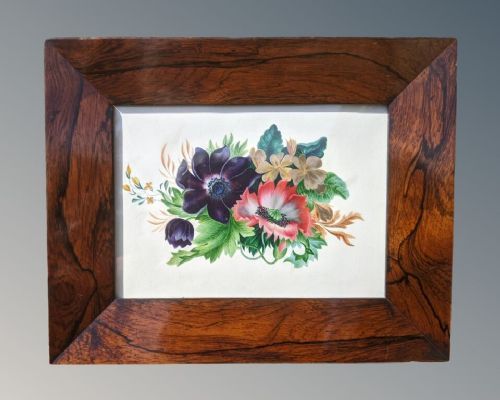
Buyers examining 19th century flower art encounter a rich variety of works spanning delicate watercolours, detailed botanical specimens and bold oil paintings on canvas and board. These pieces capture floral subjects through Victorian realism, Regency study, and impressionist techniques.
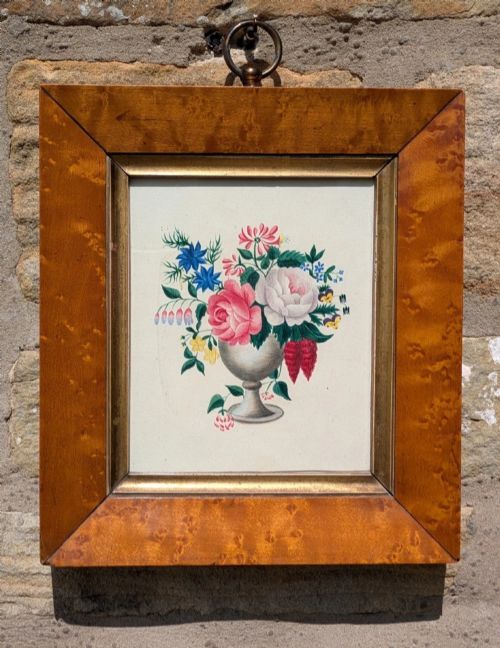
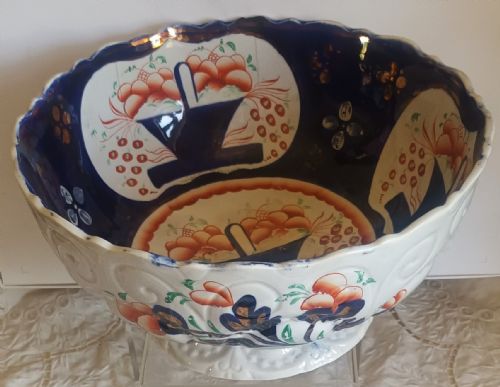
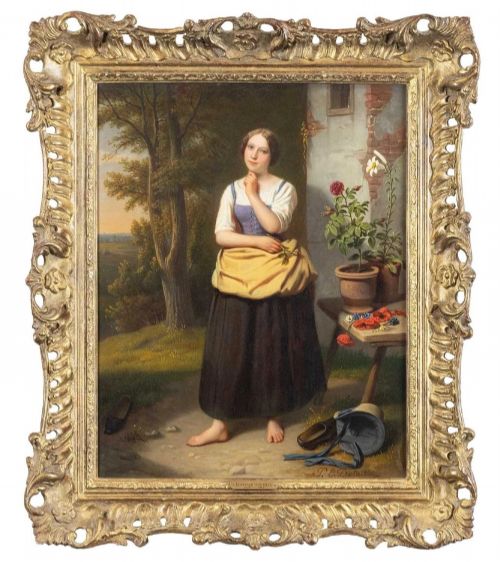
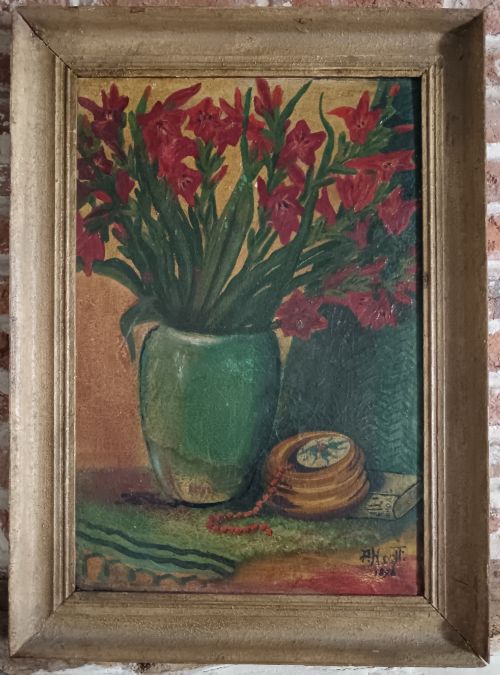
The selection ranges from intimate paper studies of single blooms to large still life arrangements and decorative vessels such as vases and pottery bowls adorned with floral motifs. Portraits from the period frequently incorporate wild or cultivated flowers into the compositions.
Originating across Britain, Europe and Japan, these pieces reflect a period of intense fascination with botany, nature and decorative arts. The most common survivals on this page are framed watercolours and oil paintings depicting roses, pansies and mixed garden bouquets.
Materials and methods
Artists and makers of this era worked primarily with oil paint on canvas or board, and watercolour or gouache on paper, often framing the completed works in ornate gilt wood. Decorative objects utilise glass, pottery, carved walnut and copper.
Techniques range from precise botanical observation using watercolours to expressive impressionist brushwork in oils. Cut paper pictures, herbarium displays and cloisonne work demonstrate the diverse craft traditions applied to floral themes during the century.
A delicate bone heart trinket box carries inked flowers and secret lovers on the reverse.
Distinctions in quality
Quality in these pieces rests upon the surety of the draughtsmanship, the handling of colour, and the preservation of the medium, whether dealing with the crisp detail of a botanical watercolour or the depth of an oil painting. Finer works display careful observation of light and botanical structure rather than mechanical repetition.
The sophistication of the framing, the integrity of the canvas or paper support, and the distinction of the maker or school elevate certain examples above standard decorative output.
Theude Gronland·Konstantin Stoitzner·Edwin Steele·Alice Anne Renshaw·Harry Wanless·Henrietta Creswell·Edward Ladell·Kralik glassworks·Sir George Reid·Henry Schouten·James Stuart Park·Emily Selinger
The 19th Century Flower Art Glossary
- Botanical watercolour
- A precise watercolour painting executed for scientific record or aesthetic appreciation of plant species. These works focus on accurate depiction of leaves, stems and petals.
- Still life
- A painting or drawing depicting inanimate subject matter, typically featuring cut flowers in vases, fruit or household vessels. It allows artists to explore light, shadow and composition.
- Gilt wood
- Wood carved and coated with a thin layer of gold leaf or gold paint. This technique was widely used for ornate period picture frames.
- Gouache
- An opaque watercolour paint consisting of pigment and a binder such as gum, sometimes combined with watercolour in nineteenth-century works to achieve dense colour and highlights.
19th Century Flower Art: Frequently Asked Questions
How do I display antique floral paintings safely?
Keep watercolours and works on paper away from direct sunlight to prevent fading of the pigments over time. Maintain stable room temperatures to protect the paper supports and antique frames.
Ensure heavy oil paintings are securely hung using appropriate wall fixtures suited to the weight of the timber frames. Avoid damp environments which can damage canvas and wood.
What is the difference between botanical art and floral still life?
Botanical art historically focuses on the scientific accuracy and identification of plant species, often showing roots, stems and individual flower parts in detail. It serves an instructional as well as an aesthetic purpose.
Floral still life arranges cut flowers primarily for artistic composition, exploring colour harmony, light and shadow within a domestic or studio setting.
How can I tell a watercolour from a print?
Examine the surface of the work under magnification to look for the distinct brush strokes and pooled pigment characteristic of hand-applied watercolours. Prints will typically show dot matrices or uniform ink patterns.
Watercolour paper often exhibits indentation from the artist's brush or plate marks, and the paint sits physically upon the surface rather than absorbing uniformly like a modern reproduction.