


Victorian Floral Illustration
These Victorian floral illustration pieces bring nineteenth-century botanical studies and still-life paintings into domestic interiors with delicate pigments and careful framing.
Victorian Floral Illustration
Victorian floral illustration encompasses original watercolours, engravings, and framed prints depicting flowers, still lifes, and botanical studies. These works primarily date from the nineteenth century, capturing a period of intense interest in natural history and decorative botanical art.
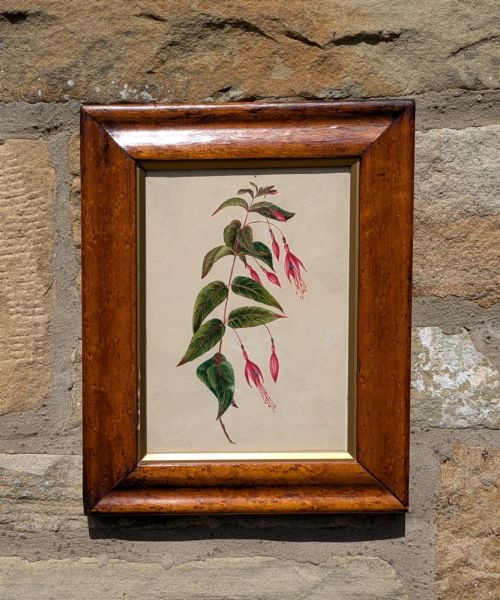
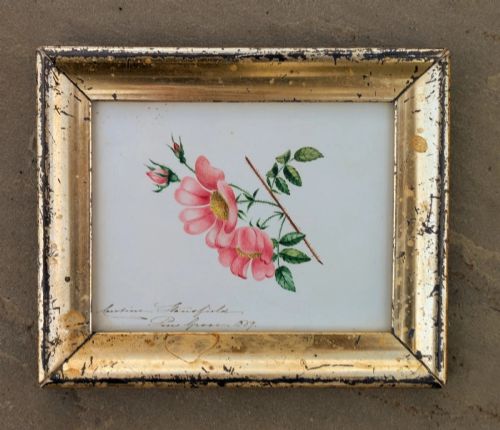
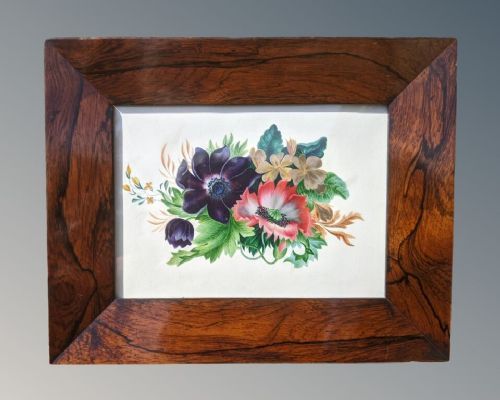
Buyers encounter subjects ranging from wild roses, fuchsias, and pelargoniums to intricate compositions featuring vases, baskets, and insects. Most examples on this page are executed in watercolour paint on paper, often housed within period frames such as rosewood or gilt wood.
The selection includes individual paintings alongside framed sets of engravings and botanical prints. Pieces span from the mid-nineteenth century into the early twentieth century, reflecting enduring styles from the Victorian and Edwardian eras.
How they were made
Artists created these works primarily using watercolour pigment on paper, applying fine washes and detailed brushwork to render petals, leaves, and stems with botanical precision. Engravings offered an alternative method for producing multiple botanical plates, often accompanied by hand-colouring to delineate plants and insects.
Finished works were typically mounted and protected beneath glass within timber surrounds, such as rosewood frames or gilt wood mouldings. These housings served to preserve the delicate paper and pigments from atmospheric moisture and handling over generations.
Several artists clearly found botanical accuracy secondary to sneaking an observant caterpillar into the flower arrangement.
What varies in quality
Quality in a Victorian floral illustration rests upon the precision of the brushwork and the artist's ability to capture the natural structure of the botanical subject. Works by named painters exhibit superior handling of light, shade, and colour harmony compared to anonymous student pieces.
The preservation of the original paper and pigment vibrancy distinguishes finer examples. Intact period framing in materials like rosewood or gilt wood further elevates the integrity of the piece.
Henrietta Creswell·William Hough·Eloise Harriet Stannard·Jabez Bligh·Charlotte Isa James·John Curtis·Annie Mary Youngman·Arthur H Buckland·Minnie Smythe
The Victorian Floral Illustration Glossary
- Watercolour
- A paint consisting of pigment suspended in a water-based solution. This medium allowed artists to achieve translucent washes and delicate botanical detail on paper.
- Engraving
- A printmaking technique where an image is incised onto a metal plate holding ink. These plates produced crisp botanical lines that were frequently hand-coloured.
- Botanical
- A representation focused on the accurate depiction of plant species. These illustrations served both scientific record and home decoration during the nineteenth century.
- Gilt Wood
- Timber coated with a thin layer of gold leaf or gilt finish. This material was commonly utilised for formal picture frames in the Victorian period.
Victorian Floral Illustration: Frequently Asked Questions
What subjects appear in these illustrations?
The works depict botanical studies, floral still lifes, and arrangements of flowers such as roses, fuchsias, and pelargoniums. Many compositions incorporate vessels like jugs and baskets alongside natural elements.
Some botanical prints also feature insects paired with specific plants to create detailed scientific and decorative plates.
How should I display watercolour art?
Watercolours require careful placement away from direct sunlight to prevent the pigments from fading over time. Maintaining stable indoor humidity protects both the paper support and the surrounding frame.
Displaying these pieces behind glass shields the delicate surface from dust and accidental marks in domestic settings.
Are these pieces original works?
The selection includes both unique hand-painted watercolours and printed works such as nineteenth-century engravings. Original paintings feature direct brushwork by artists recorded in the titles.
Printed items are produced via engraving techniques, sometimes enhanced with hand-applied colour to highlight the botanical details.
What periods do these pieces represent?
The inventory spans the nineteenth and early twentieth centuries, capturing Victorian and Edwardian aesthetic preferences. Dates range from the mid-nineteenth century through to the nineteen-thirties.
This timeline reflects the evolution of botanical illustration from scientific recording towards decorative domestic art.