





19th Century Floral Watercolour
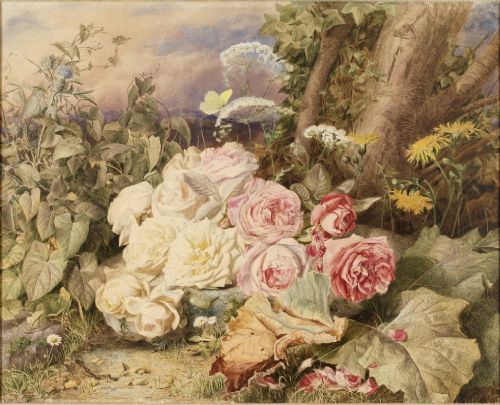
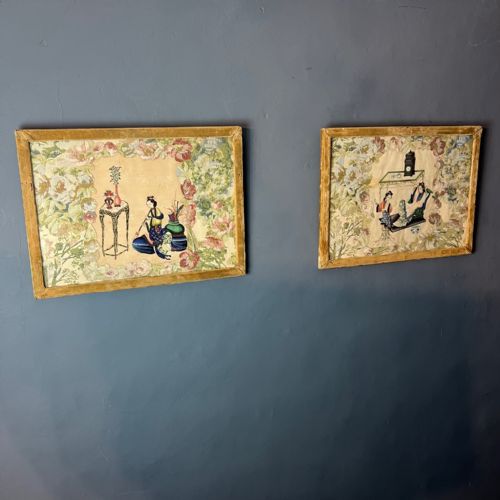
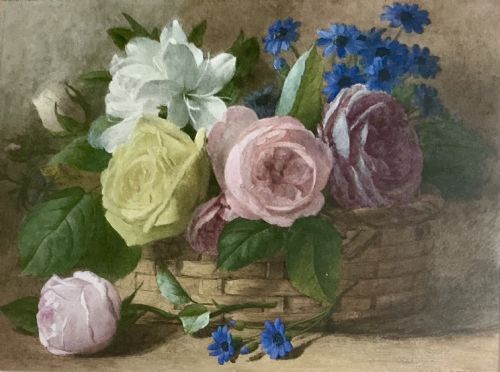
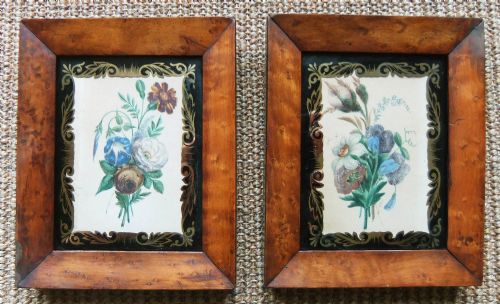
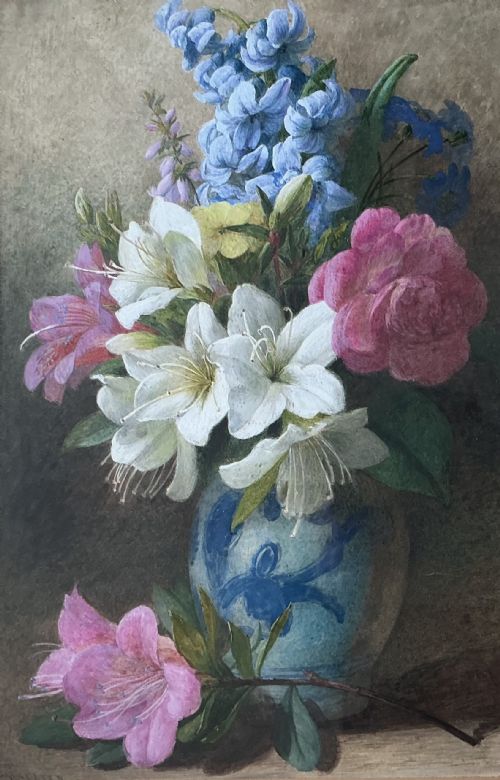
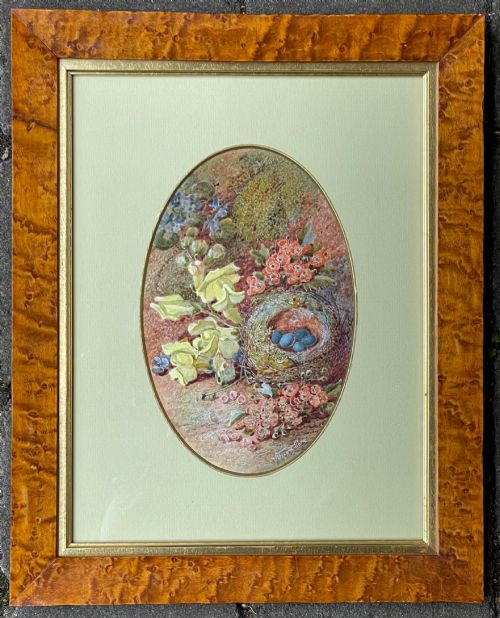
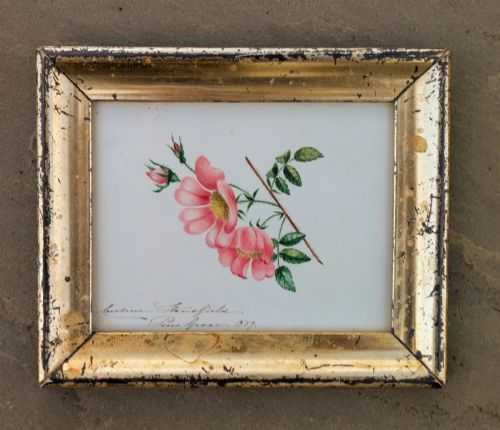
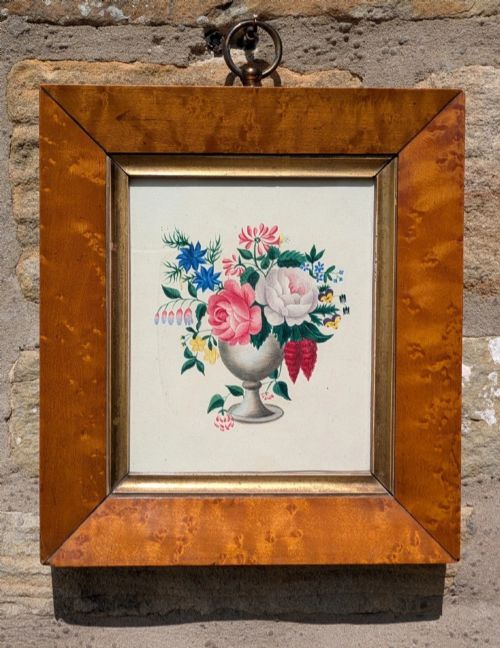
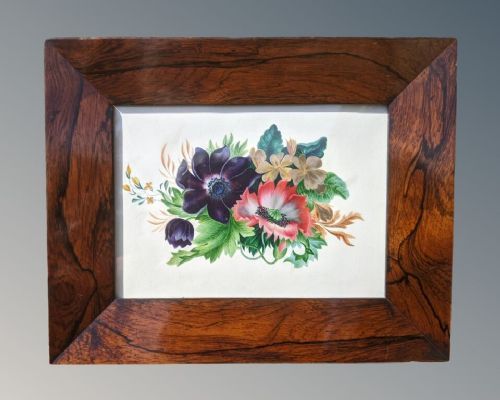
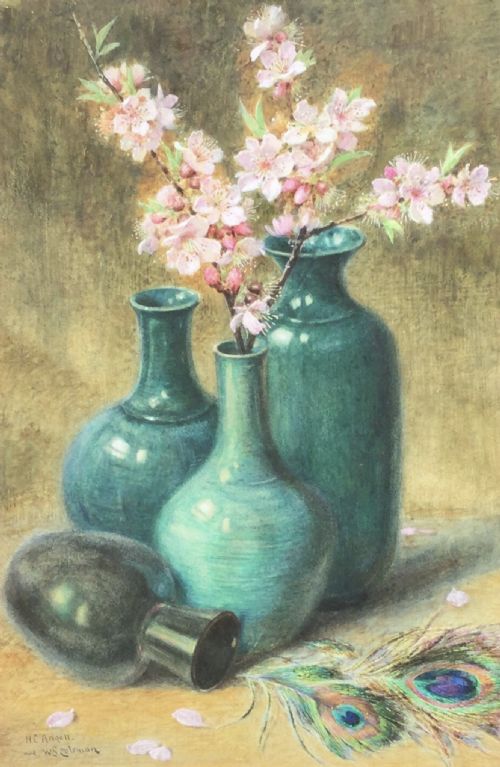
These are 19th century floral watercolour pieces, capturing botanical studies and garden still lifes on paper to bring botanical detail into interiors.
19th Century Floral Watercolour
A 19th century floral watercolour represents the Victorian and Regency interest in botany, gardens, and naturalism through delicate pigments on paper. Buyers encounter single floral studies of roses, fuchsias, and pansies alongside complex still life arrangements.
The objects on this page span from Regency origins through the Victorian period to the turn of the century. They appear framed behind glass in wood or gilt wood frames, often preserving original mounts and signatures from English regional and school artists.
How they were made
Artists painted these works using watercolour paint and gouache on paper supports, occasionally incorporating pencil underdrawing to map out botanical specimens. Selected pieces add gold leaf highlights to enhance the illumination of petals and leaves.
Finished paintings were set behind protective glass and housed within wooden or gilt wood frames designed to complement domestic interiors of the period.
19th Century Floral Watercolour Retail Price Guide 2026
Typical asking prices for 19th century floral watercolour among the pieces listed under this phrase on Sellingantiques today, from the lower quarter to the upper quarter. They describe what is for sale here now, not the wider market.
Listings include works from the Regency period through the Victorian era to 1900, executed in watercolour, gouache, and pencil on paper.
What varies in quality
Quality rests upon the precision of botanical observation and brushwork control, distinguishing skilled naturalism from simpler decorative efforts. The finest examples capture the translucency of petals and the accurate structure of leaves with confident pigment application.
The preservation of the paper support and the vibrancy of the original watercolour and gouache pigments determine the visual impact of each piece. Intact period frames and clear artist signatures or attributions further elevate an individual work.
Vincent Clare·Catherine Thomas·Alice Anne Renshaw·Harry Wanless·Henrietta Creswell·Arthur Hopkins·William Hough·Grace Hastie·Marian Chase·David Woodlock·Annie Mary Youngman·John Sherrin·Alfred Parsons·Helen Cordelia Angell·William Stephen Coleman
The 19th Century Floral Watercolour Glossary
- Watercolour
- A paint consisting of a pigment suspended in a water-soluble vehicle, used on paper to create translucent washes of colour.
- Gouache
- An opaque watercolour paint containing pigment mixed with a binding agent, applied to add solid highlights and dense detail.
- Botanical study
- A meticulous representation of plant life, focusing on accurate scientific depiction of flowers, leaves, and stems.
- Victorian Naturalism
- An artistic movement emphasising detailed, unidealised observation of the natural world and flora.
- Gilt wood
- Wood coated with a thin layer of gold leaf or gilt paint, commonly used for period picture frames.
19th Century Floral Watercolour: Frequently Asked Questions
How should I display a watercolour?
Keep works away from direct sunlight to prevent the watercolour pigments and paper from fading over time.
Hang them on interior walls where humidity and temperature remain stable to protect the paper and frame.
Are these works signed by artists?
Several pieces feature original artist signatures or attributions to named painters of the period.
Others originate from English school studies or regional makers whose names are recorded in the title.
What frames do these pieces have?
Many retain their period wooden or gilt wood frames, often preserved behind protective glass.
These frames complement the Victorian and Regency aesthetic of the paintings.
How do I identify a Victorian piece?
Look for the characteristic botanical focus, naturalistic floral arrangements, and traditional paper supports typical of the nineteenth century.
Stylistic elements like Victorian naturalism and the use of gouache alongside watercolour help distinguish the era.