


19th Century Flap Table
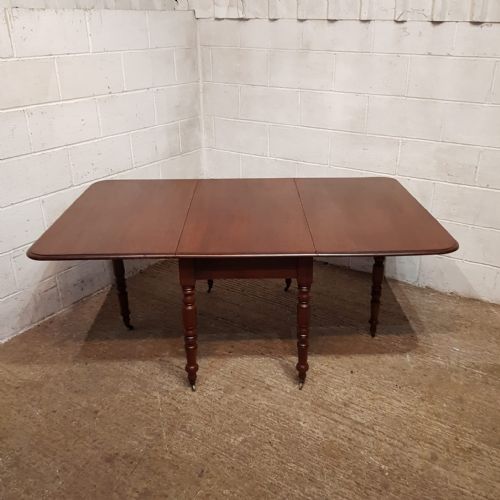
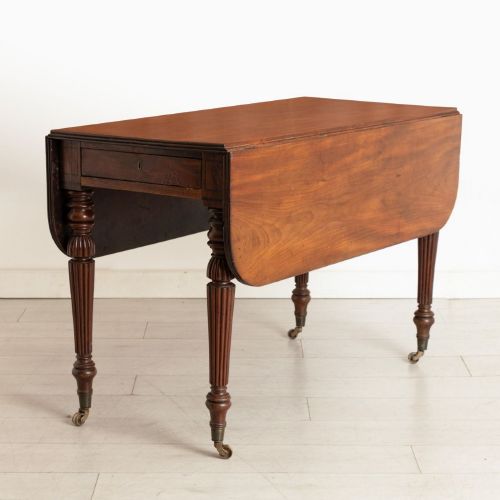
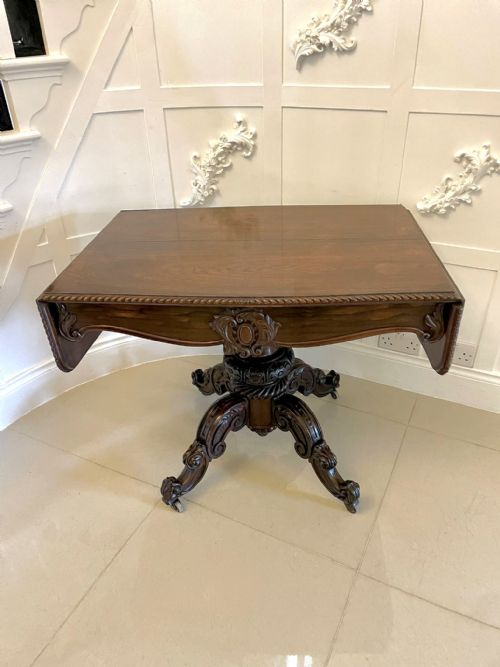
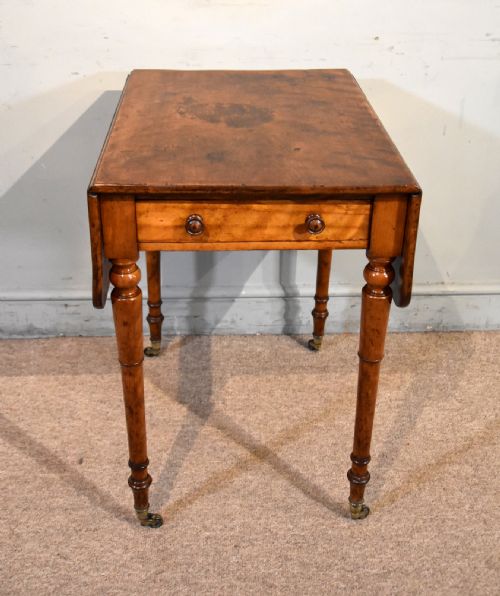
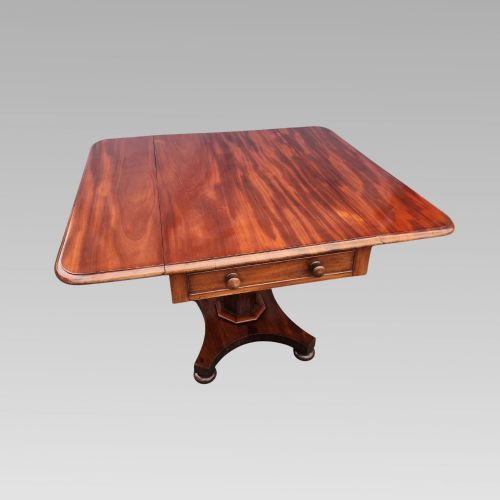
These pieces known as a 19th century flap table offer folding leaves for adaptable rooms, spanning dining, pembroke and sofa forms.
19th Century Flap Table
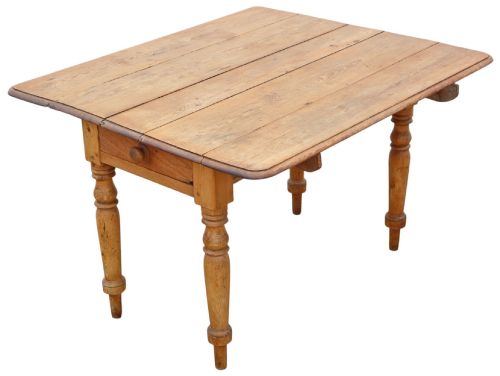
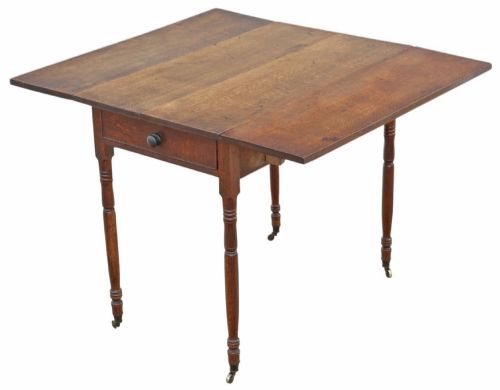
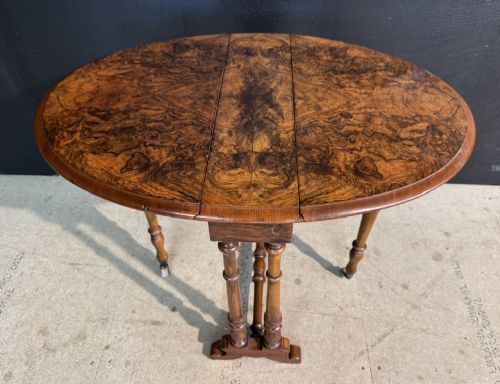
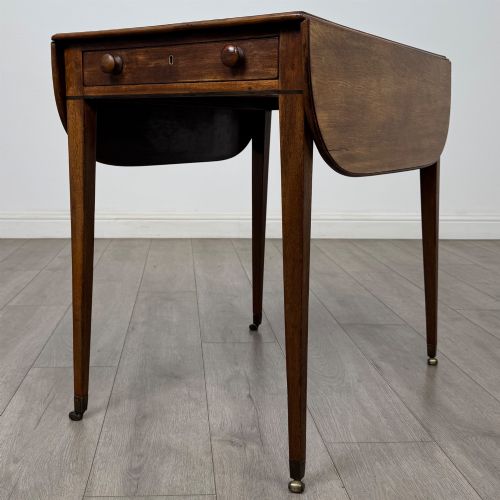
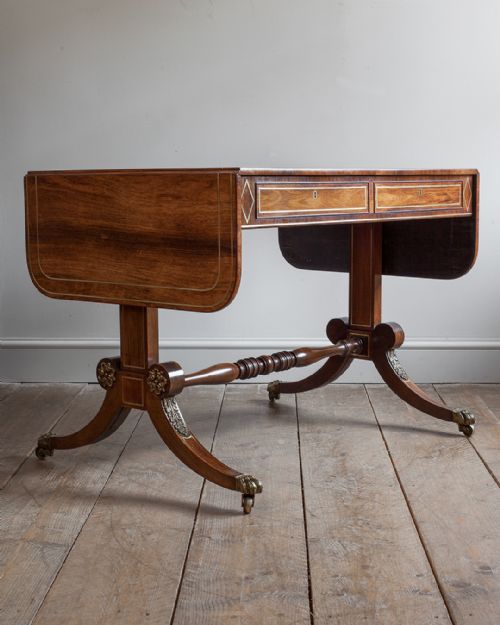
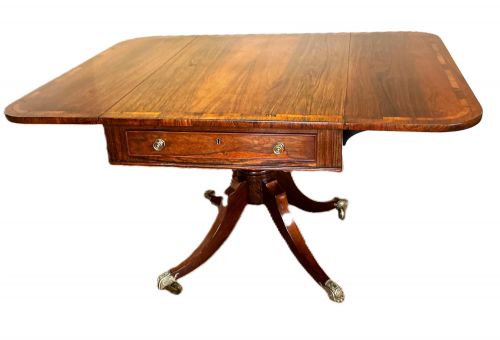
When you search for a 19th century flap table, you encounter diverse forms created for dining, occasional use, and needlework, including pembroke tables, sofa tables, and gateleg dining tables. These pieces span Georgian, Regency, William IV, and Victorian periods, reflecting shifting interior layouts where folding leaves saved space.
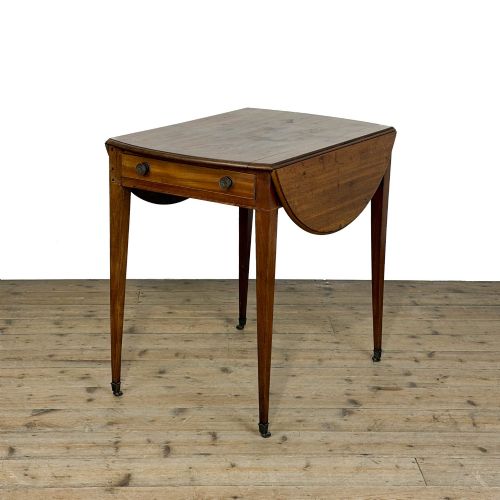
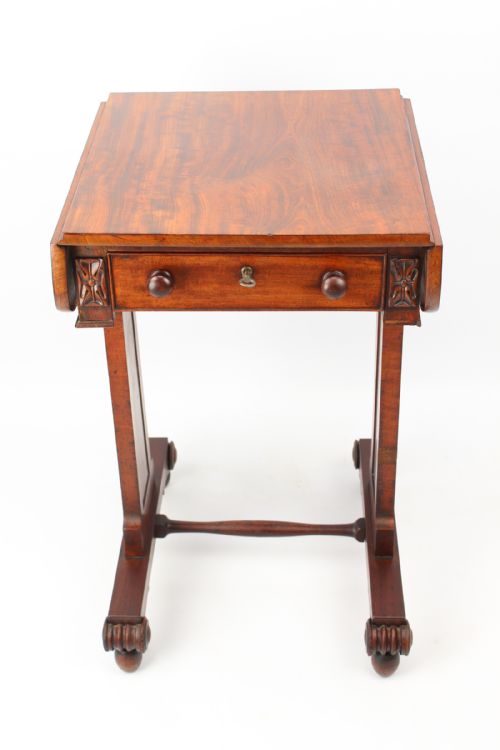
The version you are most likely to meet on this page is the mahogany pembroke table or drop-leaf dining table, frequently fitted with a single drawer or dummy drawer fronts. Alongside formal mahogany and rosewood examples, country pieces in pine, oak, and elm appear regularly, alongside occasional satinwood, walnut, and cherry variants.
Materials and Construction
Cabinet makers utilised dense hardwoods such as mahogany and rosewood, often displaying figured grain patterns on the table tops and drop flaps. Softer timbers like pine, oak, and elm were employed for kitchen and country pieces, constructed with sturdy gateleg or Pembroke pivoting bracket supports.
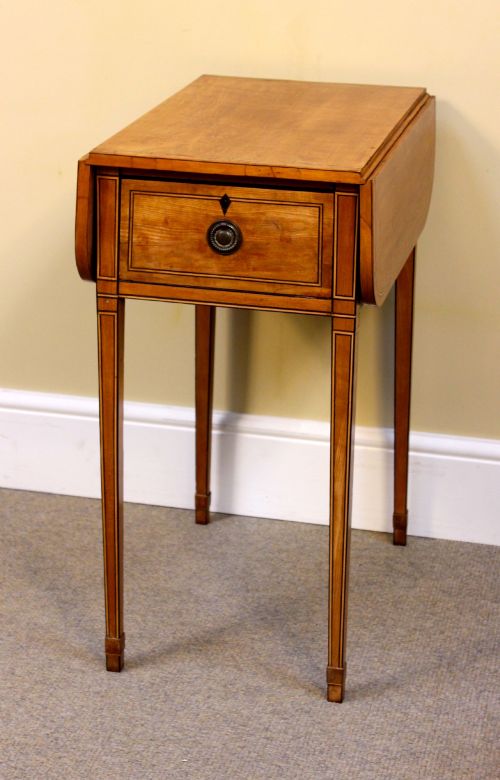
Detailing on finer examples includes brass castors, ebony stringing, and marquetry inlay, whilst structural stability relies on disciplined joinery suited to folding leaves.
Listings feature mahogany, rosewood, burr walnut, pine, and satin birch across Pembroke, sofa, and gateleg forms.
Gradations of Quality
The distinction between ordinary and superior pieces rests on the choice of timber and the precision of the drop-flap hinges and pivoting supports. Finely figured mahogany or burr walnut veneers paired with original brass castors indicate a higher workshop standard.
Proportion and restraint in carving also define the range, distinguishing utilitarian kitchen tables from refined library or sofa tables designed for formal reception rooms.
Johnstone and Jeanes·Liberty and Co
The 19th Century Flap Table Glossary
- Pembroke table
- A small occasional or dining table featuring two hinged flaps on opposite sides and a central drawer. It gained popularity during the 18th and 19th centuries for flexible room usage.
- Sofa table
- A rectangular occasional table designed to stand in front of a sofa, characterised by drop flaps at each end and often twin pedestal supports. These emerged strongly during the Regency and Victorian periods.
- Drop-leaf table
- A table with a fixed centre section and hinged leaves that fold down when not in use. They provide space-saving utility across kitchen and dining environments.
- Gateleg table
- A drop-leaf table where the leaves are supported by hinged legs that swing out like a gate. This construction offers robust support for larger dining surfaces.
19th Century Flap Table: Frequently Asked Questions
What is a pembroke table?
A pembroke table is a compact form featuring drop flaps on two opposing sides and typically a single drawer beneath the top. It serves as a versatile piece for writing, breakfast, or occasional placement.
Cabinet makers of the Georgian and Victorian eras produced these in mahogany, satinwood, and rosewood for flexible domestic use.
How do sofa tables work?
Sofa tables are long, narrow tables originally placed behind or beside a sofa, equipped with short drop flaps on either end. They often incorporate trestle bases or twin pedestals joined by a stretcher.
Regency and Victorian makers utilised fine veneers and brass details, making them suitable for display and writing.
Were drop leaf tables for dining?
Larger examples functioned as principal dining tables in homes where space required furniture to be cleared away or folded down against walls. Gateleg and pembroke formats provided extended surfaces when needed.
Sturdy timbers like oak, mahogany, and pine supported daily household meals.
How do I date a 19th century table?
Dating relies on stylistic shifts from Georgian restraint through Regency classical lines to heavier Victorian carving, alongside the specific timber choices and hardware like brass castors. Secondary woods inside drawers also offer clues to the period.
Construction methods transition from hand-sawn elements to early machine assistance as the century progresses.