


Victorian Gateleg Dining Table
These Victorian gateleg dining table options offer folding leaves and sturdy legs, bringing useful surface area and period charm to everyday dining.
Victorian Gateleg Dining Table
A victorian gateleg dining table is a folding table designed to expand for meals and drop its leaves to save space when not in use. Buyers search for these pieces to bring nineteenth century character and flexible surface space into a modern dining room or kitchen.
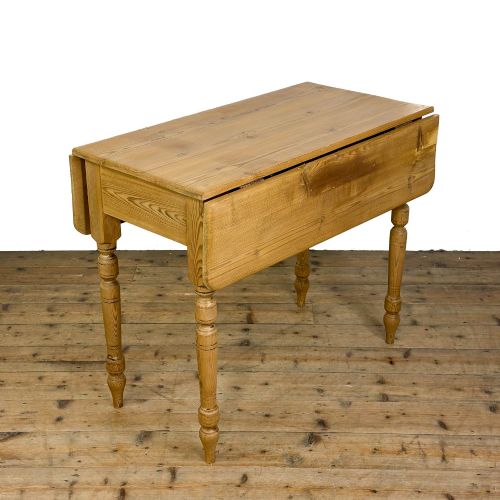
The versions most commonly met on this page include drop leaf dining tables and oval gateleg forms, alongside related folding tables in oak, mahogany, and walnut. These examples span the nineteenth century, including pieces from the eighteen fifties, eighteen sixties, and eighteen eighties.
Makers of the period built these tables for practical utility, often pairing drop leaves with gateleg supports or bobbin turned legs. They appear in styles ranging from rustic country to Jacobean revival and Regency influences.
Materials and construction
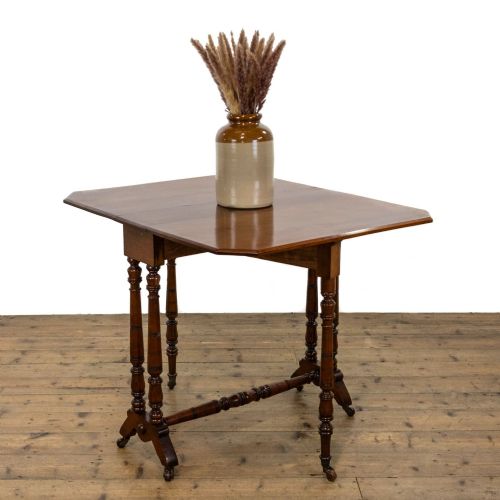
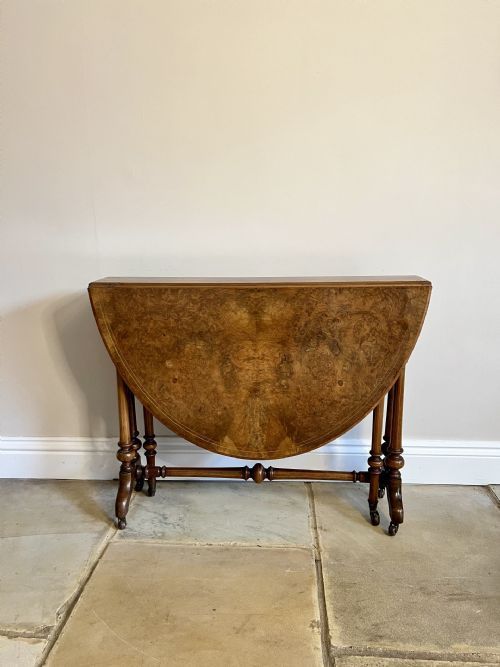
Cabinet makers utilised dense hardwoods such as oak, mahogany, and walnut, frequently selecting burr walnut veneers for superior Sutherland and occasional tables. Pine and elm also appear, particularly in country kitchen variations.
Construction relies on hinged drop leaves supported by swing out gatelegs or folding actions, allowing the surface to expand and contract smoothly. Metal and brass hinges, alongside ceramic castors on select pieces, provide functional movement and stability.
Bobbin turned legs give some tables the delightful appearance of being strung together with wooden beads.
Quality and finish
Quality rests in the choice of timber and the precision of the folding mechanism, with burr walnut and solid oak examples showing superior cabinet work. Finely figured grains and well executed inlays distinguish finer exhibition pieces from utility furniture.
The stability of the gateleg action and the integrity of the hinges determine daily usability, where tight joints and smooth leaf movement separate robust pieces from looser structures.
The Victorian Gateleg Dining Table Glossary
- Gateleg table
- A table with hinged leaves supported by legs that swing outward like a gate. This design provides sturdy support for the drop leaves when fully extended.
- Drop leaf
- A hinged table leaf that drops down when lowered. It allows the table to occupy less floor space when dining capacity is not required.
- Sutherland table
- A narrow drop leaf table with particularly slender gatelegs. The leaves fold down almost vertically, making it exceptionally compact when closed.
- Bobbin leg
- A turned furniture leg shaped with a series of rounded, spool like swellings. This decorative turning style is characteristic of seventeenth century revival pieces made during the nineteenth century.
- Burr walnut
- Timber sliced from walnut tree growths, producing swirling, highly decorative grain patterns. Cabinet makers prized this veneer for high grade table tops.
Victorian Gateleg Dining Table: Frequently Asked Questions
How do gateleg dining tables work?
Gateleg tables use hinged leaves supported by movable legs that swing outward from the frame to lock the surface in place. Folding these legs inward allows the leaves to drop vertically.
This mechanism enables the table to shift between a compact profile and a full sized dining surface with minimal effort.
Are these tables suitable for daily use?
Solid hardwood construction in oak, mahogany, and walnut makes these nineteenth century tables robust enough for everyday dining and kitchen tasks. Their folding design also suits homes that require flexible room layouts.
Regular care of the timber surface keeps the wood protected against daily wear and minor spills.
How do I date a Victorian table?
Dating relies on observing timber choices, construction methods, and stylistic details recorded across the nineteenth century. Pieces from the eighteen fifties often show different turning styles compared to later oak gateleg designs from the eighteen eighties.
Hardware types and veneer applications also offer clues to the specific decade of manufacture.
What is the difference between a Sutherland table and a gateleg table?
A Sutherland table is a specific, narrower type of gateleg table featuring exceptionally slender legs and leaves that drop almost completely flat. Standard gateleg tables often have wider fixed central sections and heavier structural proportions.
Both utilise folding leaves, but Sutherland tables are typically used as occasional or tea tables rather than large dining surfaces.