

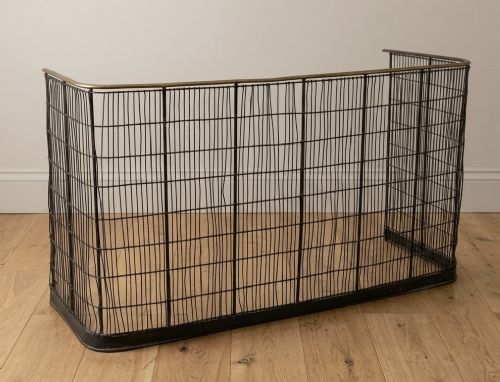


19th Century Fireplace Fender
A 19th century fireplace fender frames the hearth with metal and leather, protecting the room from stray embers while offering a place to sit.
19th Century Fireplace Fender
A 19th century fireplace fender sits directly on the floor in front of the hearth to contain coal, ash, and sparks. The selection spans standard low kerbs to elaborate club fenders fitted with upholstered seats.
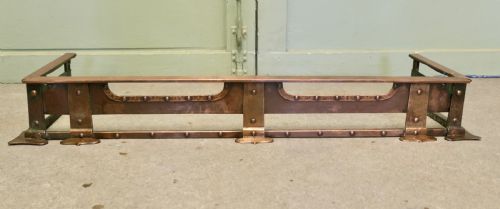
Most examples date from the Victorian period, though earlier Georgian and Regency designs alongside later Arts and Crafts interpretations appear. Common forms range from simple pierced brass channels to substantial steel frames with leather tops.
Distinctions in quality
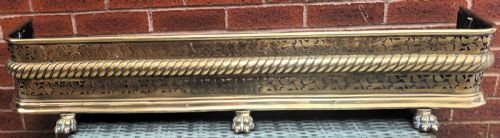
The weight of the metal gauge and the crispness of casting separate standard production pieces from finer examples. Heavy brass frames and deeply chased or pierced ornamentation indicate superior craftsmanship.
The integrity of the structural joints and the quality of secondary materials, such as heavy saddle leather on club seats or dense oak frames, dictate the overall standard of survival.
Gentlemen once warmed their shins on club fender seats while debating politics over stray embers.
The 19th Century Fireplace Fender Glossary
- Club fender
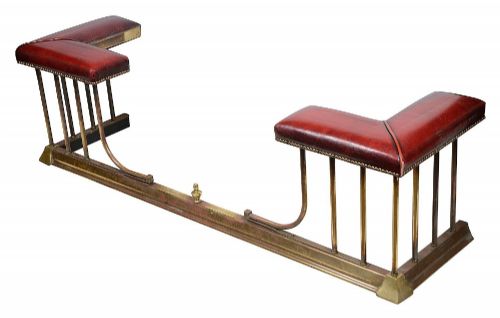
- A low fireside frame featuring upholstered corner or bench seats. These originated in gentleman's clubs to provide close warmth near the fire.
- Kerb fender
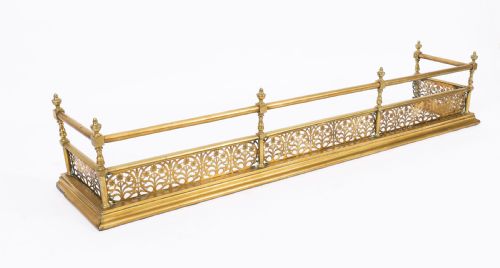
- A simple low barrier of brass, iron, or steel that surrounds the hearth perimeter. It contains rolling logs and hot embers without providing seating.
- Nursery guard
- An elevated fireside barrier incorporating tall wire mesh or iron screens. This design protected children and long dresses from open flames.
- Chenets
- Decorative firedogs or fire irons placed within the hearth. They occasionally accompany matching fenders in rococo or neoclassical decorative schemes.
- Pierced brass
- Sheet metal perforated with decorative geometric or floral patterns. This technique lightens the visual weight of heavy brass kerbs.
19th Century Fireplace Fender: Frequently Asked Questions
What is a club fender?
A club fender is a low metal hearth surround fitted with cushioned seats on top. These seats allowed people to sit right by the fire.
They appear frequently in nineteenth-century country houses and libraries. The upholstered top is typically finished in leather or fabric.
How do I measure for a fender?
Measure the width and depth of your hearth stone carefully before selecting a piece. Note that some nineteenth-century examples feature extending frames that adjust to fit specific openings.
Keep clearance space in mind for fire tools and surrounding hearth surrounds. The metal barrier should sit squarely on the floor around the fireplace aperture.
Were all fenders made of brass?
Brass is common, but makers used several other materials throughout the nineteenth century. Iron, steel, copper, and bronze appear regularly across the period listings.
Combinations of materials also occur, such as steel frames paired with oak tops or leather upholstery. Wire mesh forms are typically found on nursery guards.
How do I clean an antique brass fender?
Dust the metal gently with a soft dry cloth to remove surface grit. Avoid harsh abrasive polishes that can strip away historic patination and fine chasing detail.
Leave patinated iron and steel surfaces with minimal intervention beyond light oiling. Preservation of the original finish remains central to retaining character.