


19th Century English Pottery
These nineteenth century English pottery pieces range from transfer-printed jugs to moulded figures, offering collectors utilitarian vessels and decorative mantel ornaments.
19th Century English Pottery
Nineteenth century English pottery encompasses a diverse output of utilitarian wares and decorative items shaped during the Georgian, Regency, and Victorian periods. The selection focuses heavily on jugs, pitchers, and ceramic figures produced across Staffordshire, Sunderland, and other regional kilns.
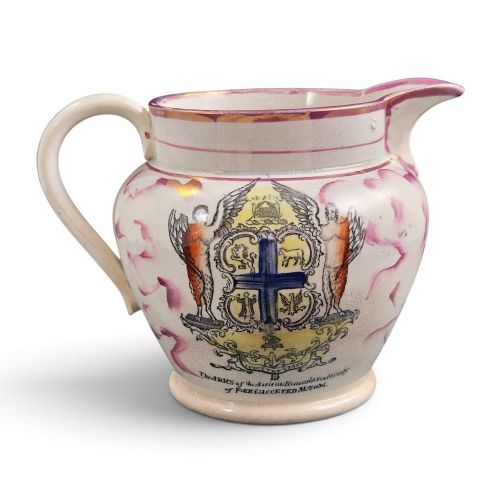
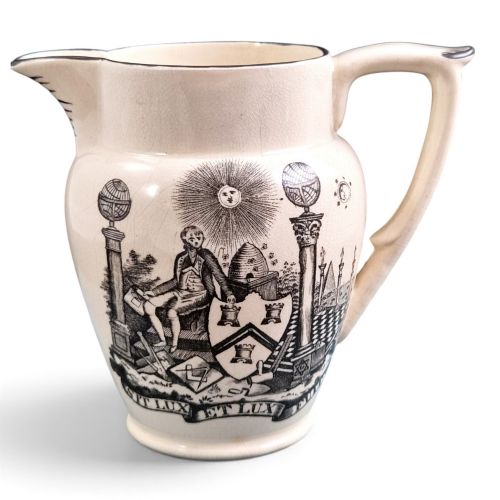
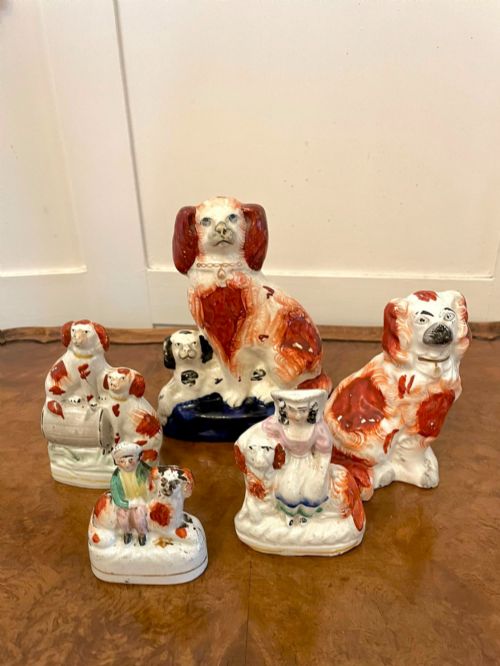
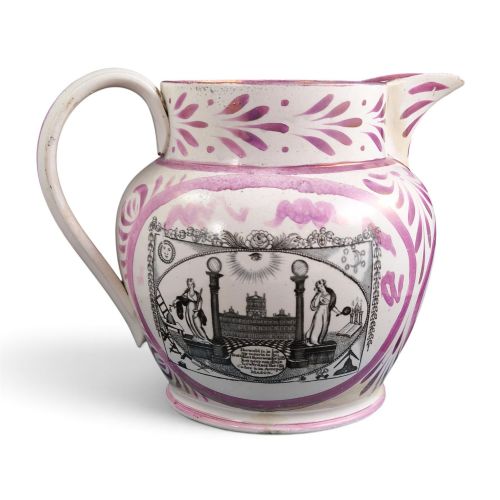
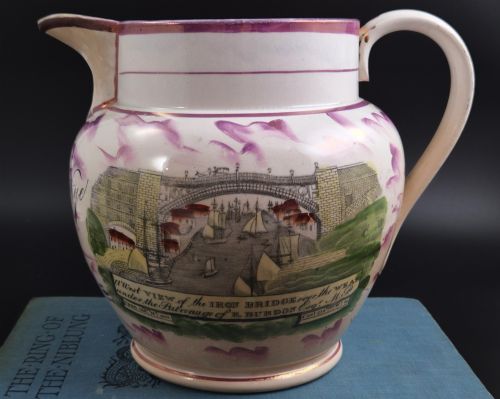
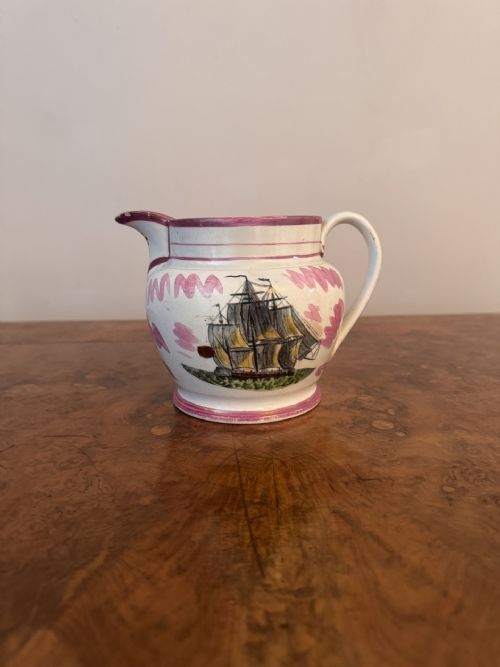
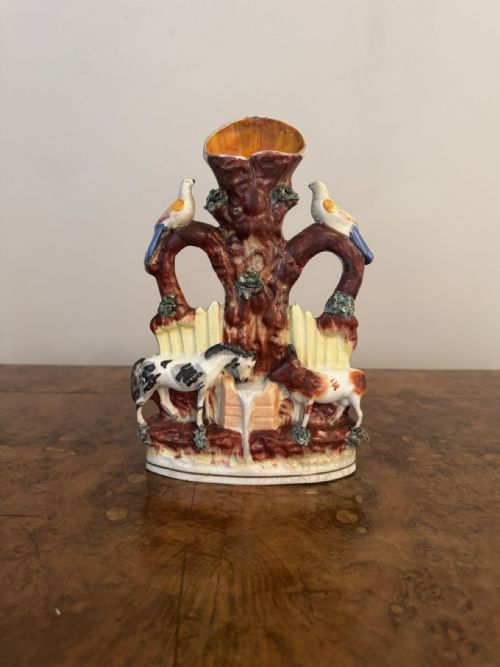
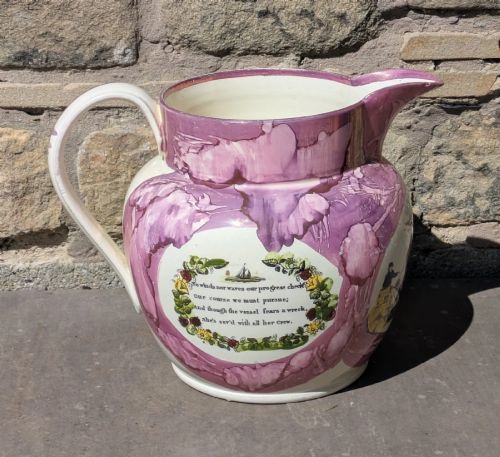
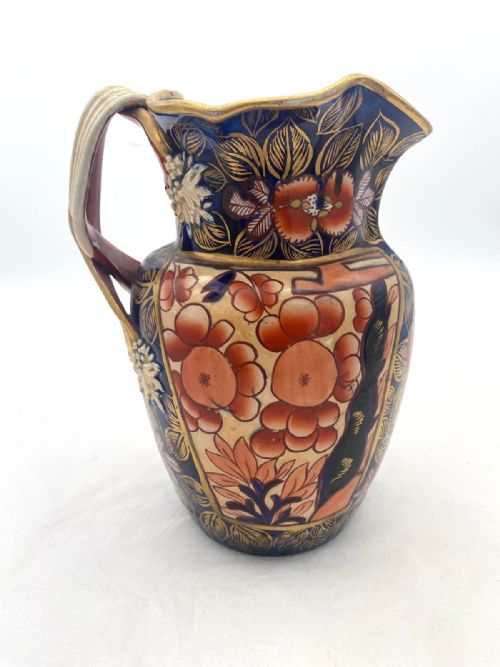
Buyers regularly encounter earthenware jugs bearing transfer prints of maritime themes, Masonic symbols, or local bridges alongside pearlware and ironstone vessels. Figurines depicting literary figures, historical events, and animals form another prominent category within these listings.
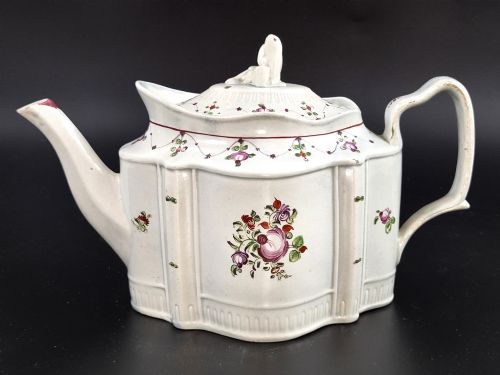
Domestic items such as teapots, platters, and majolica fruit baskets represent the functional side of this ceramic tradition. Distinctive regional styles like Gaudy Welsh and Jackfield black-glazed pottery also appear frequently among the available objects.
Materials and methods
Potters utilised earthenware, pearlware, ironstone, and stoneware as bodies for these objects, applying lead glazes and enamel colours to achieve finished surfaces. Transfer printing allowed workshops to apply complex black or blue patterns onto creamware and earthenware surfaces before glazing.
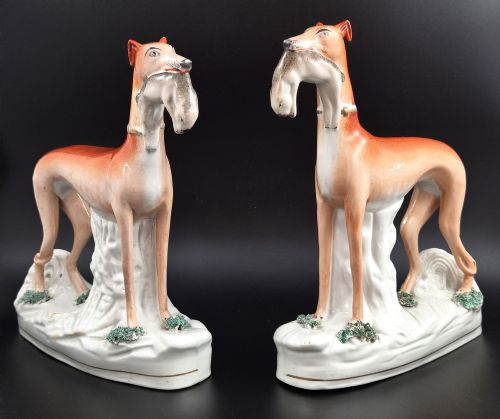
Moulding techniques permitted the production of relief-moulded jugs and symmetrical pairs of Staffordshire animals, while lustre decoration added metallic pink and copper sheens through specialised kiln firings. Hand painting frequently supplemented printed outlines on figures and teaware.
Pug dogs and greyhounds gaze steadfastly from nineteenth-century mantelpieces, guarding nineteenth-century sitting rooms with unwavering ceramic loyalty.
Markers of quality
The crispness of the transfer print and the registration of hand-applied enamel colours separate standard domestic vessels from superior examples. Finely detailed relief moulding and carefully smoothed glaze surfaces indicate higher workshop standards during production.
Completeness of original matched pairs, particularly among Staffordshire dogs and portrait figures, influences desirability among collectors. The preservation of metallic lustre finishes without extensive rubbing points to better initial firing and subsequent preservation.
Mason's Ironstone·George Jones·John Bevington·Wedgwood·Minton
The 19th Century English Pottery Glossary
- Creamware
- A fine earthenware with a pale yellowish-buff glaze developed during the eighteenth century and continued into the nineteenth. It provided a smooth surface suitable for transfer printing.
- Pearlware
- A refined earthenware body containing a small amount of cobalt in the glaze to produce a slightly bluish tint that made the ceramic appear whiter. It served as a transitional material between creamware and later white earthenware.
- Transfer printing
- A method of applying pre-printed paper designs from engraved copper plates onto ceramic surfaces. This technique enabled the rapid production of repeatable patterns on jugs and platters.
- Lustreware
- Pottery decorated with a metallic film that produced an iridescent copper or pink sheen upon reduction firing. Sunderland kilns specialised in pink splash variations for maritime souvenir jugs.
- Majolica
- A colourful lead-glazed earthenware modelled with naturalistic plant and animal forms. The glaze created vibrant translucent green, brown, and yellow hues over moulded relief.
19th Century English Pottery: Frequently Asked Questions
How do I identify a Victorian Staffordshire figure?
Staffordshire figures generally feature earthenware bodies with hand-painted enamel colours and distinctively hollow bases. They often depict notable people, animals, or literary scenes intended for mantelpiece display.
Inspect the underside and interior for potting marks and ventilation holes typical of nineteenth-century production methods. The weight and application of the glaze also help distinguish genuine period pieces from later reproductions.
How were nineteenth century jugs used?
Nineteenth century jugs served various domestic purposes including serving beer, water, milk, or cream at the table. Larger examples often commemorated local events, clubs, or naval ships as presentation pieces.
Many featured Masonic symbols or commemorative verses suited for communal gatherings. Smaller specimens remained in daily household use for tea and dairy service.
What distinguishes ironstone from earthenware?
Ironstone is a dense, durable type of feldspathic stoneware patented in the early nineteenth century to resist chipping. It provided a sturdy alternative to porcelain while remaining suitable for heavy domestic use.
Potters used ironstone for robust jugs, platters, and dinner services that received frequent handling. The material typically feels heavier and sounds more resonant when tapped than standard earthenware.