




19th Century Empire Commode
A 19th century empire commode brings architectural dignity and generous storage to a room through bold form and rich timber.
19th Century Empire Commode
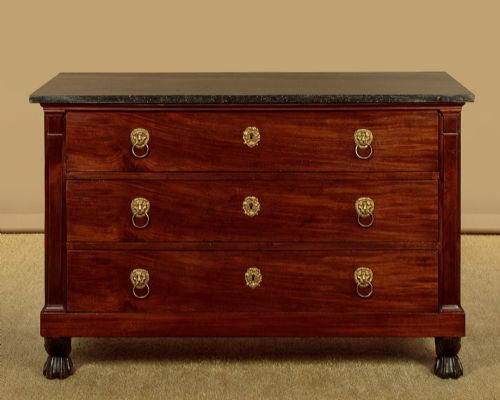
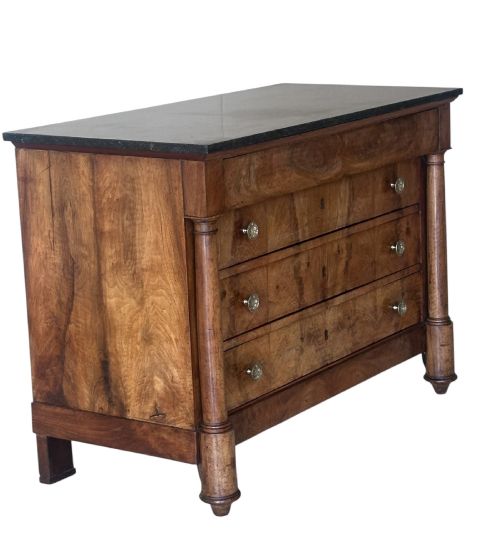
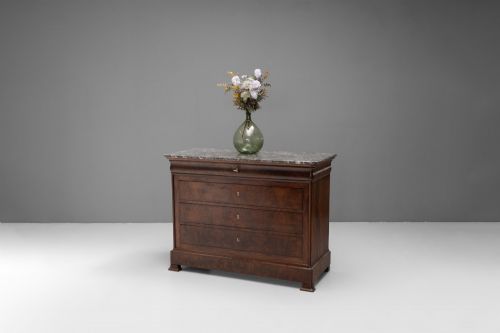
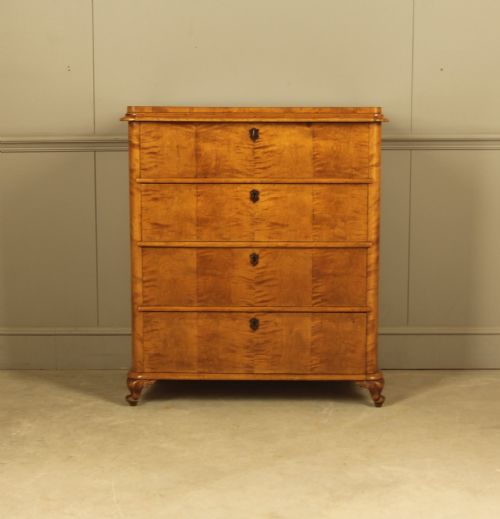
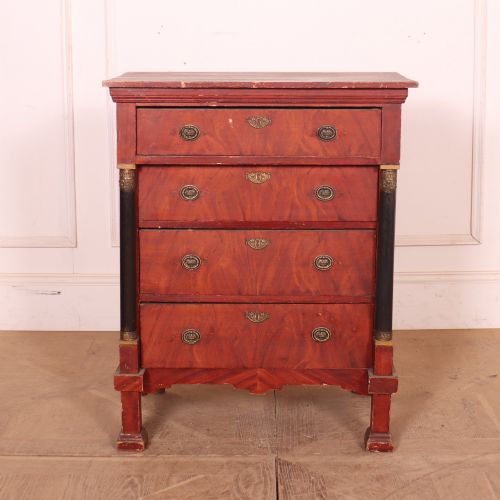
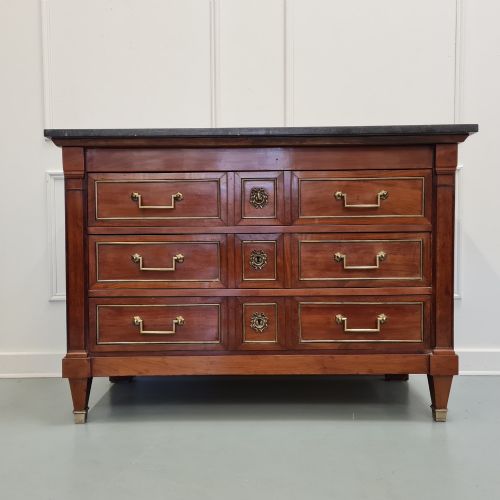
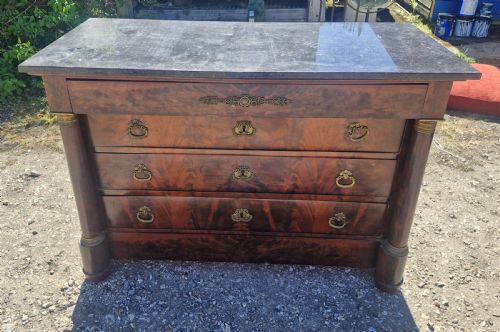
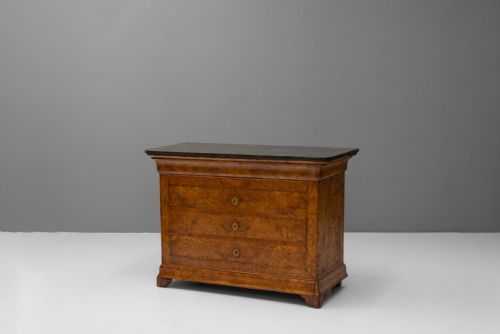
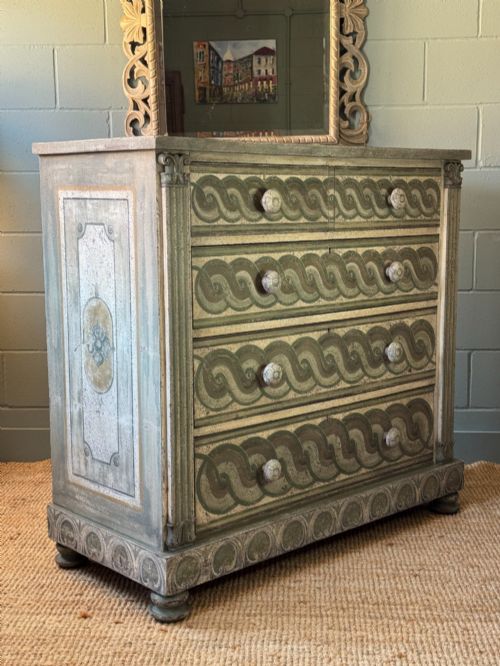
A 19th century empire commode is a substantial case piece designed for storage, most frequently taking the form of a chest of drawers or a side cabinet. These items appear across various stylistic interpretations including French Empire, Charles X, Biedermeier, and Empire Revival periods. The forms often incorporate rectangular silhouettes with pronounced pilasters and heavy top drawers fitted beneath projecting cornices.
Buyers will encounter multiple regional variations, with French and Swedish examples appearing frequently alongside Dutch and Italian pieces. Materials span from dark figured mahoganies and walnuts to pale birches and ebonised woods, frequently finished with contrasting marble slabs. The primary function remains a grand bedside or principal room storage unit that commands visual attention through proportion alone.
How they were made
Construction relies heavily on dense carcasing timbers such as pine or oak, faced with finely figured veneers including flame birch, mahogany, burr walnut, and amboyna. Cabinetmakers applied these timbers carefully to create symmetrical grain patterns across the primary drawer fronts and panelled sides. Structural stability was achieved through substantial carcase framing designed to support heavy stone surfaces.
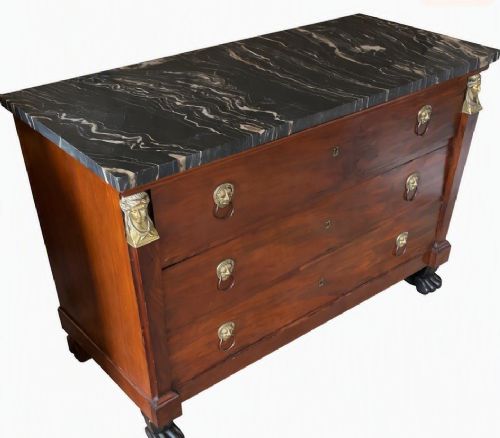
Surface enrichment involves cast brass and ormolu mounts depicting classical motifs, alongside carved paw feet and ebonised details. Marble tops, including fossil and white varieties, were cut to precise dimensions and fitted to rest directly upon the upper framework of the commode. Drawer linings typically utilise secondary softwoods with hand-cut dovetail joinery joining the sides to the fronts.
Paw feet on these chests allow fierce beasts to support your folded linen.
What varies in quality
The degree of distinction in a 19th century empire commode rests largely upon the selection and matching of the wood veneers. Superior examples display continuous, book-matched grain patterns that wrap purposefully across multiple drawer tiers, whereas lesser items use plain or mismatched timber boards. The crispness and weight of the cast ormolu or brass mounts further separate standard production from exceptional cabinet work.
Structural integrity and the retention of original components dictate the standing of individual pieces. High-grade items preserve their original marble slabs, functional locks with matching keys, and tightly fitted drawer construction without excessive timber shrinkage. The integration of architectural elements like columns and pilasters should appear deliberate and balanced relative to the main body.
The 19th Century Empire Commode Glossary
- Ormolu
- Gilt bronze mounted decoration applied to furniture surfaces. This technique adds metallic contrast against dark mahogany and ebonised wood bodies.
- Commode
- A low chest of drawers or cabinet designed for domestic storage. Originating in France, the form evolved into a grand architectural centrepiece.
- Biedermeier
- A Central European style emphasising clean lines and utility over excessive ornamentation. It frequently employs native timbers like birch and walnut.
- Pilaster
- A rectangular column projecting slightly from a wall or cabinet side. They flank the drawer stacks on many classical case pieces.
- Fossil marble
- Natural limestone containing embedded organic remains used for furniture tops. This material provides a patterned, geological surface above the timber carcase.
19th Century Empire Commode: Frequently Asked Questions
What is an empire commode?
An empire commode is a heavy, architectural chest of drawers or cabinet stemming from the neoclassical design movements of the nineteenth century.
These pieces are defined by their strong geometric lines, classical columns or pilasters, and substantial timber construction.
How do I style a commode at home?
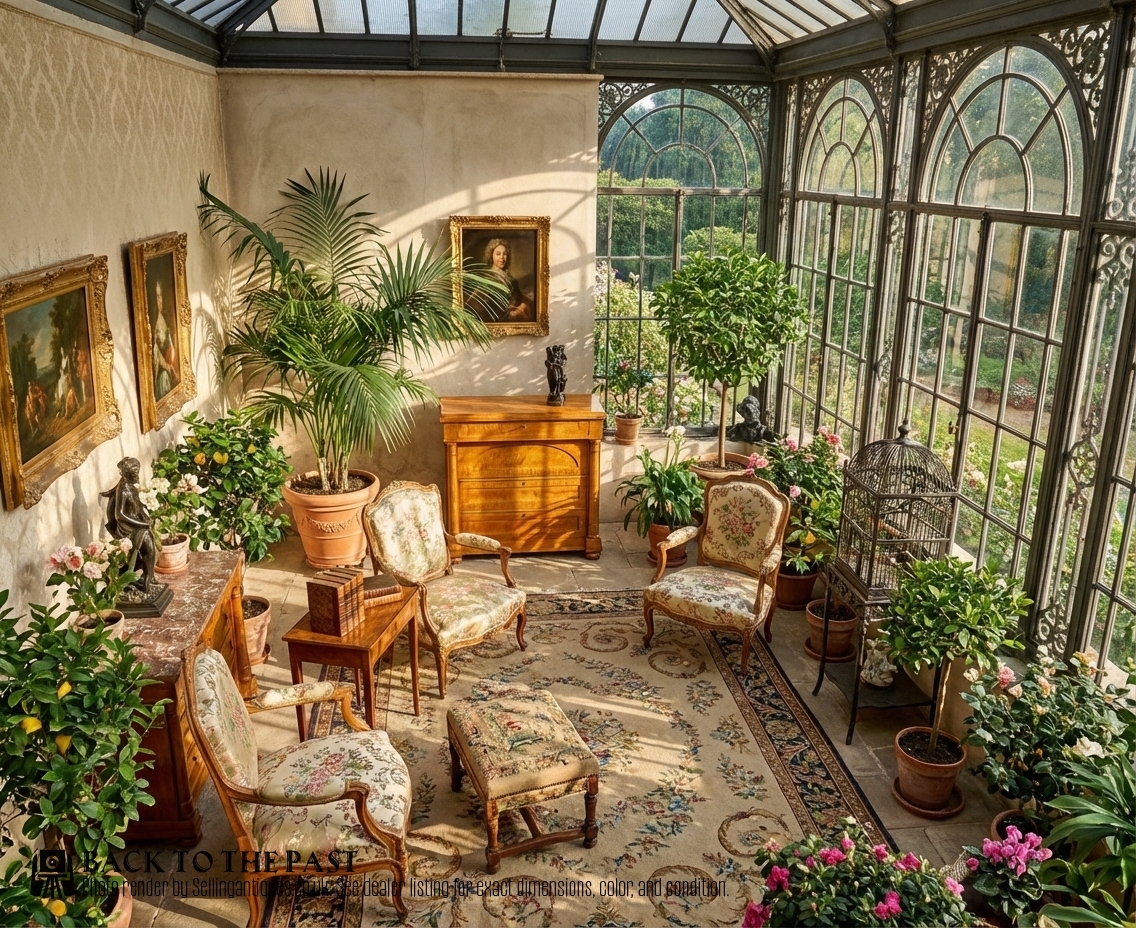
These pieces function well in living rooms, hallways, or bedrooms as principal storage units that anchor the surrounding decor.
Because of their strong visual weight and marble tops, they require minimal surface styling to make an impact in a room.
Are marble tops original to these pieces?
Many nineteenth-century commodes were designed specifically to carry heavy stone slabs, particularly French and Swedish iterations.
The marble serves both a decorative and practical function, providing a durable surface on top of the timber carcase.
What woods were commonly used?
Cabinetmakers utilised a wide variety of timbers depending on the regional origin of the workshop.
Mahogany and walnut appear frequently in French workshops, while Swedish pieces often feature pale flame birch or tiger birch veneers.