
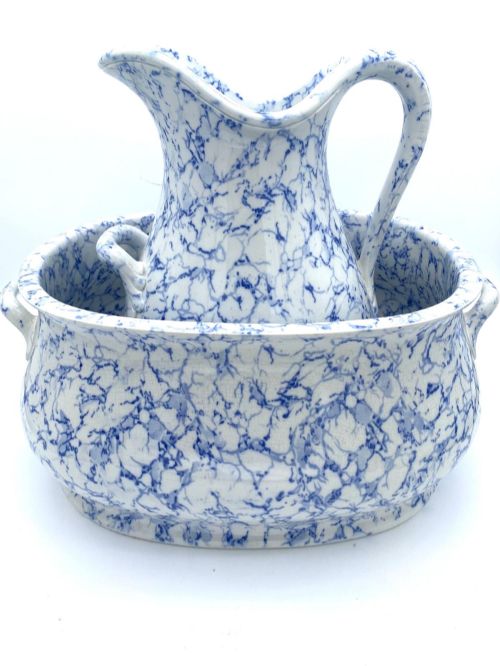
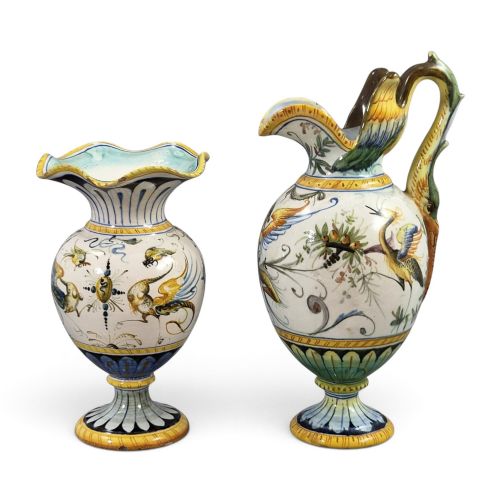
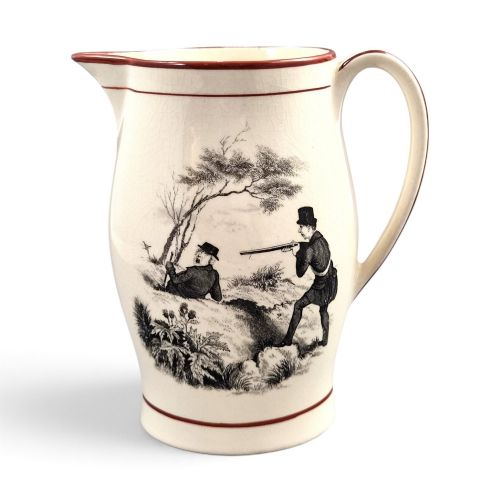

19th Century Earthenware Pitchers
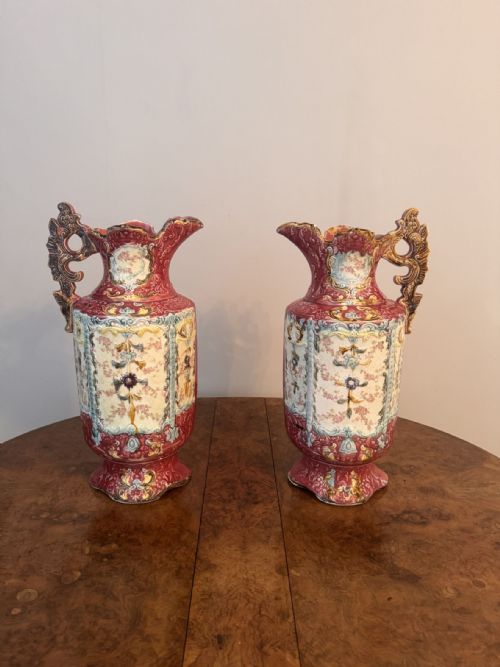
These 19th century earthenware pitchers span Georgian creamware through to Victorian majolica, offering tactile history and robust utility for the table.
19th Century Earthenware Pitchers
When you search for 19th century earthenware pitchers, you encounter a varied selection of utilitarian and commemorative vessels spanning the Georgian, Regency, and Victorian periods.
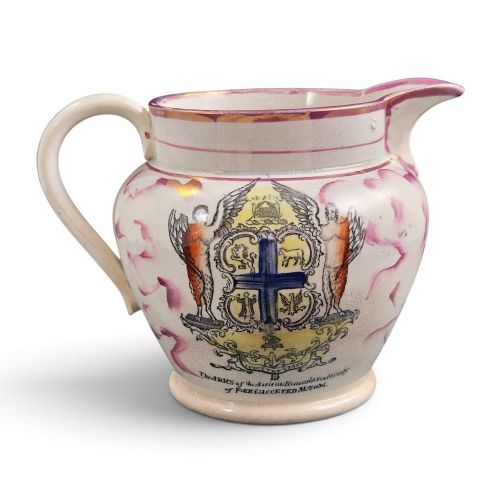
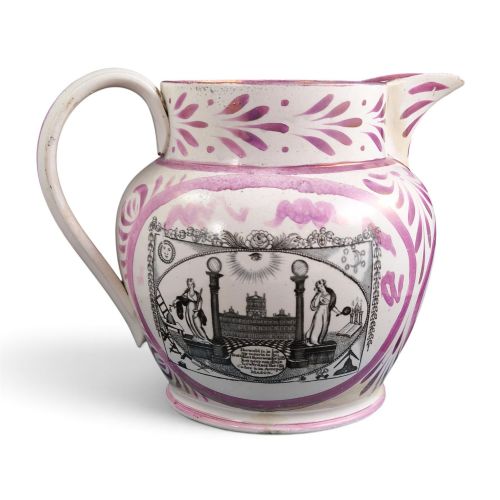
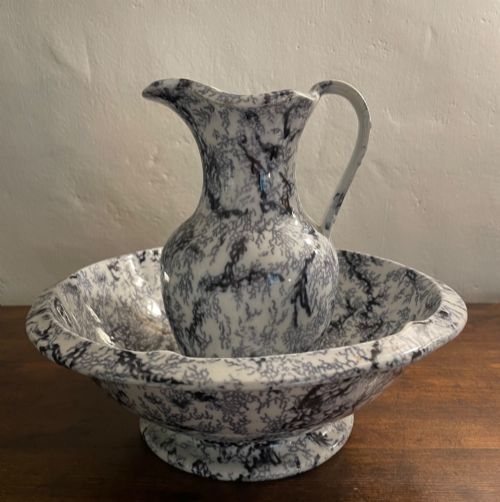
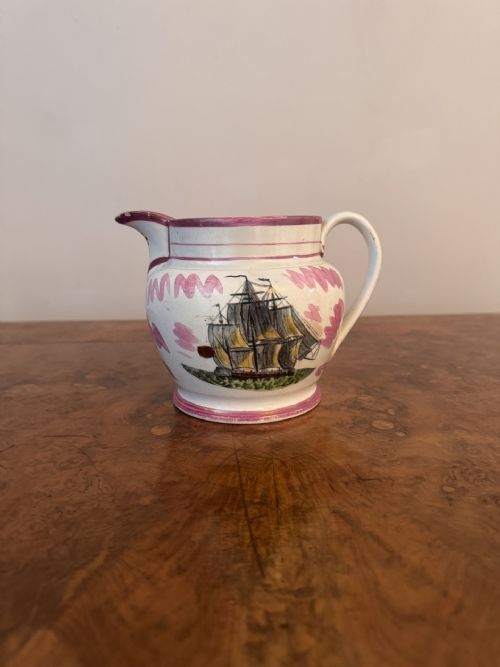
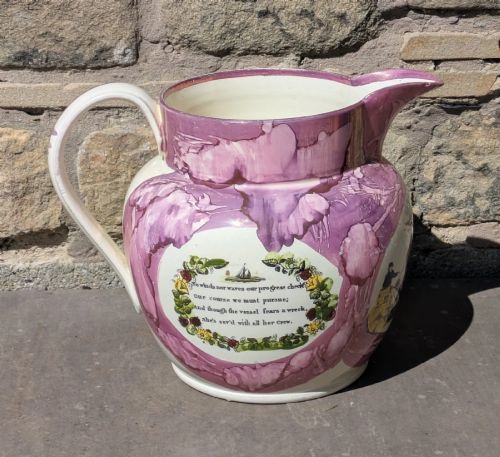
The most common examples on this page are Staffordshire creamware, pearlware, and Sunderland pink lustre jugs, alongside distinctive regional wares like Gaudy Welsh and Dutch Delftware.
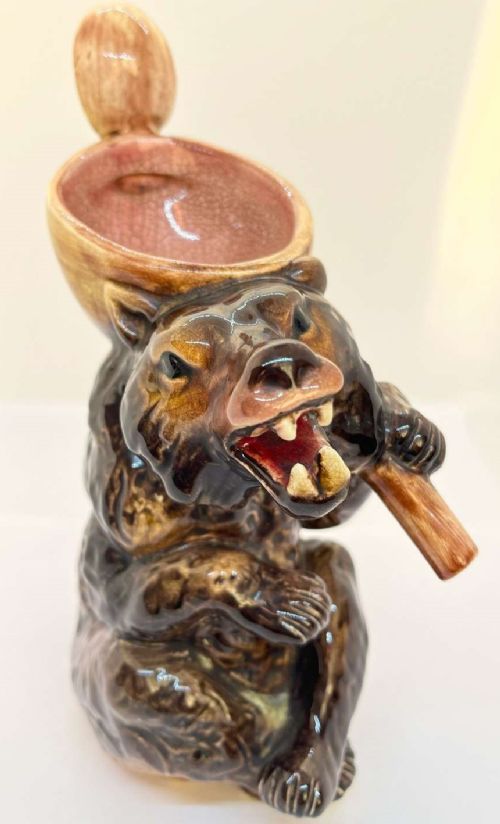
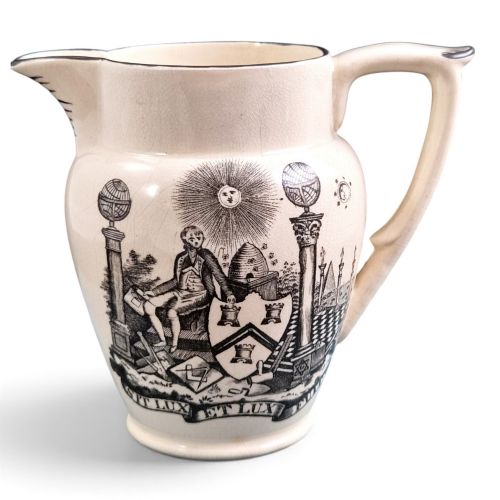
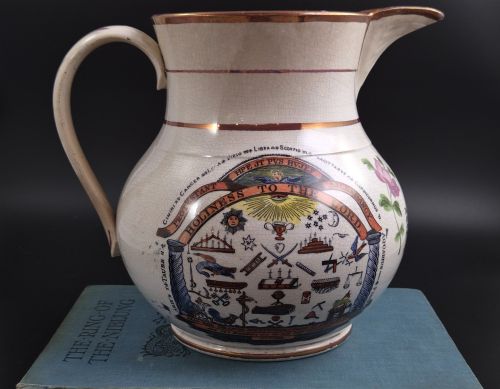
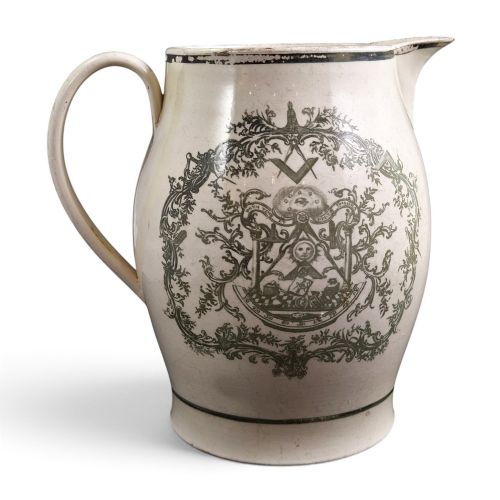
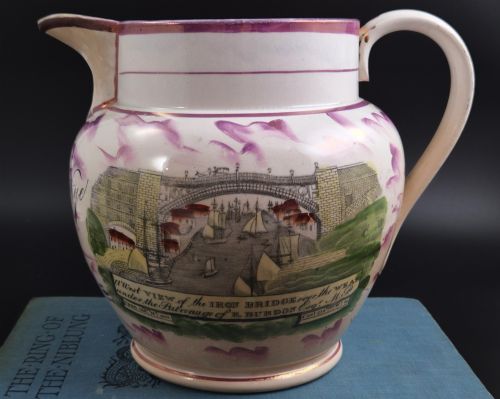
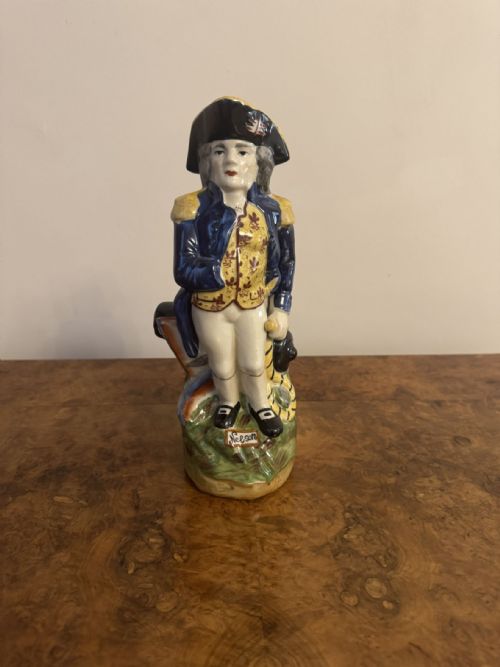
Forms range from large maritime and Masonic transfer-printed vessels down to domestic cream jugs, Toby jugs, and figural animal creamers.
How they were made
Potters shaped these earthenware bodies using local clays, often applying a tin or transparent lead glaze to seal the porous ceramic.
Decoration relied heavily on black and polychrome transfer printing, hand-painted enamels, and metallic lustre applications such as copper and pink splash.
Lord Nelson appears with startling regularity, glaring out from sturdy earthenware jugs while keeping a weather eye on the tavern.
What varies in quality
Quality rests in the crispness of the transfer print, the depth and stability of the metallic lustre, and the control shown in hand-painted polychrome enamel details.
The sophistication of the potting and the liveliness of modelled figures - particularly in Toby jugs and figural creamers - distinguish standard vessels from finer studio or factory pieces.
Holdcroft·Sunderland Garrison Pottery·Minton·Cantagalli Florence·Ridgway and Sons·Davenport
The 19th Century Earthenware Pitchers Glossary
- Creamware
- A fine-grained earthenware with a pale yellowish-buff glaze developed in Staffordshire during the eighteenth century. It became the dominant domestic ceramic before white earthenware took over.
- Lustreware
- Earthenware finished with a metallic glaze that produces an iridescent sheen. Sunderland and copper lustre varieties achieve this through gold, silver, or copper applications fired in a reducing kiln.
- Transfer printing
- A decoration technique where an engraved copper plate transfers an inked design onto tissue paper, which is then pressed onto the ceramic biscuit before glazing. This allowed complex historical and maritime scenes to be produced consistently.
- Toby jug
- A pottery jug modelled as a full-bodied robust figure, usually seated and holding a mug of beer and a pipe. They often depict recognizable historical personages or archetypal characters.
- Slipware
- Pottery decorated with liquid clay slip applied before firing, either trailed or brushed onto the body. It provides a tactile, rustic surface texture.
19th Century Earthenware Pitchers: Frequently Asked Questions
How do I date a pitcher?
Dating relies on stylistic shifts, glaze characteristics, and the evolution of transfer printing techniques. Georgian pieces often display creamware bodies and transfer prints, whereas Victorian examples favour lustre finishes, majolica glazes, or heavier earthenware forms.
Makers' marks, registration diamonds, and commemorative subjects provide further chronological anchors. Examining the base and the wear patterns helps confirm the period of production.
Were these pitchers used daily?
Many of these vessels served practical roles in nineteenth-century homes, carrying water, milk, or ale to the table. Robust earthenware and ironstone bodies handled daily domestic tasks with ease.
Larger commemorative and Masonic jugs often served communal functions in taverns and lodges rather than everyday dining. Their survival in good condition suggests many were treated as display or presentation pieces.
Can I use them for serving drinks?
While structurally sound, antique earthenware can develop microscopic cracks in the glaze over centuries. Using them for serving carries a risk of staining the porous ceramic body underneath.
It is generally safer to enjoy them as decorative display objects or for holding dried botanicals.