



19th Century Dresden Figurines
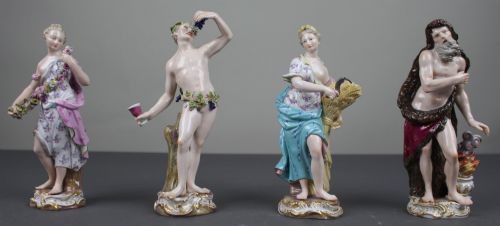
These 19th century dresden figurines bring the theatrical charm of European porcelain figure groups and candelabras into a room.
19th Century Dresden Figurines
When you search for 19th century dresden figurines, you encounter a selection of porcelain figures, decorative figurines, and figural candlesticks produced during the nineteenth century. These objects frequently take the form of pastoral groups, romantic pairs, and musical scenes set upon floral bases.
The pieces on this page span several decades of the nineteenth century, including specific dates around eighteen eighty and eighteen ninety. Alongside items carrying Dresden style attribution, the listings incorporate works from continental European factories such as Meissen, Sitzendorf, and Bloor Derby.
Buyers regularly encounter matched pairs and multi-piece sets, such as depictions of the Four Seasons or shepherd and shepherdess figures. These porcelain groups capture the prevailing tastes for Rococo Revival and Victorian aesthetic movements across European workshops.
Materials and methods of manufacture
The construction of these pieces relies primarily upon hard-paste porcelain shaped into sculptural forms and detailed figure groups. Makers utilised enamel glazes to bring vibrant colour to clothing, natural settings, and facial expressions.
Surface ornamentation frequently incorporates gold leaf and careful gilding to highlight decorative elements such as garment trim and candelabra arms. Intricate details like applied porcelain lace appear on specific French and German groups from the period.
19th Century Dresden Figurines Retail Price Guide 2026
Typical asking prices for 19th century dresden figurines among the pieces listed under this phrase on Sellingantiques today, from the lower quarter to the upper quarter. They describe what is for sale here now, not the wider market.
Listings span the nineteenth century, featuring hard-paste porcelain figures and candelabras in Rococo Revival and Victorian styles.
Distinctions in quality
The application of gilding and enamel glaze further separates standard production items from masterworks. Finer pieces maintain clean lines in their polychrome decoration and secure attachment of intricate elements like baskets and musical instruments.
Meissen·Bourdois and Bloch·Bloor Derby·Helena Wolfsohn·Sitzendorf
The 19th Century Dresden Figurines Glossary
- Hard-paste porcelain
- A durable ceramic material fired at high temperatures, composed of kaolin and petuntse. It serves as the primary body for nineteenth-century European figure groups.
- Rococo Revival
- A nineteenth-century design style drawing on eighteenth-century French motifs, characterised by C-scrolls, asymmetry, and elaborate floral embellishment. This style dominates the aesthetic of many figural candlesticks and pastoral groups.
- Enamel glaze
- A vitreous coating fused to the porcelain body through firing, providing a smooth coloured surface. Painters apply these glazes to render garments and natural backdrops.
- Figurines and sculptures
- Three-dimensional ceramic representations of human figures, animals, or mythological subjects. In this category, they often depict children, musicians, or allegorical figures.
- Gilding
- The application of gold leaf or powdered gold to porcelain surfaces for decorative accent. It highlights architectural details on bases and elements of costume.
19th Century Dresden Figurines: Frequently Asked Questions
What do these figures typically depict?
The subjects range from pastoral shepherds and musicians to allegorical representations of the Four Seasons and children in gardens.
Many pieces also include mythological scenes, romantic pairs, and figural candlesticks designed with floral bases.
How do I identify a Meissen piece?
Meissen items in this category often feature detailed modelling of human subjects, such as romantic groups or figures adapted from earlier models.
They appear alongside works from other German and French factories reflecting similar nineteenth-century revival styles.
Where were these porcelain objects made?
Production centred primarily in Germany, with major contributions from Dresden, Meissen, and Sitzendorf workshops.
Other examples originate from French porcelain makers in Paris and English factories working in continental styles.
How should I display porcelain candelabras?
These pieces function well as decorative table centrepieces or focal points on mantelpieces where their sculptural details remain visible.
Because they incorporate delicate porcelain elements and gilt surfaces, they require placement away from heavy foot traffic and direct physical contact.