


19th Century Dessert Plates
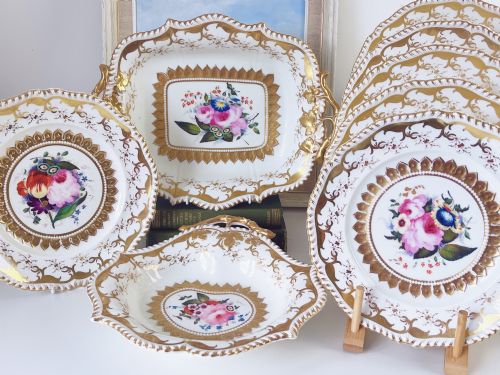
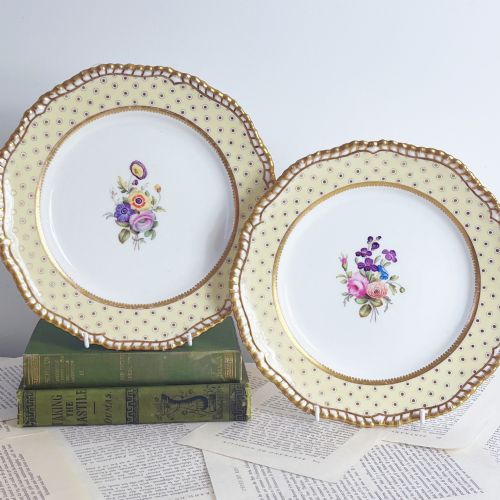
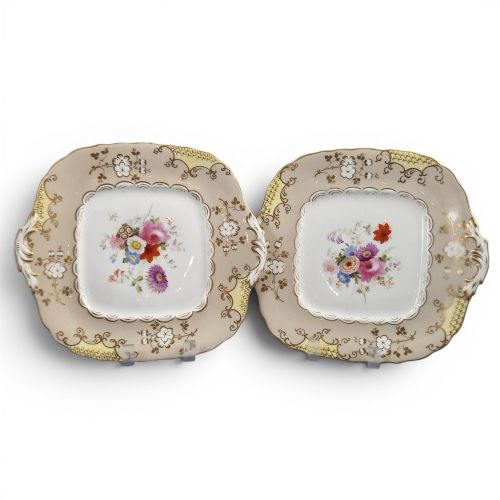
These 19th century dessert plates bring handpainted botanicals, armorials, and gilded porcelain to the table, offering a glimpse into formal dining rooms of the past.
19th Century Dessert Plates
19th century dessert plates comprise porcelain, bone china, ironstone, and earthenware vessels created to serve the final course of a formal meal. These items appear both individually and as part of larger services that include matching serving dishes, comports, and ice plates.
The objects on this page stem from periods spanning the Georgian, Regency, and Victorian eras, alongside specific decades such as the 1850s, 1860s, and 1880s. Makers range from English factories like Minton, Spode, Coalport, and Derby to continental European porcelain works.
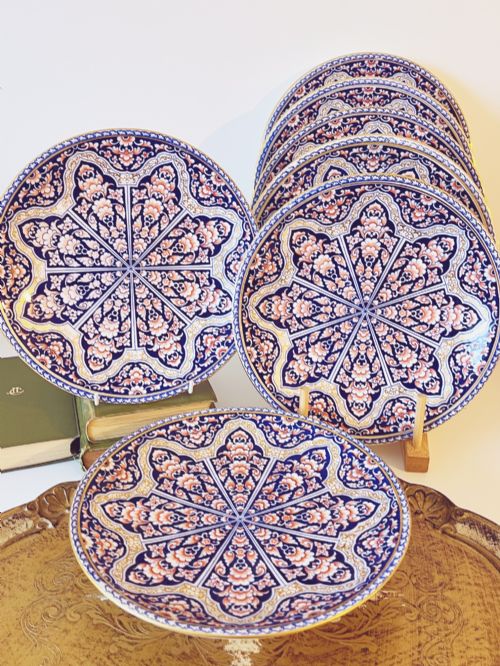
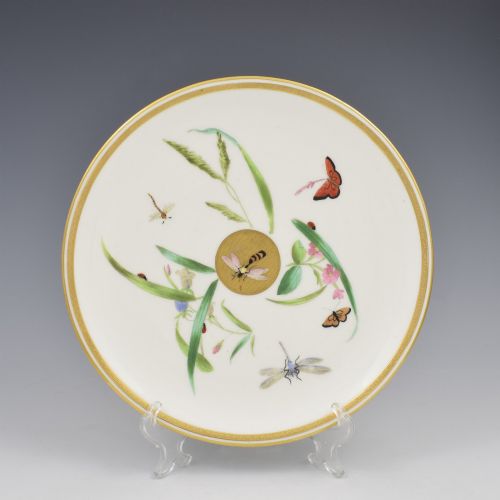
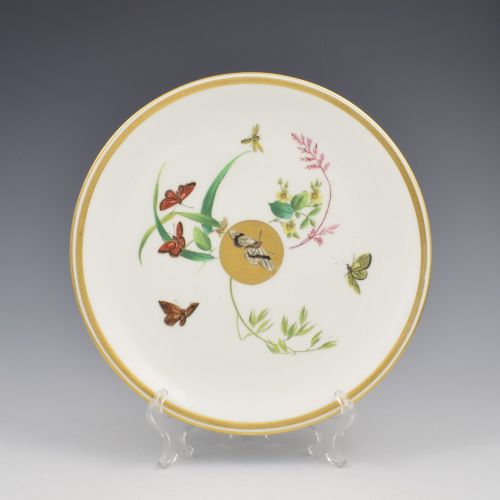
Forms vary from cabinet display plates with elaborate pierced borders to robust ironstone services meant for regular use. Buyers encounter botanical studies, armorial crests, and Japanese-influenced aesthetic designs across these earthenware and porcelain bodies.
How they were made
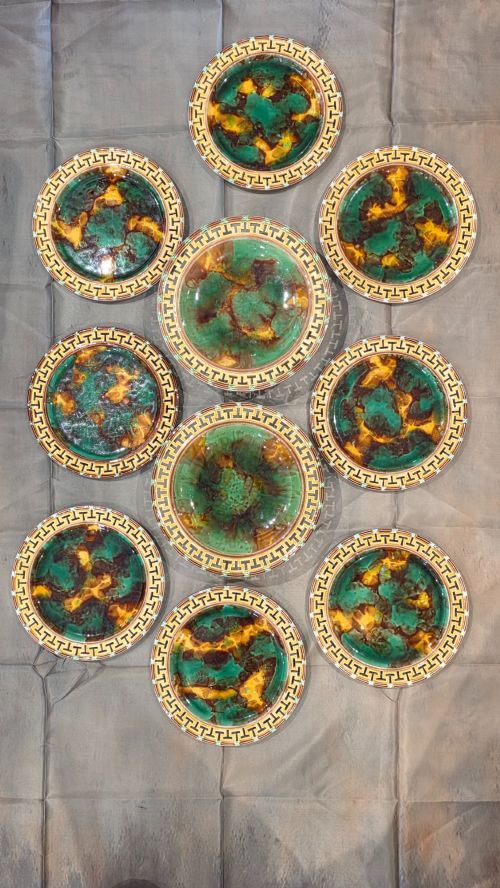
Potters shaped these objects using porcelain, bone china, ironstone, and ceramic bodies, often applying tin or lead glazes before firing in kilns. Some services utilised moulded basketweave or shaped rims to give architectural structure to the plate before decoration began.
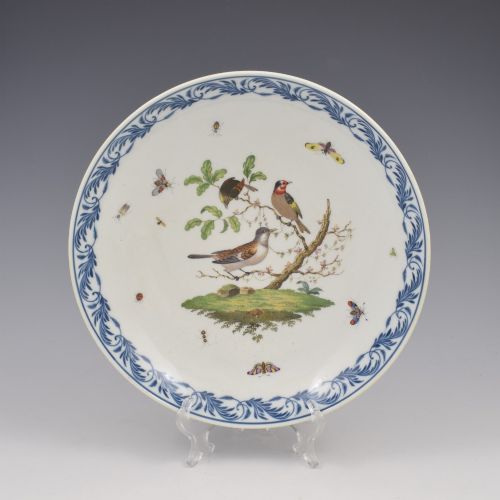
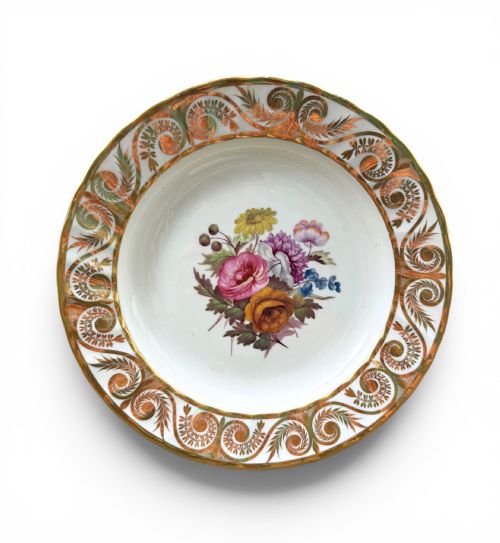
Decoration relied heavily on handpainted enamels depicting flowers, birds, and landscapes, supplemented by transfer printing for repetitive patterns. Artisans applied gold leaf and gilt highlights by hand, fixing the metal through a subsequent low-temperature kiln firing.
Listings feature porcelain, bone china, and ironstone decorated with handpainted flowers, armorials, and gilding across the Georgian and Victorian periods.
What varies in quality
Quality rests principally on the precision of the handpainting and the ambition of the factory design. Plates featuring named artist work, intricate botanical specimens, or raised gold jewelling sit at the upper end of the scale.
The integrity of the ceramic body and the preservation of the enamel and gilding dictate desirability. Simpler transfer-printed wares or heavily worn surfaces occupy a different tier from well-preserved, finely potted porcelain services.
Grainger Lee & Co·Spode·Wedgwood·Royal Crown Derby·Meissen·Minton·Coalport·Bloor Derby·Rockingham Pottery·Chamberlain Worcester·Flight Barr & Barr·Kerr & Binns·Mason's Patent Ironstone·Davenport
The 19th Century Dessert Plates Glossary
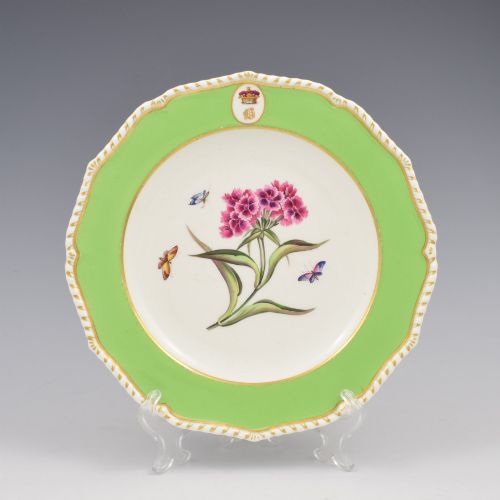
- Armorial plate
- A ceramic dish painted with a family crest, coat of arms, or heraldic motto. These bespoke pieces were commissioned by landed families for formal dining.
- Comport
- A raised dish or pedestal bowl used for serving fruit or sweetmeats as part of a dessert service. They anchor the centre of a table display.
- Bone china
- A type of soft-paste porcelain containing bone ash, developed in England to create a durable, brilliantly white body. It allowed makers to throw thinner, more refined plates.
- Ironstone
- A heavy, durable ceramic patented in the early nineteenth century to imitate Chinese porcelain. It resists chipping and formed the basis for robust utilitarian services.
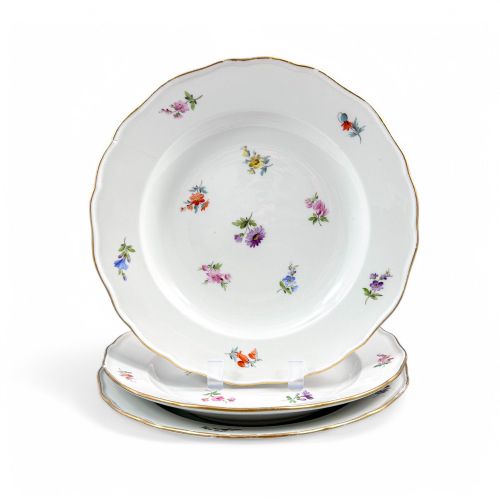
- Streublumen
- A scattered flower decorative motif originating in European porcelain factories during the eighteenth and nineteenth centuries. The pattern arranges small, individual blooms across the white glaze.
19th Century Dessert Plates: Frequently Asked Questions
How were 19th century dessert plates used?
These plates served the final course of a formal meal, which typically consisted of fruit, nuts, cheeses, and sweet confections.
They formed part of a grander table service that often included specialised ice plates, comports, and serving dishes arranged symmetrically.
Can I use antique dessert plates for dining?
While many of these plates remain physically robust, particularly ironstone and bone china examples, handpainted enamels and delicate gilding suffer from modern dishwashers and cutlery.
Most owners choose to display them on walls or in cabinets, or reserve them for very occasional gentle use.
How do I date an antique dessert plate?
Dating relies on maker's marks stamped, impressed, or painted on the reverse, alongside stylistic clues such as Regency shapes or Aesthetic Movement motifs.
Factory pattern numbers and registration diamonds provide further chronological markers for pieces produced across the Victorian era.
What is the difference between a cabinet plate and a dessert plate?
Cabinet plates are primarily decorative objects meant for display in a cabinet or on a wall, often featuring highly detailed painted scenes and delicate pierced borders.
Dessert plates were manufactured as part of functional dining services, though many surviving examples combine practical utility with artistic painted decoration.