




19th Century Davenport Desk
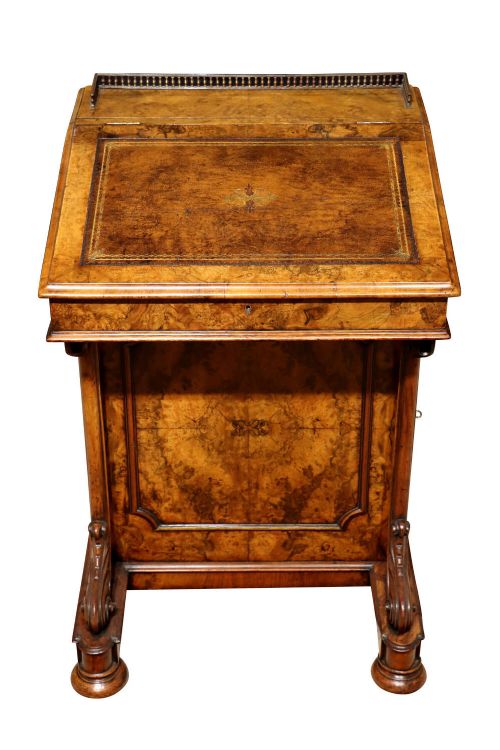
These 19th century davenport desk examples combine compact writing slopes with secure drawer storage, offering collectors practical writing furniture.
What a 19th century davenport desk is
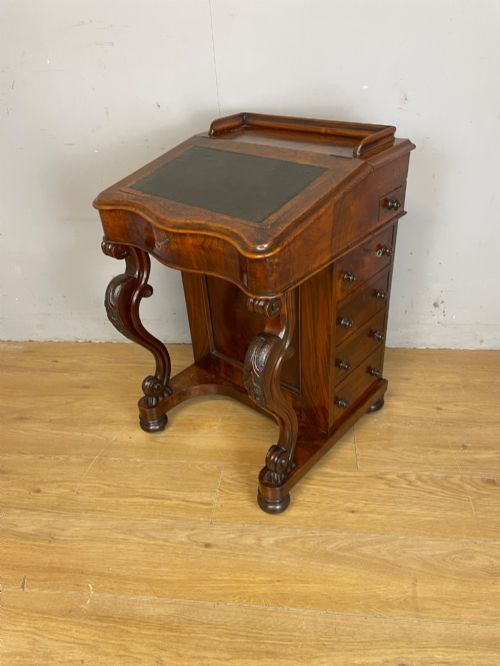
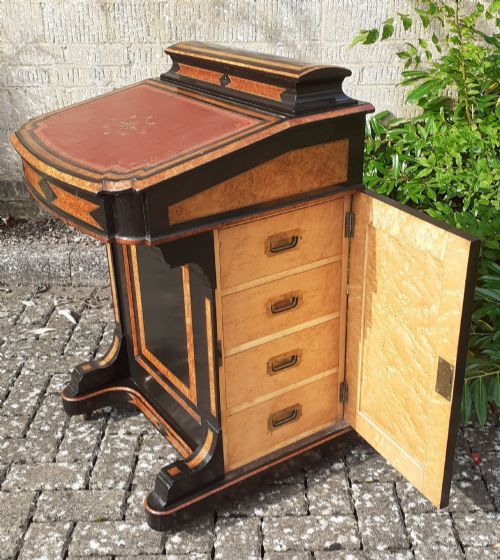
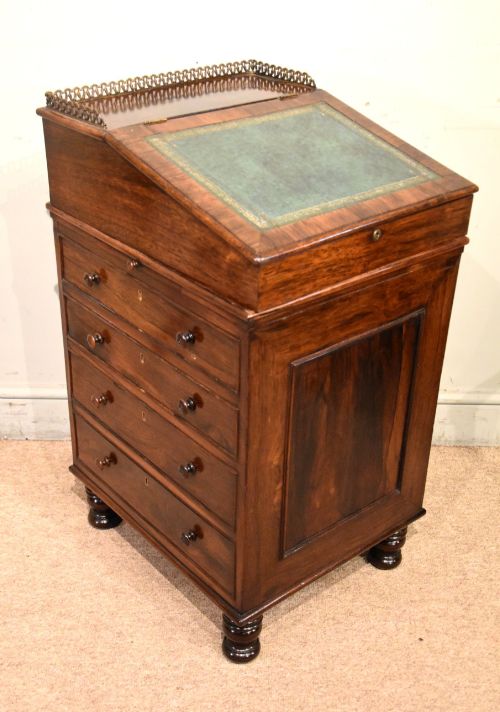
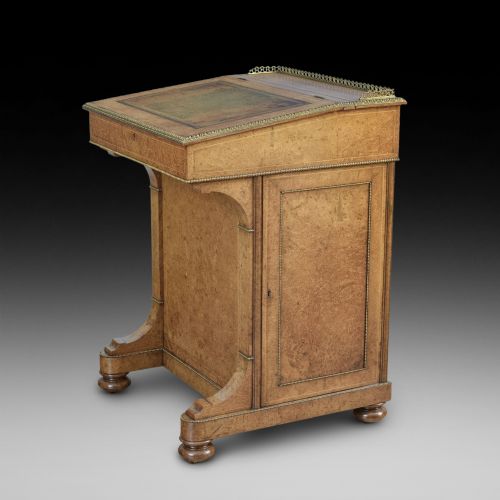
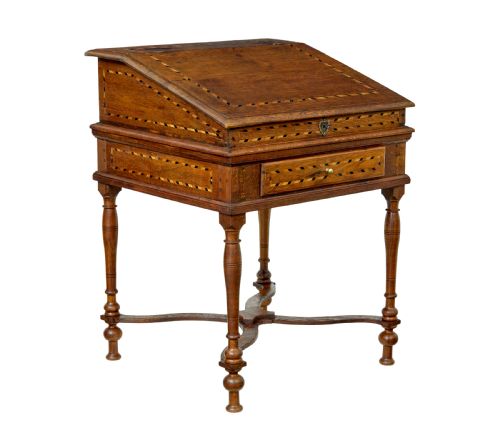
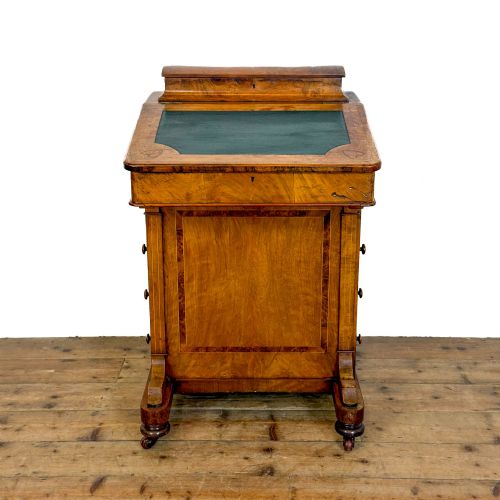
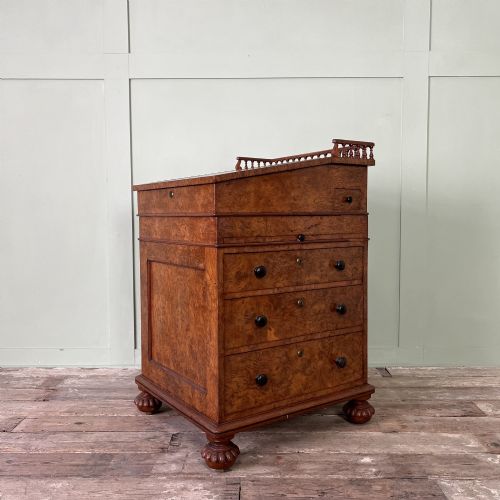
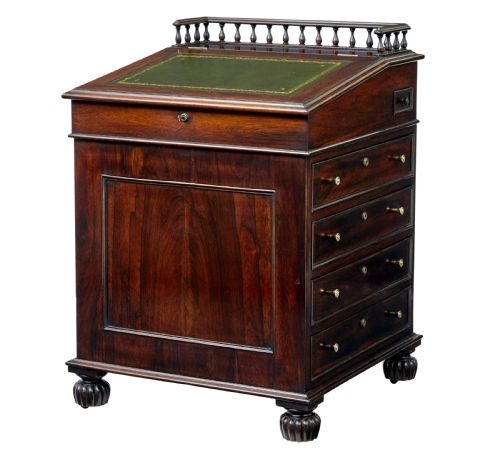
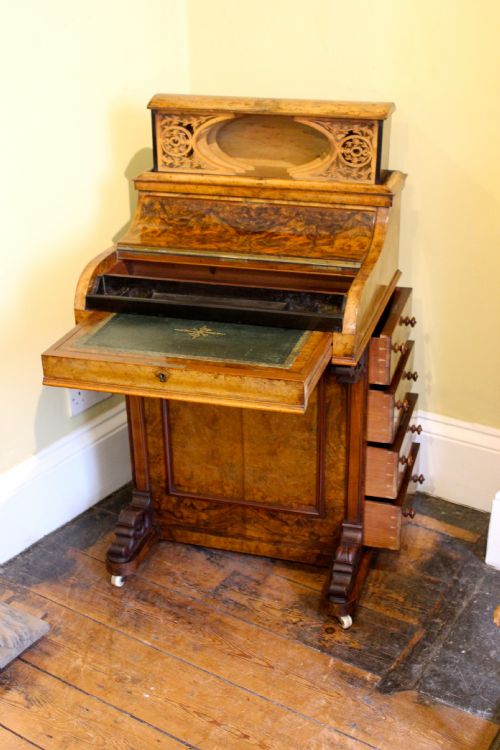
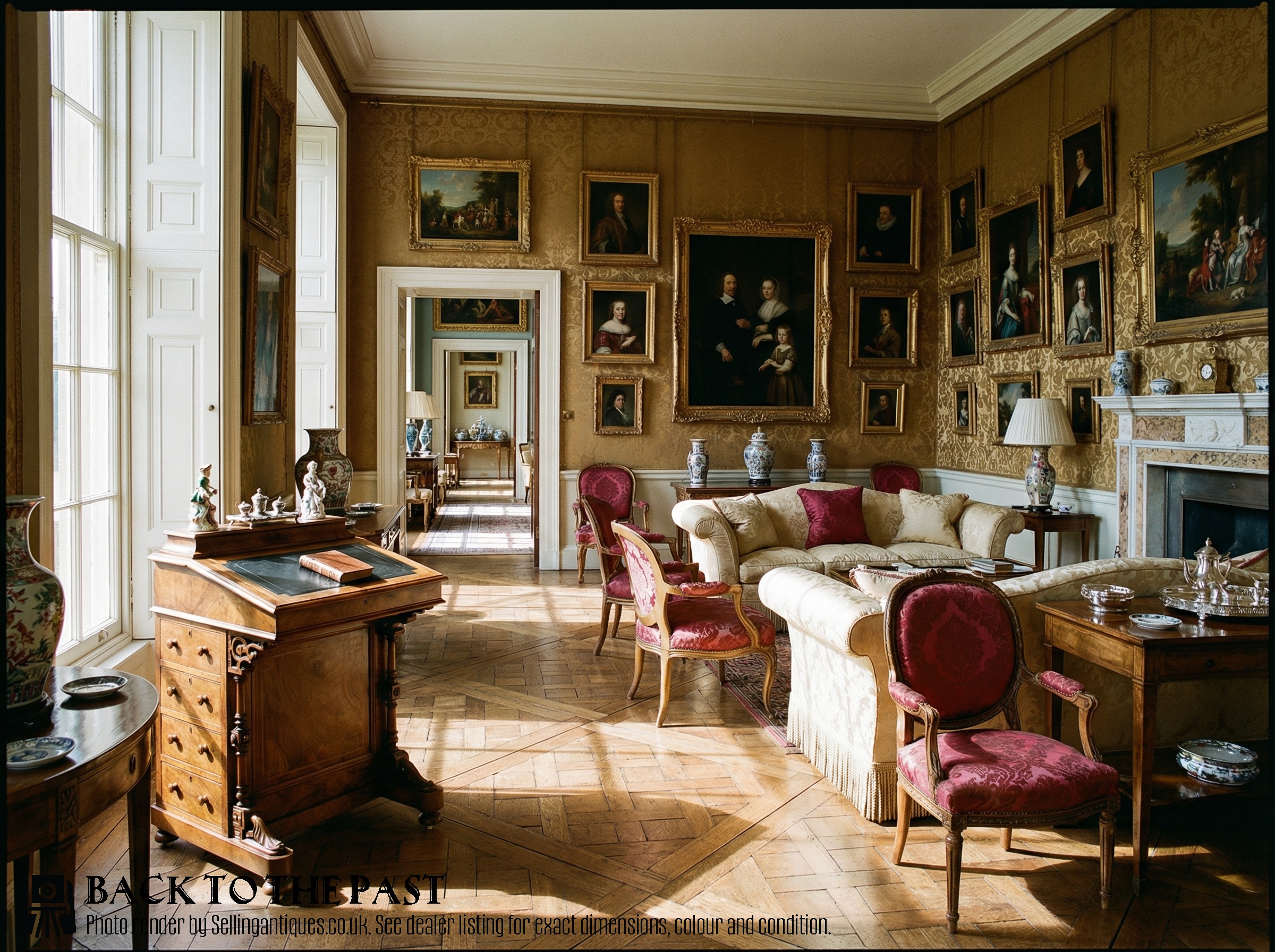
The layout generally incorporates side drawers accessed from a pedestal beneath the sloping lid, sometimes accompanied by brass galleried rails. Buyers will most frequently encounter walnut, burr walnut, mahogany, rosewood, and oak versions spanning the mid century decades.
Regional and stylistic variations include carved oak gothic revival models alongside inlaid amboyna and marquetry pieces. The form serves both as decorative furniture and a functional writing station for smaller domestic spaces.
Materials and construction
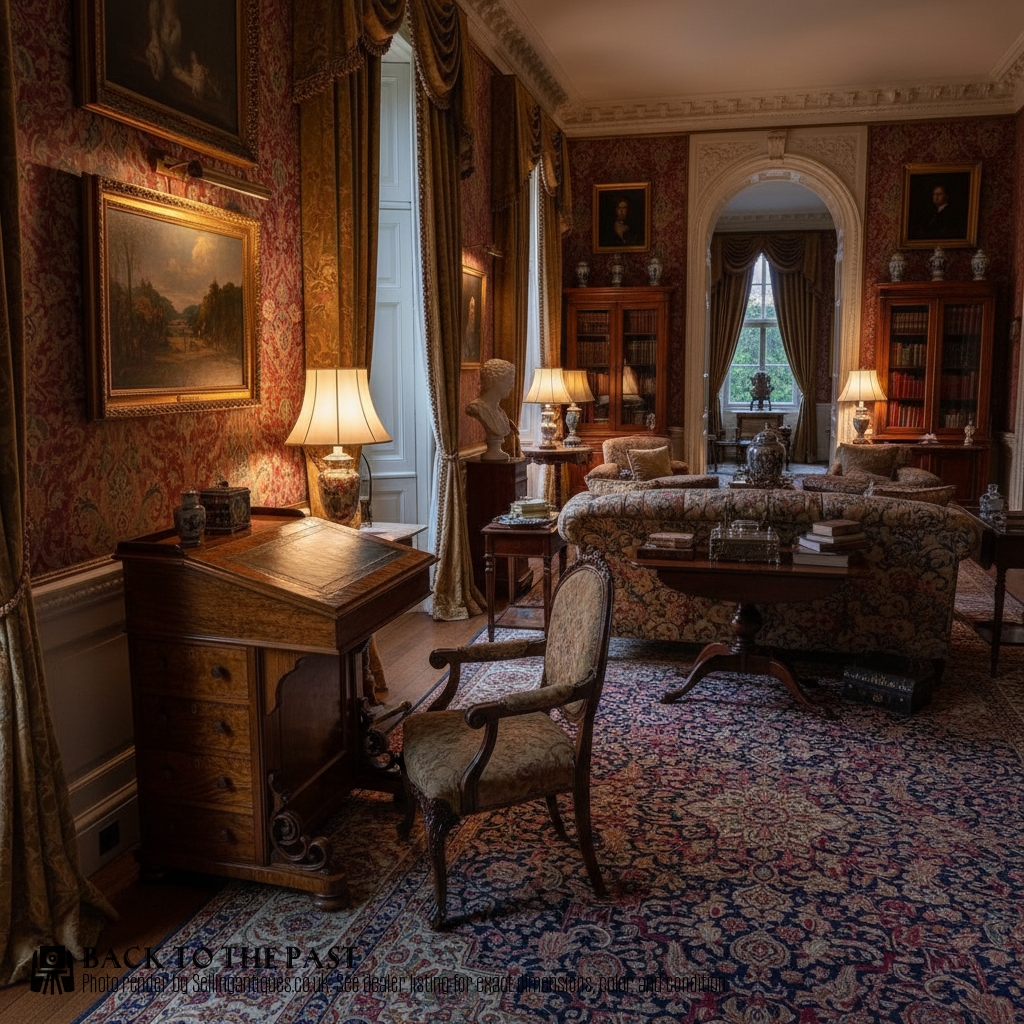
Cabinet makers utilised dense hardwoods including mahogany, walnut, burr walnut, rosewood, and oak for the primary carcase and structural elements. Decorative veneers like burr walnut and amboyna provided figured surfaces on the sloping lids and drawer fronts.
Working surfaces frequently incorporate inset leather writing panels to provide a smooth platform for correspondence. Brass components, including galleried rails, handles, and locks with keys, secure the stationery compartments and drawers.
Retail Price Guide 2026
Typical UK retail prices for 19th century davenport desk, calculated from the Sellingantiques database of over a million retail prices indexed since 2003. This retail price guide relies exclusively on Sellingantiques data; no external sources or auction records are used, so the figures do not describe the wider market.
Listings feature Victorian, Early Victorian, Regency, and William IV styles in mahogany, walnut, burr walnut, rosewood, and oak.
Distinctions in quality
The standard of timber selection largely dictates quality, separating figured burr walnut and richly grained rosewood or mahogany from standard domestic hardwoods. Finely executed marquetry inlay and complex carving, such as lion mask motifs or gothic tracery, separate standard production from high end pieces.
Internal complexity also defines the tier of a piece, with fitted stationery drawers, sliding writing surfaces, and integrated storage mechanisms representing superior craftsmanship. Maker stamps, such as those from documented Edinburgh workshops, provide evidence of workshop pedigree.
J & T Scott
The 19th Century Davenport Desk Glossary
- Davenport
- A compact pedestal desk featuring a sloping top hinged above a set of drawers. The form gained popularity during the nineteenth century for domestic correspondence.
- Secretaire
- A desk fitted with a pull out writing drawer or drop front flap that conceals small pigeonholes and inner drawers. This arrangement keeps writing materials neatly organised out of sight.
- Burr walnut
- Timber harvested from walnut tree growths that produces highly decorative, swirling grain patterns. Cabinet makers prized this wood for veneering prominent surfaces.
- Brass gallery
- A small decorative metal rail fitted around the top of the desk to prevent stationery and inkwells from sliding off. These fixtures add a polished metallic accent to the timber carcase.
- Marquetry
- The art of applying pieces of veneer to a structure to form decorative patterns and pictures. Makers used contrasting timbers to create elaborate floral or geometric designs.
Frequently Asked Questions
What is a 19th century davenport desk?
A davenport desk is a compact piece of writing furniture featuring a sloping desktop above a pedestal of side drawers. These pieces date across the Victorian, Regency, and William IV periods.
Cabinet makers produced them in varieties including standard writing desks, secretaire models, and elaborately carved gothic or inlaid versions.
How were davenport desks used?
They served as dedicated writing stations for correspondence, keeping paper, ink, and stationery contained within the compact desk body. The sloping lid provided a comfortable writing angle.
Side drawers allowed the user to sit close to the pedestal while keeping writing materials and personal ledgers locked securely away.
What woods are used in these desks?
Primary construction timbers include mahogany, walnut, burr walnut, rosewood, and oak. Cabinet makers often selected figured veneers for visual impact on the main surfaces.
Secondary details incorporate brass hardware, leather writing inserts, and contrasting inlaid woods for marquetry decoration.
How do I tell Victorian from Regency periods?
Regency and William IV pieces often display clean classical lines, rosewood surfaces, and restrained ornamentation. Victorian examples span a broader range including heavy carving, burr walnut veneers, and gothic revival details.
Construction techniques and specific stylistic quirks like lion mask carvings help align pieces with mid or early nineteenth century eras.