


19th Century Crystal Decanter
When you search for a 19th century crystal decanter, you meet heavy cut glass vessels designed to hold wine, spirits, and water in period dining rooms.
19th Century Crystal Decanter
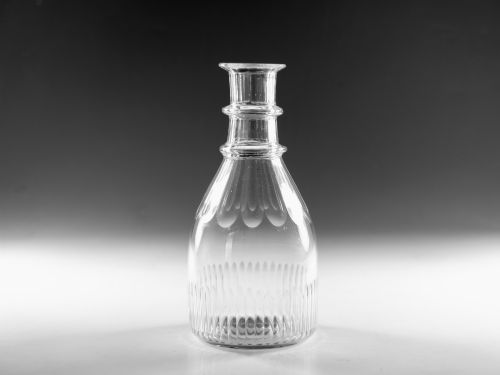
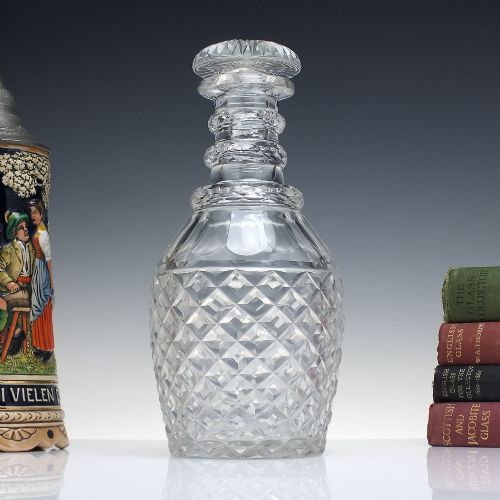
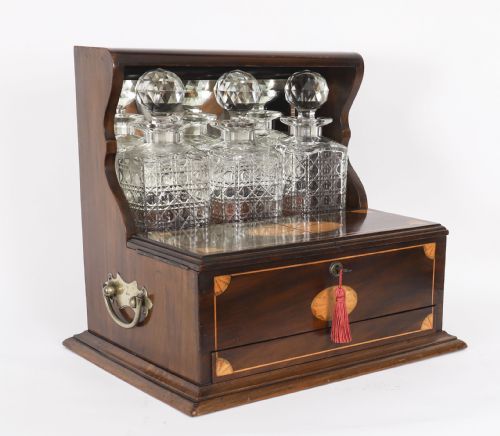
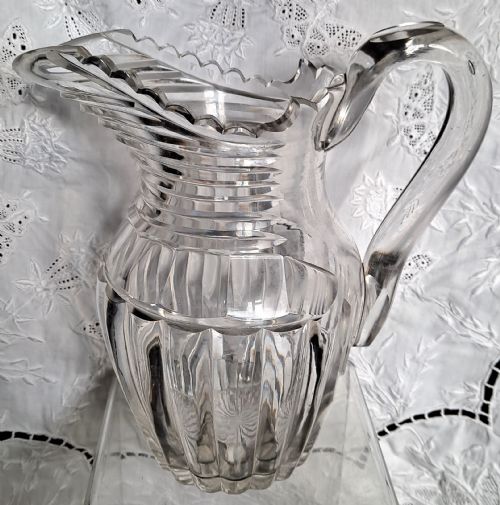
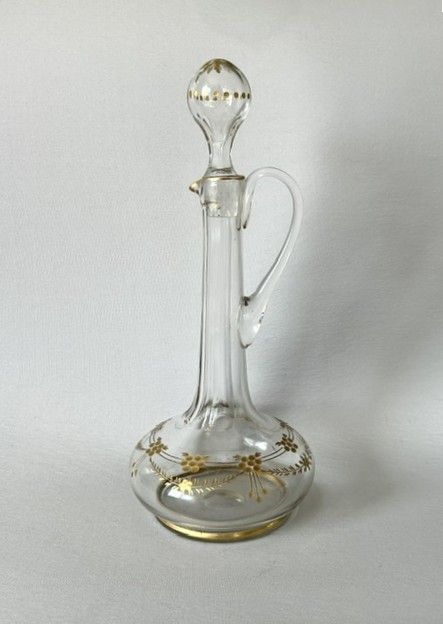
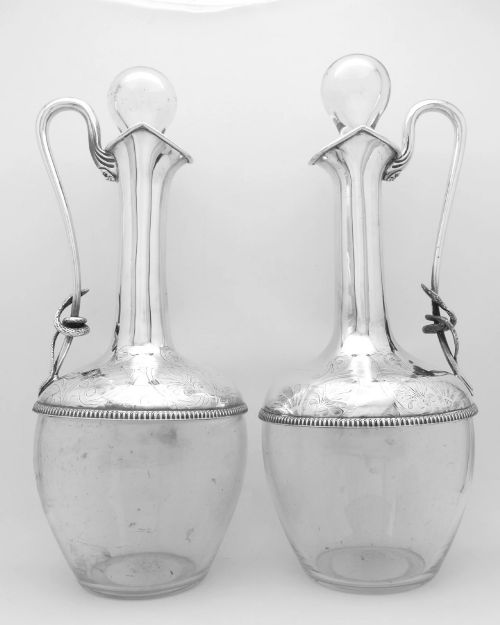
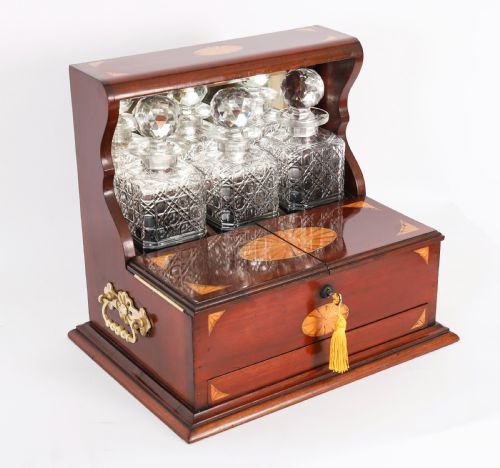
A 19th century crystal decanter encompasses standard wine vessels, shaft and globe shapes, ship decanters with wide bases for stability at sea, and matching pairs from the Georgian and Victorian eras. These pieces also extend to claret jugs, water jugs, and complete sets housed inside fitted tantalus boxes made from mahogany, walnut, or coromandel.
The styles shift across the decades from the restrained cutting of the Regency period through to ornate Victorian etching, Bohemian coloured overlays, and French Napoleon III liquor cabinets. Buyers encounter single bottles alongside triple sets fitted with silver-plated or solid silver hardware, sometimes accompanied by games compendiums and dry bar fittings.
Judging the work
Quality rests in the crispness of the wheel-cutting and the weight of the lead crystal, where sharper facets and thicker metal indicate superior material and skilled hand-polishing. The brilliance of the glass and the absence of cloudiness separate better productions from utilitarian utility ware.
In fitted pieces, the precision of the cabinetwork, the quality of the timber grain in walnut or coromandel housings, and the sturdiness of the silver-plated or brass mountings distinguish standard iterations from elaborately appointed salon pieces.
Listings feature lead crystal, glass, and silver plate alongside wooden cabinet timbers including mahogany, walnut, coromandel, and satinwood.
Baccarat·The Goldsmith Co
The 19th Century Crystal Decanter Glossary
- Tantalus
- A locking wooden frame that holds decanters securely while displaying their contents, named after the mythological figure because the stoppers cannot be removed while the bar is locked.
- Pillar cut
- A heavy linear facet cut deeply into the body of the vessel, creating vertical columns that refract light through thick lead crystal.
- Latticinio
- Fine white or coloured glass threads embedded within the clear metal during blowing, creating delicate network patterns seen on continental wine jugs.
- Ship decanter
- A form featuring a broad, flat base and a conical body designed to prevent tipping on rolling dining tables aboard vessels.
- Cave a liqueur
- A French boxed set, often lined with velvet and fitted with ormolu mounts, containing matching liqueur decanters and small glasses.
19th Century Crystal Decanter: Frequently Asked Questions
What is a tantalus?
A tantalus is a locking wooden cabinet or frame that holds decanters upright, securing the stoppers beneath a metal bar to prevent unauthorized access to the spirits.
These units typically house three or four cut crystal bottles inside mahogany, walnut, or coromandel boxes, often incorporating games drawers or dry bar compartments.
Why do ship decanters have wide bases?
Ship decanters feature a distinctive conical shape with a broad, low centre of gravity to prevent the vessel from overturning during movement.
This practical engineering allowed diners to pass wine safely across the table when dining at sea or in unstable dining rooms.
How do you date a cut glass decanter?
Dating relies on observing the profile of the body, the shape of the neck rings, and the style of the facet cutting, alongside the presence of pontil marks on the base.
Earlier Regency and Georgian examples generally show simpler, heavier pillar or prismatic cutting, while Victorian pieces often feature denser hobnail patterns, engraved vine motifs, or coloured overlays.
Were stoppers original to the decanter?
Stoppers were individually ground to fit the neck of each specific decanter during manufacture, ensuring a tight seal for the contents.
Matching the cut pattern and the degree of wear on the ground peg helps confirm whether a stopper has remained with its original vessel since the nineteenth century.