
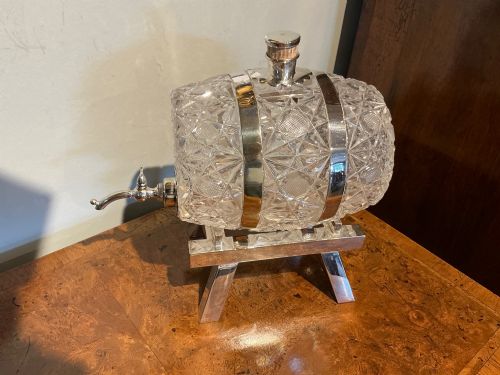


Cut Glass Port Decanter
A cut glass port decanter brings heavy lead crystal and bright facet-cutting to the dining table, offering both traditional service and enduring sparkle.
Cut Glass Port Decanter
A cut glass port decanter is a heavy glass vessel designed for serving fortified wine, commonly found in forms dating from the Regency, Victorian, and Edwardian periods. These pieces combine practical pouring spouts with deep geometric cutting that catches the light around the room.
The versions most likely to be met on this page include nineteenth-century lead crystal examples, featuring traditional neck rings and matching stoppers. Makers utilised clear glass and heavy crystal to produce durable bottles suited to regular dining use.
Geographic origins span English workshops of the Georgian, Regency, and Victorian eras, with styles ranging from low ship's decanters to tall Prussian-shaped bottles. Each object type balances stability on the sideboard with elegance during pouring.
How they were made
Glassmakers shaped these vessels using lead crystal and clear glass, blowing the molten material into moulds or free-blowing the basic form before cooling. Artisans then applied wheel-cutting techniques to carve deep flutes, diamonds, and horizontal rings into the exterior surface.
Necks were frequently finished with applied glass rings, sometimes numbering two or three, designed to provide a secure grip for the hand during pouring. Stoppers were ground by hand to fit individual bottle necks snugly, often paired with silver plate or sterling silver mounts and cork components.
What varies in quality
Quality rests upon the crispness of the wheel-cutting and the weight of the lead crystal material used in the body. Superior examples display sharp, defined facets that refract light cleanly, whereas simpler pieces show softer edges and lighter glass.
The proportion of the vessel and the matching of the original stopper define the visual balance of the piece. Heavier crystal provides a substantial feel in the hand and a clearer ring when struck gently.
The Cut Glass Port Decanter Glossary
- Lead crystal
- Glass containing a high proportion of lead oxide, which increases weight, brilliance, and softness for easier cutting. This material is standard for fine decanters.
- Prussian style
- A decanter shape featuring a tapering body and a series of horizontal neck rings. This form originated in the eighteenth century and remained popular through the Regency period.
- Ship's decanter
- A vessel with a broad, flat base and a conical body designed to prevent tipping at sea. These stable decanters were widely used on dining tables ashore as well.
- Neck ring
- An applied band of glass around the neck of a decanter, useful for secure handling. Decanters often feature one, two, or three distinct rings.
- Stopper
- A ground-glass or fitted plug designed to seal the decanter neck and preserve the contents. Original matching stoppers add significantly to the integrity of a piece.
Cut Glass Port Decanter: Frequently Asked Questions
What is a cut glass port decanter?
A cut glass port decanter is a heavy glass container shaped to hold and serve fortified wine. These vessels feature decorative surface cutting and fitted stoppers.
Most examples date from the nineteenth and early twentieth centuries, reflecting Regency, Victorian, and Edwardian manufacturing traditions in England.
How do I date a cut glass decanter?
Dating relies on observing the overall silhouette, the style of the cutting, and the shape of the neck rings. Regency pieces often show heavy lead crystal and distinct three-ring necks, while Edwardian versions display varied proportions.
Comparing the weight, clarity, and base wear helps place the object within its proper nineteenth-century or early twentieth-century period.
Are ship's decanters different from standard decanters?
Ship's decanters feature a wide, low base that prevents the vessel from sliding or tipping on moving surfaces. Standard decanters tend to have straight or tapering cylindrical bodies.
Both forms utilise heavy lead crystal and deep facet-cutting to achieve stability and visual appeal.
How should I clean an old decanter?
Cleaning requires gentle washing with warm water and mild detergent, avoiding harsh abrasives that might scratch the surface. Residue inside the body can be loosened using specialised cleaning beads and water.
Stoppers should be washed separately and dried thoroughly before being replaced in the neck.
Did these decanters always have matching stoppers?
Original stoppers were ground to fit each individual bottle neck during manufacture. Finding a decanter with its correct period stopper ensures proper sealing and historical consistency.
Many surviving pieces retain their original matching glass stoppers, often featuring cut star or button tops.