

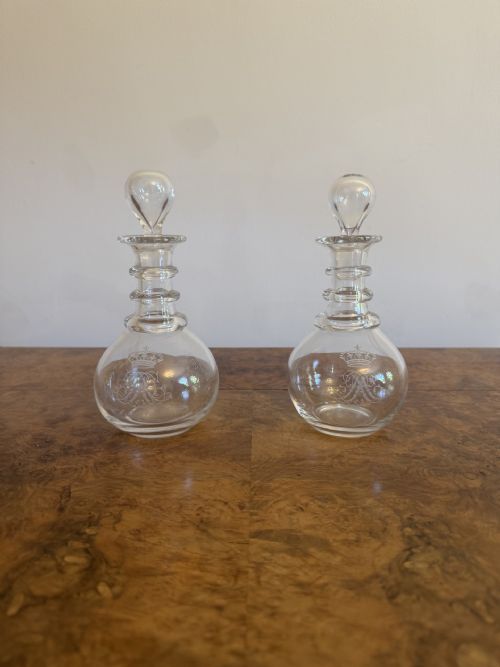

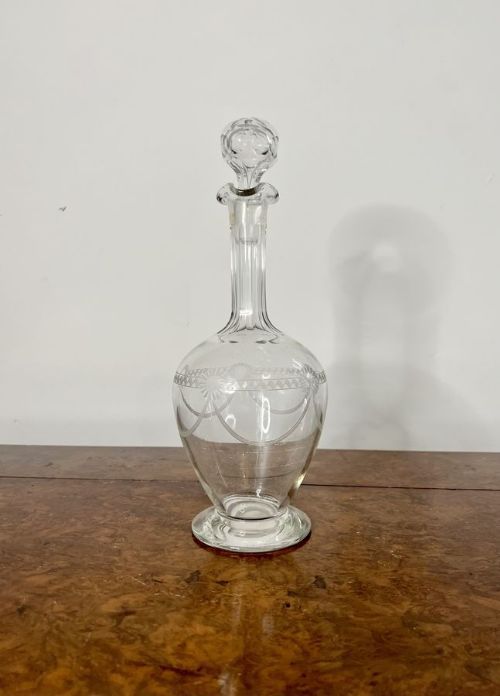


Etched Glass Carafe
An etched glass carafe brings tactile weight and delicate floral or foliate pattern to the table.
Etched Glass Carafe
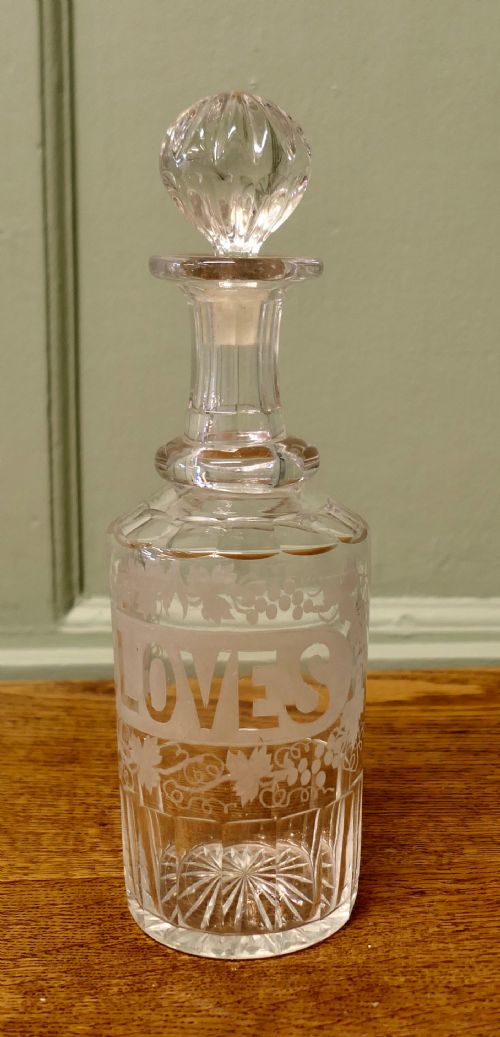
An etched glass carafe or decanter serves wine and spirits while displaying ornamental wheel or acid engraving upon the vessel body. These serving vessels span the Victorian and Edwardian eras into the twentieth century, taking the form of claret jugs, ewers, and spirit decanters.
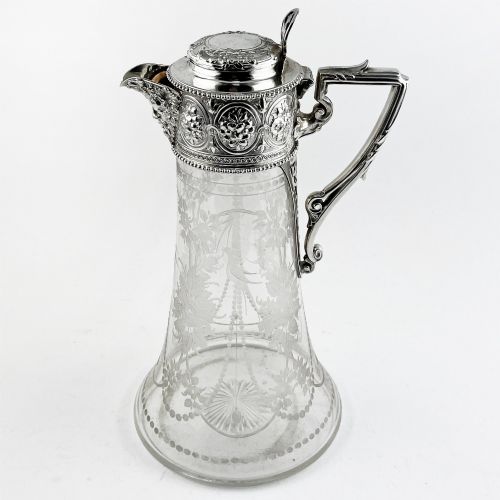
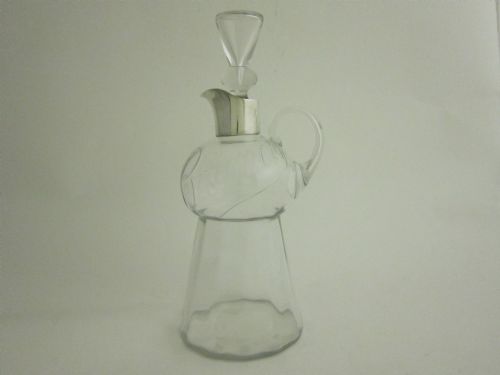
The version most commonly met on this page is the Victorian or Edwardian glass vessel fitted with sterling silver or silver plated mounts, often incorporating handles and pouring spouts.
Makers and manufacturers from England, France, Germany, and Bohemia produced these pieces utilising clear, ruby, cranberry, or overlaid glass alongside metalwork.
How they were made
Glass bodies were blown into moulds or free-blown, then cut, engraved, or acid-etched to create surface patterns such as grapes and vines. Artisans utilised hand wheel engraving and chemical etching to achieve frosted or translucent decorative details.
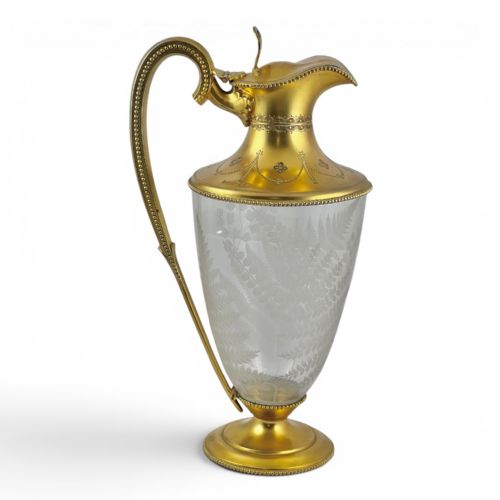
Mounts, collars, handles, and lids were fashioned from sterling silver, silver gilt, silver plate, or wrought iron, then secured to the glass neck.
Listings feature Victorian and Edwardian pieces in clear glass, ruby glass, and silver plate.
What varies in quality
Quality rests in the crispness of the glass engraving and the weight of the material, whether clear lead crystal or coloured overlay glass. Superior examples display deeply cut or finely wheel-engraved botanical motifs rather than shallow surface scratching.
The execution and metal purity of the silver mounts, collars, and spouts distinguish finer productions, alongside the integration between glass body and metalwork.
Asprey and Co Ltd·Elkington
The Etched Glass Carafe Glossary
- Claret jug
- A pouring vessel specifically designed for serving red wine at the table. These typically incorporate a hinged metal lid and a handle.
- Silver plate
- A base metal coated with a thin layer of silver. Many nineteenth century examples use this technique for mounts and handles.
- Lead crystal
- Glass containing metal oxide that increases weight, brilliance, and clarity. This material accepts deep cutting and engraving cleanly.
- Overlay glass
- A technique where a layer of coloured glass is cased over a clear glass body. Cutting through the outer layer reveals the contrasting glass beneath.
- Acid etching
- A method of decorating glass using acid to eat away exposed surfaces. This creates frosted designs without mechanical cutting.
Etched Glass Carafe: Frequently Asked Questions
How do I clean an etched glass carafe?
Wash the vessel by hand using warm water and mild detergent without abrasive sponges. Avoid soaking pieces with silver mounts in water for extended periods.
Dry the interior carefully to prevent water spots, and polish the silver mounts with a soft cloth designed for precious metals.
Can I use these for serving wine today?
These historical vessels function well for decanting and serving wine at the dining table. Ensure the interior is thoroughly rinsed before use.
Hand wash the piece immediately after use to prevent staining from red wine residues.
How do I tell Victorian from Edwardian pieces?
Victorian vessels often display heavier cut glass and ornate floral or naturalistic engraving alongside substantial silver plate or sterling mounts. Edwardian examples tend toward lighter proportions and refined decorative motifs.
Maker marks and hallmarks on the silver mounts provide definitive dating evidence.