


19th Century Cloisonne Enamel
19th century cloisonne enamel brings together vivid coloured glass fields and metal wirework across chargers, vases, and vessels from diverse world traditions.
19th Century Cloisonne Enamel
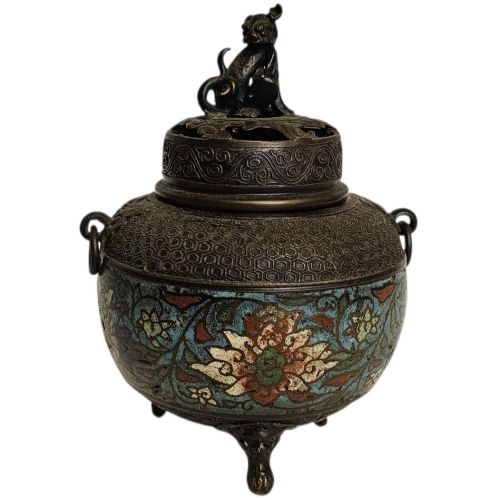
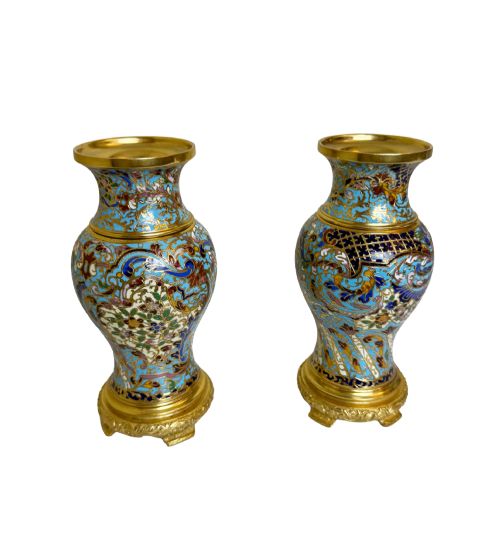
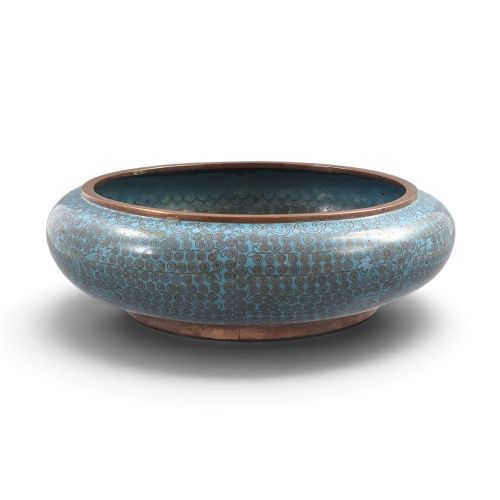
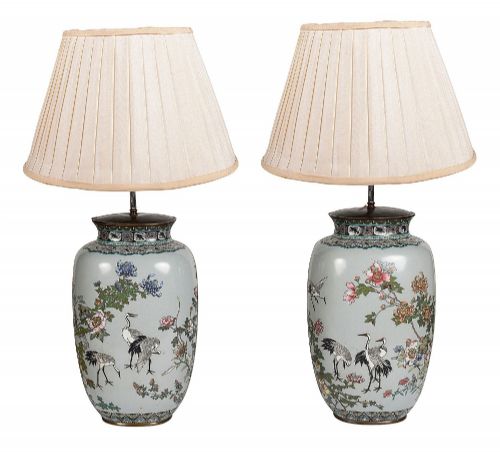
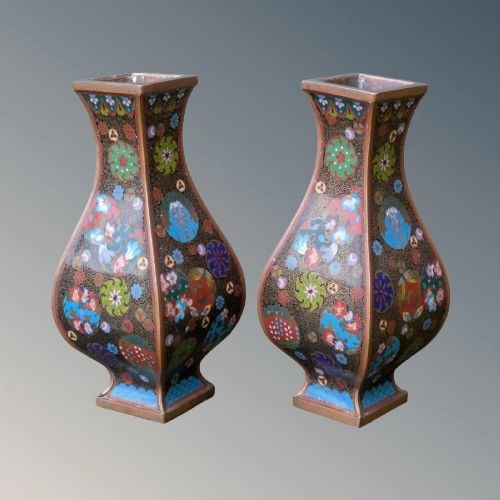
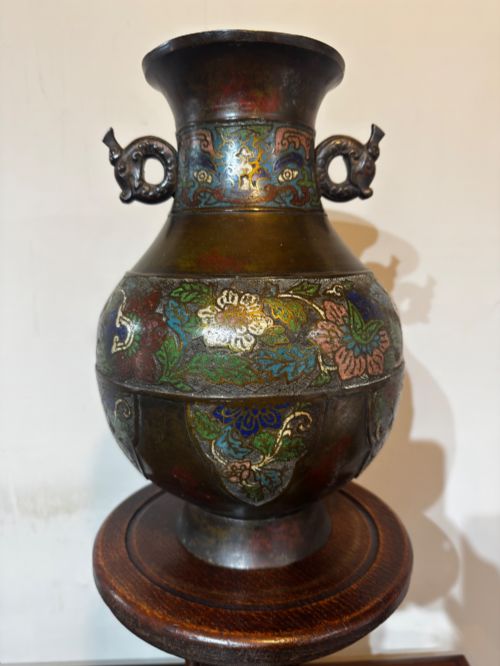
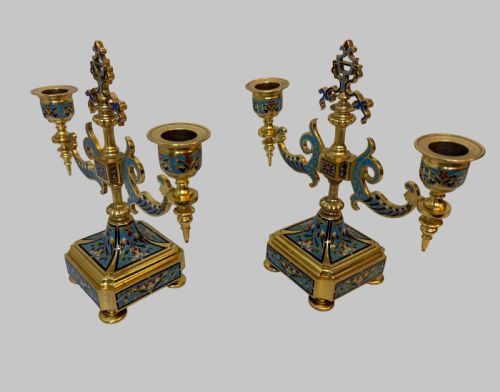
When searching for 19th century cloisonne enamel, a buyer encounters a wide array of decorative objects including large chargers, palace vases, bowls, censers, and clocks. The inventory draws heavily from Japanese Meiji period workshops, Chinese Qing dynasty production, and European centres such as France and Imperial Russia.
Vessels span from small scholar's brush washers and lidded bowls to massive temple water dispensers and palace vases standing over ninety centimetres tall. Japanese examples often feature naturalistic motifs like leaping koi, dragons, phoenixes, and birds perched on branches, whilst Chinese and Russian pieces lean towards traditional vessel forms and silver gilt mountings.
Materials and construction
The foundation of these pieces relies on metal bases fashioned from copper, bronze, brass, or solid silver. Artisans then soldered fine metal wires, known as cloisons, onto the surface to create intricate cellular compartments.
Coloured glass pastes or enamels were packed into these tiny wired cells before firing in a kiln. Once cooled, the surfaces were ground and polished down until the metal wire rims and vitrified enamel fields formed a smooth, continuous plane.
Materials recorded across the inventory include copper, brass, bronze, gilt bronze, solid silver, porcelain, wood, and fabric.
Assessing quality and execution
Quality rests upon the precision of the wirework and the density of the enamel fill. Finer pieces demonstrate exceptionally thin, uniform wire cells that form complex pictorial scenes without visible flaws or pitting in the coloured glass pastes.
The ambition of the form and the clarity of the design separate standard production from masterworks. Signed chargers with complex animal or avian iconography, alongside heavily mounted or gilt bronze pieces, represent the higher tiers of period output.
The 19th Century Cloisonne Enamel Glossary
- Cloison
- A thin metal wire soldered to a metal base to form compartments for enamel paste. These wires remain visible on the finished surface as outlines around the coloured glass.
- Champleve
- An enamelling technique where troughs or cavities are cast or gouged directly into a metal surface rather than building up soldered wires. The hollows are then filled with enamel and fired.
- Totai Shippo
- A Japanese technique using porcelain or earthenware as a base body instead of metal, decorated with wire cloisonne enamel. Pieces often feature textured grounds that mimic natural tree bark.
- Meiji Period
- The era of Japanese history spanning from 1868 to 1912, noted for a massive surge in the export of highly detailed cloisonne enamel chargers and vases.
- Qing Dynasty
- The final imperial dynasty of China, lasting from 1644 to 1912, represented in enamel work by archaic vessel forms, censers, and scholar's objects.
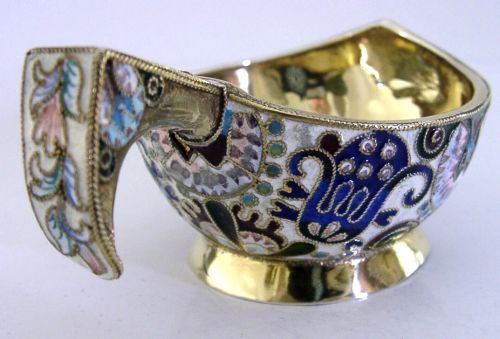
- Kovsh
- A traditional Russian drinking vessel shaped like a boat or water bird, frequently executed in solid silver with gilt and enamel decoration.
19th Century Cloisonne Enamel: Frequently Asked Questions
What is Totai Shippo?
Totai Shippo translates to bodyless or earthenware cloisonne, where the artisan applied wires and enamel directly onto a ceramic or porcelain core rather than metal.
These pieces often display textured surfaces resembling tree bark or bamboo alongside traditional dragon and floral motifs.
How were these enamel objects used originally?
Many large chargers, vases, and palace vessels served purely as decorative display pieces within elite interiors, reflecting the high status of their owners.
Smaller items like censers, brush washers, Kovsh cups, and lidded bowls fulfilled functional roles in scholarly studies, dining rooms, and ritual spaces.
How do I date 19th century enamel pieces?
Dating relies on stylistic markers, materials, and signatures associated with specific manufacturing periods such as the Meiji era or the Qing dynasty.
Makers' signatures, specific mounting styles like ormolu, and the integration of distinct regional techniques help narrow the production window.