
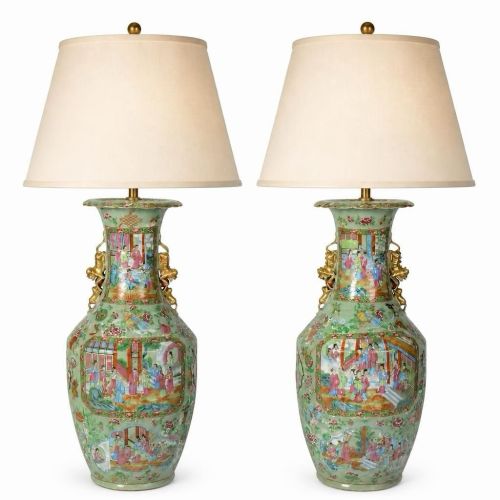


19th Century Chinese Porcelain Lamp
A 19th century chinese porcelain lamp brings hand-painted colour and ceramic weight to a room.
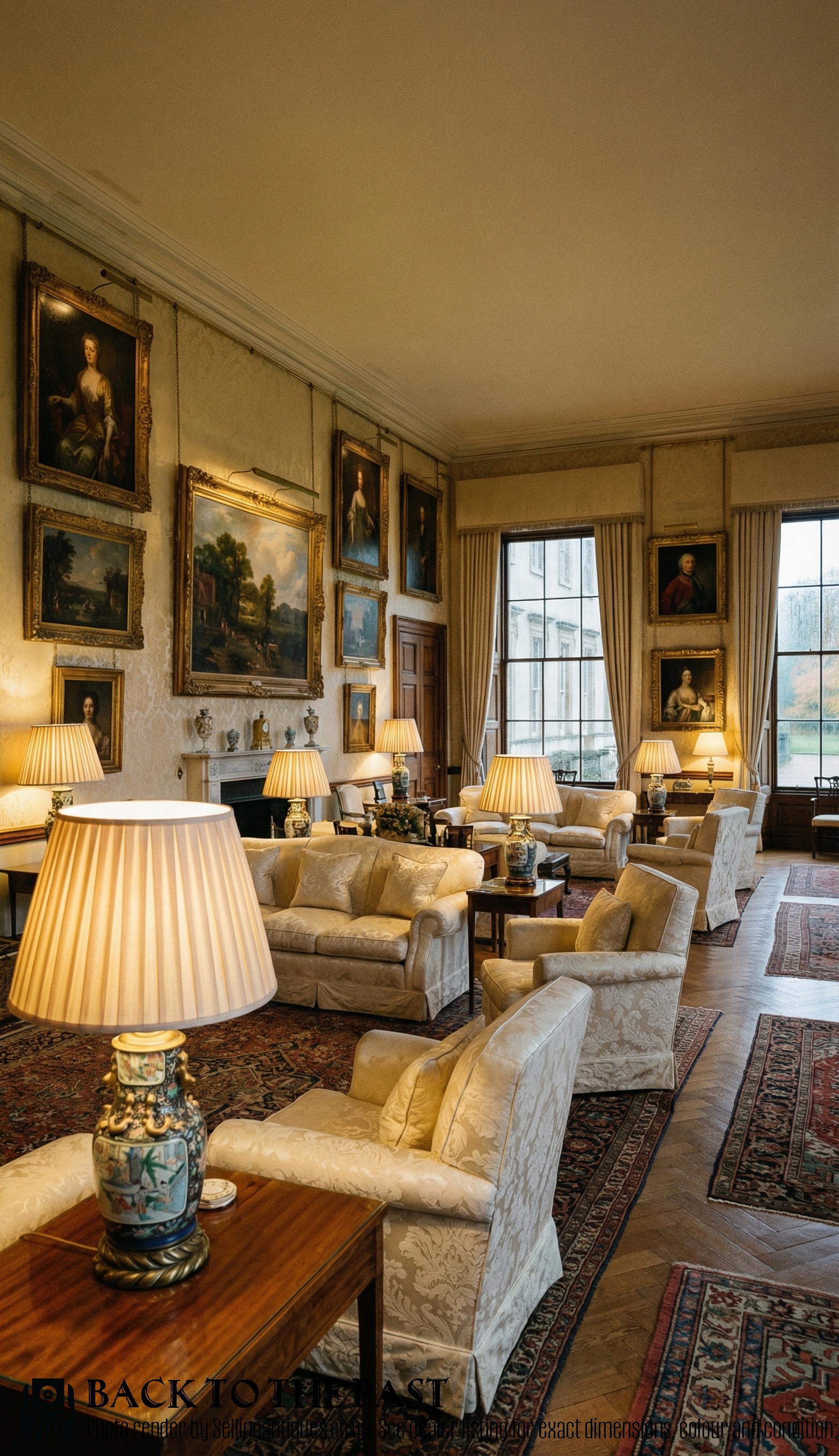
19th Century Chinese Porcelain Lamp
A 19th century chinese porcelain lamp typically starts life as a ceramic vessel before conversion for electrical use. The selection spans single table lamps and matched pairs, frequently derived from earlier ginger jars or large vases.
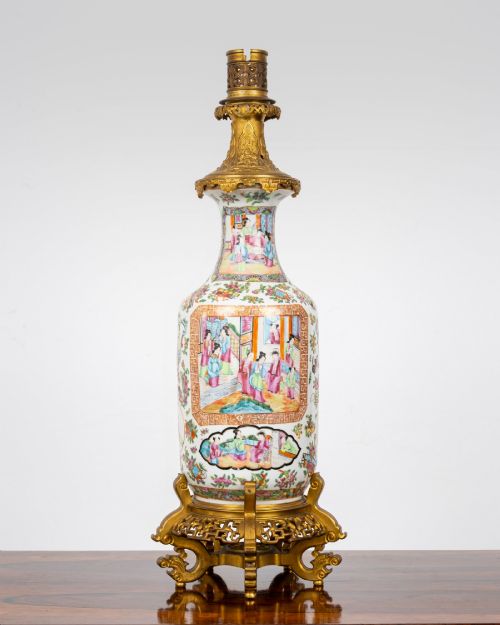
The decorative styles draw heavily upon Qing Dynasty aesthetics, including Famille Rose, Famille Verte, blue and white, and Rose Medallion patterns. Many pieces combine traditional Oriental ceramics with European metal mounts.
Vessels span various scales, from diminutive enamel-painted examples measuring under twenty centimetres to monumental forms exceeding one metre in height. Conversion methods and mounted hardware often reflect Victorian tastes for interior display.
Materials and construction
The primary material is fired porcelain, hand-decorated with mineral pigments to achieve rich palettes of green, pink, blue, and black. Certain items incorporate crackleware glazes or celadon surfaces.
Metalwork mounts in brass, gilt bronze, and ormolu secure the base and rim, often added during European conversion or export preparation. Lamps frequently include fabric or silk shades to complete the assembly.
Some towering vessels reach past one metre, ensuring these converted jars command serious attention in any room.
Distinguishing finer examples
Quality rests in the precision of the hand-painted brushwork on the porcelain body and the crispness of the applied ormolu or gilt bronze mounts. Finer pieces demonstrate careful integration between the ceramic vessel and the metal hardware.
The balance of the form and the preservation of the original glaze details distinguish standard conversions from exceptional decorative objects.
The 19th Century Chinese Porcelain Lamp Glossary
- Famille Rose
- A palette of opaque enamels dominated by pink or rose colours, introduced during the Qing Dynasty. This technique allows for detailed pictorial scenes on porcelain bodies.
- Ormolu
- Gilt bronze mounted onto furniture and ceramics, popular in French and Victorian decorative schemes. It provides a bright metallic contrast to the fired porcelain.
- Celadon
- A transparent jade-green glaze laid over a pale body, creating subtle crackle effects. It is characteristic of classical Chinese ceramic traditions.
- Rose Medallion
- A distinct Canton pattern featuring panels of figures and birds interspersed with flowers and butterflies. The design uses bright enamels within gilded borders.
- Ginger Jar
- A high-shouldered ceramic vessel originally used for storing spices, frequently converted into a table lamp. These forms offer stable proportions for domestic lighting.
19th Century Chinese Porcelain Lamp: Frequently Asked Questions
How do I wire an old lamp?
Most antique lamps require professional rewiring to meet modern electrical safety standards. A qualified electrician can replace internal cord sets while preserving the original ceramic body.
Care should be taken to protect antique mounts and threaded fittings during any rewiring process to maintain the structural integrity of the base.
Are these lamps sold as pairs?
Many listings feature matched pairs of table lamps converted from identical vases or ginger jars. Single lamps also appear frequently in the inventory.
Pairs often command higher interest for symmetrical placement on sideboards or mantelpieces within traditional interior schemes.
What periods do these lamps date from?
The inventory focuses on items originating across the nineteenth century, including pieces produced during the Qing Dynasty and Victorian eras. Some items reflect later nineteenth-century export production.
Stylistic markers and mounting techniques help narrow the production window for specific ceramic bodies.
How do I clean the porcelain?
Dusting with a dry, soft cloth is recommended to protect delicate enamel painted surfaces and gilt mounts. Moisture and chemical cleaners can damage fragile nineteenth-century pigments.
Silk or fabric shades should be brushed gently or vacuumed with a low-suction attachment to remove surface particulate matter.