



19th Century Ceramic Dogs
These 19th century ceramic dogs bring character to a mantelpiece, offering the traditional appeal of Victorian Staffordshire figures and continental porcelain.
19th Century Ceramic Dogs
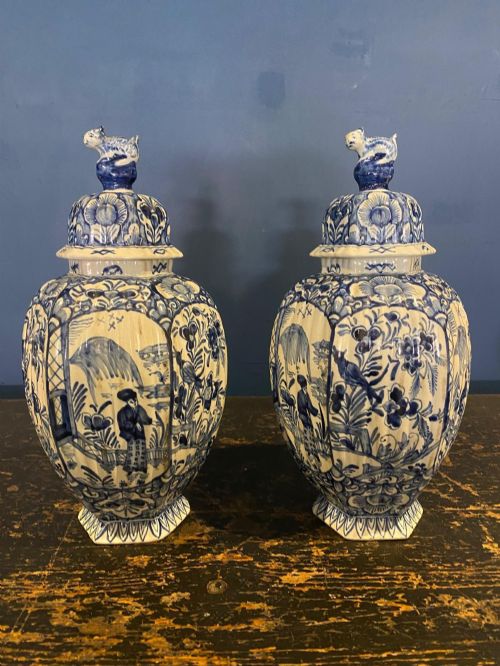
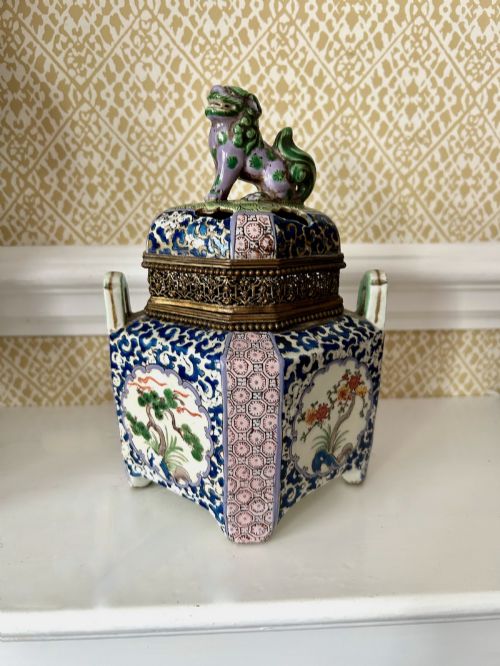
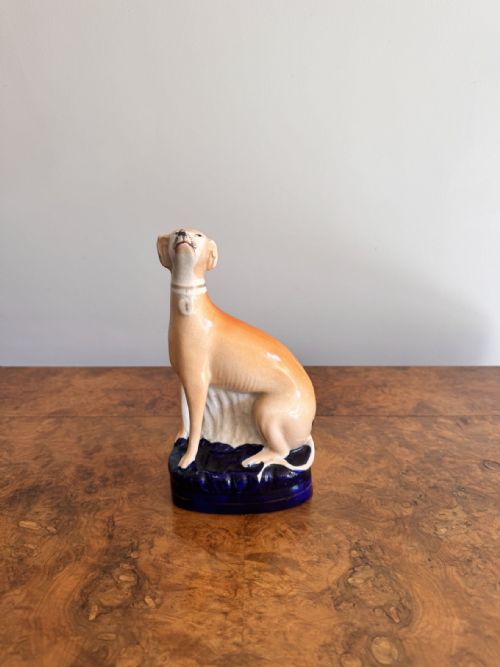
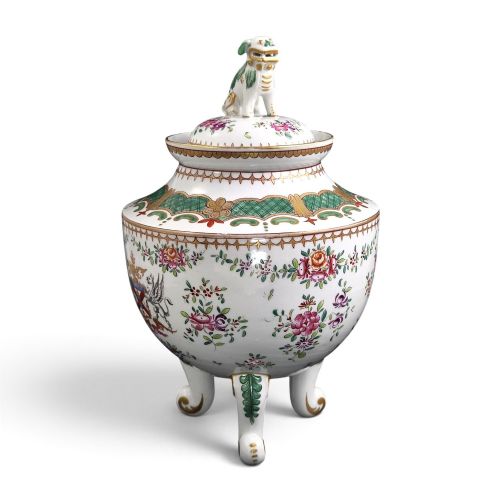
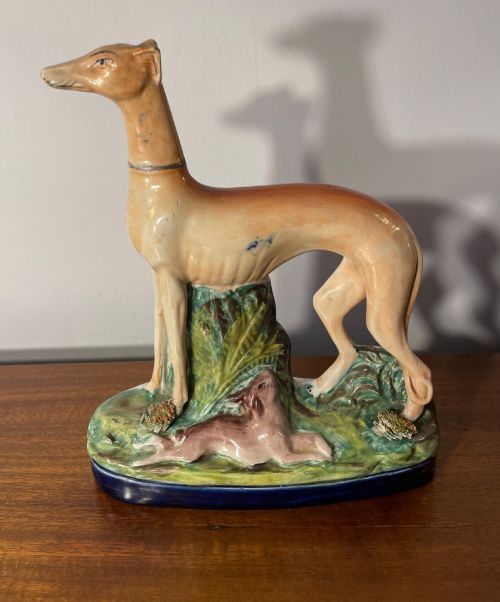
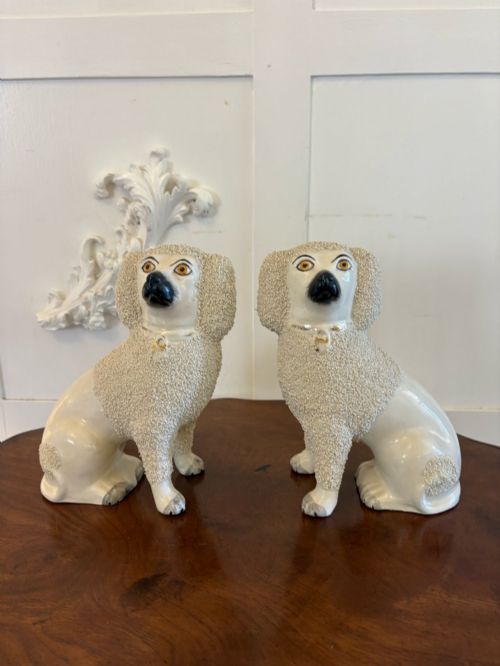
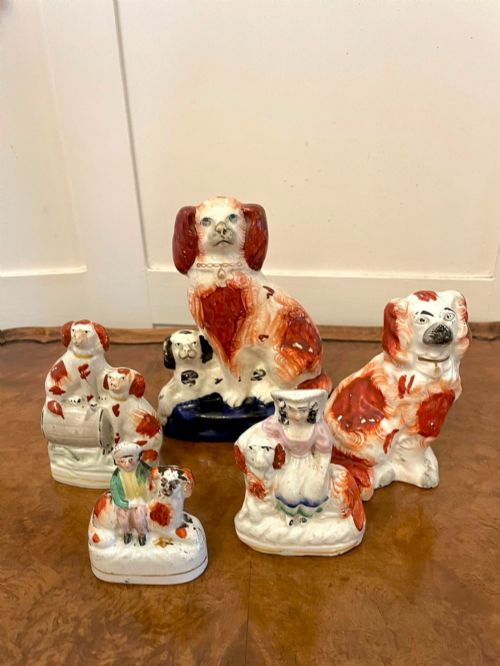
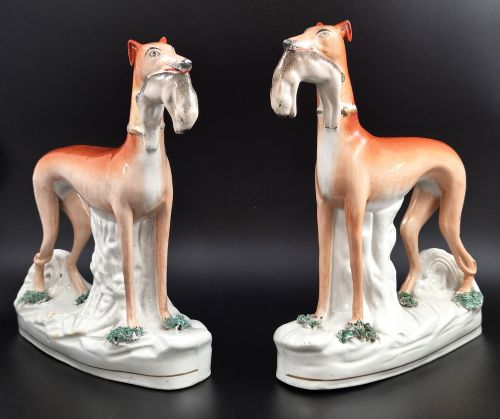
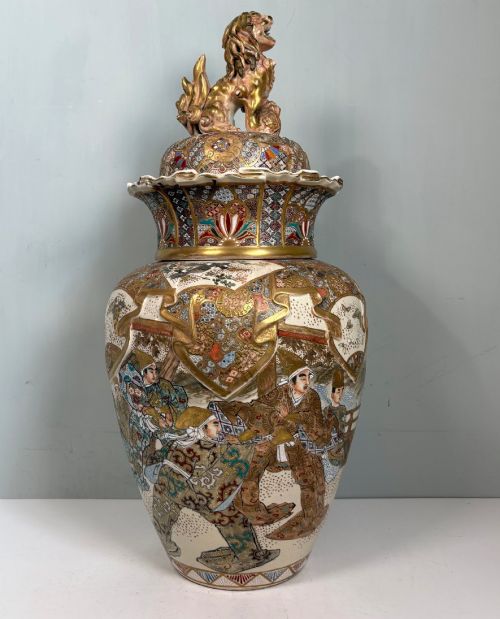
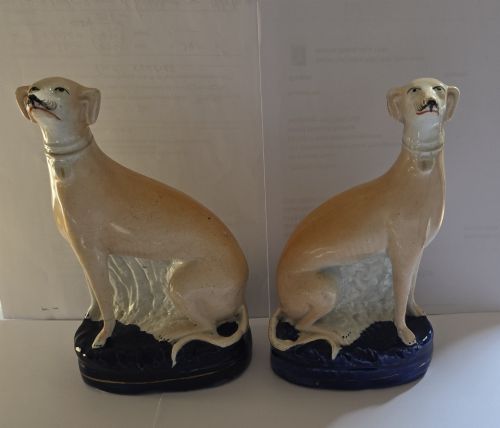
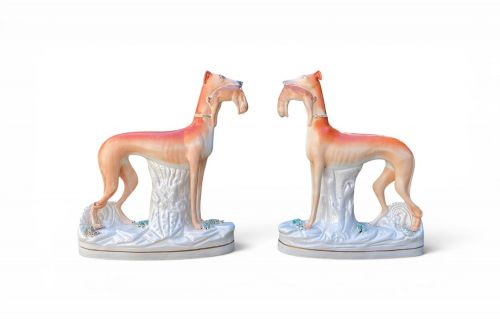
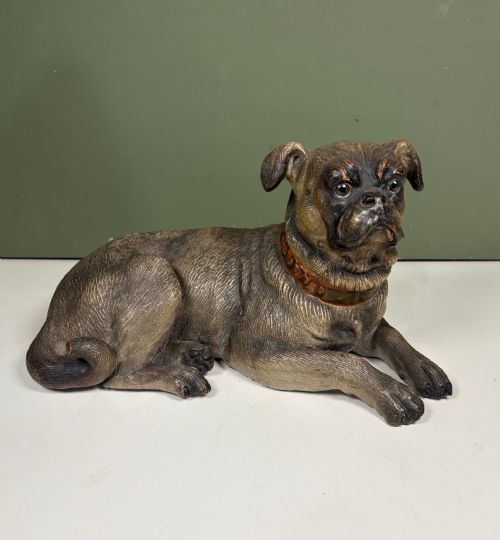
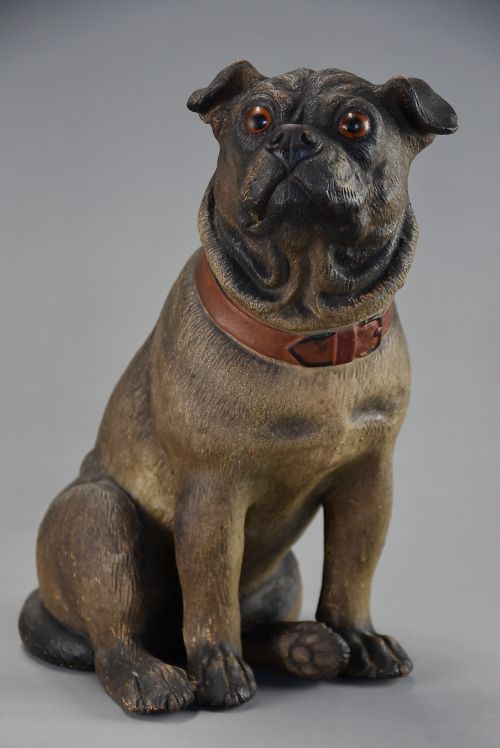
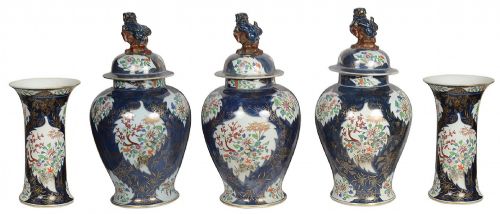
When searching for 19th century ceramic dogs, buyers encounter a diverse group of figures spanning the Victorian era and continental European workshops. These pieces take the form of Staffordshire spaniels, poodles, greyhounds, and pugs, often modeled as matched pairs for display on mantels. Alongside British earthenware, the selection includes German porcelain, Austrian terracotta, and Asian ceramic guardian lions.
The Staffordshire tradition dominates the domestic output, featuring seated spaniels, dalmatian inkwells, and whippets adorned with painted or gilt details. Continental factories contributed distinct figures, such as German porcelain Spitz dogs and terracotta pugs from the late nineteenth century. These objects served primarily as decorative ornaments for middle-class interiors during the Victorian period.
How they were made
Continental manufactories utilised hard-paste porcelain and Parian ware to achieve finer anatomical details in sculptures of hunting dogs and gundogs. Stoneware and terracotta served for more robust models like pug dogs and larger greyhounds. Firing techniques determined the final finish, ranging from high-gloss transparent glazes to matte biscuit porcelain.
19th Century Ceramic Dogs Retail Price Guide 2026
Typical asking prices for 19th century ceramic dogs among the pieces listed under this phrase on Sellingantiques today, from the lower quarter to the upper quarter. They describe what is for sale here now, not the wider market.
Listings feature 19th century ceramic dogs created across England, Germany, Austria, France, and China in earthenware, porcelain, stoneware, and terracotta.
What varies in quality
The standard of modeling separates ordinary production pieces from superior examples by named potters like Thomas Parr or factories such as Minton. Crispness in the moulding of fur, paws, and facial expressions indicates a careful maker working from sharp primary blocks. Softer details suggest worn moulds used repeatedly across high-volume production runs.
Hand-painted decoration creates further distinction between pieces, particularly in the precision of enamel application and the brightness of gilt accents. Matched pairs with uniform glaze coverage and minimal firing flaws hold greater visual coherence than mismatched or heavily restored specimens. Original finish integrity across eyes, noses, and collars remains central to the character of each figure.
Thomas Parr·Minton·Copeland·Samson Paris
The 19th Century Ceramic Dogs Glossary
- Staffordshire
- Pottery figures produced in the English county of Staffordshire, renowned for earthenware spaniels and greyhounds. These mantel ornaments formed a staple of Victorian domestic interior decoration.
- Earthenware
- A porous pottery body fired at lower temperatures, typically covered in a glaze to render it waterproof. This material formed the foundation for the majority of nineteenth-century British dog figurines.
- Parian ware
- A fine-grained unglazed porcelain developed in the nineteenth century to imitate carved marble. Figures in this medium often depicted hunting dogs and classical statuary.
- Gilt
- A thin layer of gold applied to the surface of ceramics to highlight collars, chains, and bases. This decorative touch distinguishes many standard Victorian Staffordshire pairs.
- Enamel
- Vitreous paints fired onto the glazed surface of ceramic pieces to render eyes, patches, and collars. Careful enamel work provides the distinct facial expressions found on antique pugs and spaniels.
- Blanc de Chine
- A white porcelain produced in China, valued for its smooth glaze and used for figures such as gundogs. European factories later adopted this style for specialised white animal models.
19th Century Ceramic Dogs: Frequently Asked Questions
How do I identify genuine Victorian Staffordshire dogs?
Genuine nineteenth-century Staffordshire figures typically feature earthenware bodies with hand-painted enamel details, vent holes on the underside, and crazing in the glaze. Examining the potting weight and the crispness of the moulding helps distinguish period examples from later reproductions.
Pairs often show minor individual variations because mold-pressed pieces were hand-finished and painted separately before firing. Makers rarely marked these affordable domestic ornaments, so attribution relies on stylistic traits and clay characteristics.
Were these ceramic dogs meant to be displayed in pairs?
Makers frequently produced these figures as mirror-image pairs designed to sit at either end of a mantelpiece or sideboard. Symmetry was a central element of Victorian interior arrangement, making matched sets particularly desirable for formal rooms.
Single dogs do appear, sometimes originating from larger groupings or surviving independently after the loss of a companion. Matched pairs featuring identical colouring and sizing command stronger interest among collectors.
What is the difference between porcelain and earthenware dogs?
Earthenware dogs possess a heavier, opaque ceramic body covered in a glaze, characteristic of traditional Staffordshire production. They often feature bold painted markings and gilt highlights suited for decorative domestic display.
Porcelain dogs, produced by continental or specialised British factories like Minton, use a vitrified white clay body fired at higher temperatures. These pieces allow for finer anatomical detail and smoother, more translucent surfaces.
How should I care for antique ceramic dog figures?
These ceramic pieces require gentle dusting with a dry, soft brush to protect fragile enamel paints and gilt highlights. Avoid using water or liquid cleaners, particularly on earthenware with pre-existing hairline cracks or restoration.
Display the figures away from direct sunlight and sources of heat to prevent further glaze degradation. Stable placement on a secure mantel or shelf protects these brittle nineteenth-century objects from accidental knocks.