



19th Century Carved Wood Lions
These 19th century carved wood lions bring powerful classical presence to a room, appearing in forms from architectural wall masks to grand sculptural figures.
19th Century Carved Wood Lions
When you search for 19th century carved wood lions, you encounter a diverse group of sculptural objects and furniture ornaments shaped during the nineteenth century. The pieces span periods such as Regency and Victorian, alongside specific decades like the 1850s, 1860s, 1880s, and 1890s.
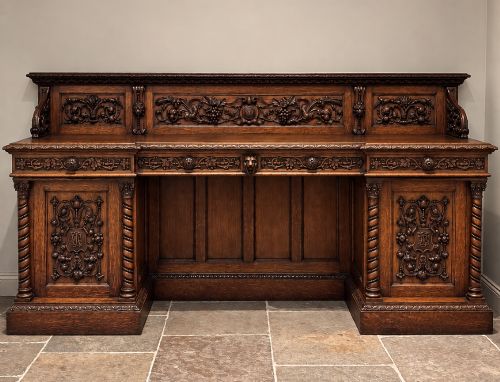
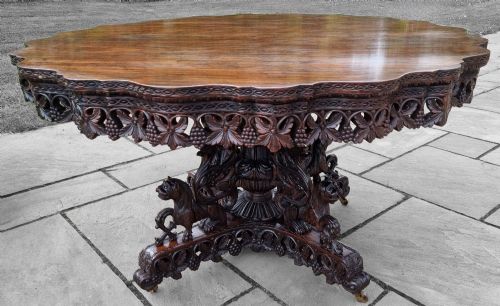
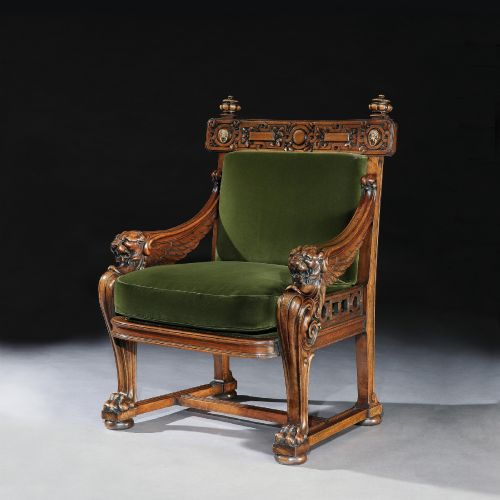
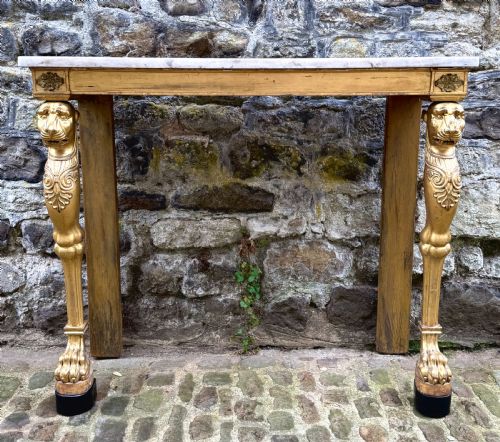
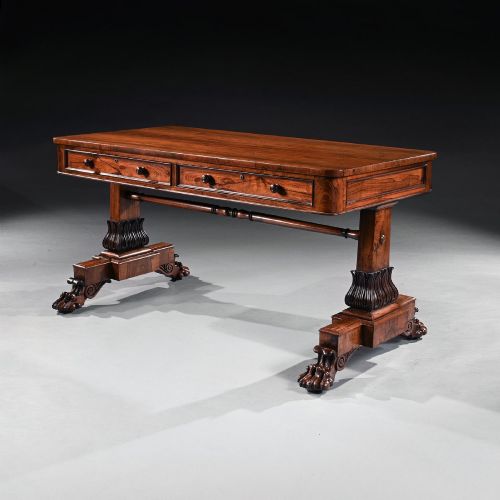
On this page, you are most likely to meet these creatures integrated into furniture supports like monopodia armchairs, library tables, and chests of drawers, or manifested independently as wall masks and architectural carvings.
Makers and workshops across Britain, Europe, and colonial regions utilised dense timbers to render the powerful musculature and detailed manes characteristic of these feline subjects.
Materials and construction methods
Master carvers employed chisels and gouges to shape the solid wood directly, often integrating the lion forms structurally into furniture feet, console supports, or as applied decorative masks on cabinets and sideboards.
Object forms span functional furniture like armchairs, console tables, and chests of drawers alongside standalone sculptures and wall masks.
Distinctions in craftsmanship
The choice of material also dictates the character of the object, with dense exotic hardwoods and finely gilded surfaces holding sharper detail than coarser secondary timbers.
Thomas Hope·Mack Williams And Gibton·Luigi Frullini
The 19th Century Carved Wood Lions Glossary
- Monopodia
- A furniture support consisting of a single leg ending in an animal paw or figure. These are frequently carved in the likeness of a lion.
- Medici lions
- A pair of marble sculptures of lions, one with its paw on a ball, copied extensively during the 19th century in various materials including wood.
- Padauk
- A heavy tropical hardwood with a reddish-brown hue used frequently in Anglo-Indian and colonial furniture. It provides a stable base for intricate carving.
- Giltwood
- Wood that has been coated with gold leaf or gold paint. This finish creates a reflective, opulent surface on frames and console tables.
- Black Forest
- A style of wood carving associated with a region in Germany, known for realistic representations of animals such as bears and lions.
19th Century Carved Wood Lions: Frequently Asked Questions
Where were these carved lions displayed?
These pieces found places in libraries, grand hallways, and principal reception rooms of nineteenth-century residences. They served as structural supports for heavy tables or as standalone decorative wall masks.
Larger sculptural pairs often stood beside doorways or focal points in the interior scheme, asserting a classical aesthetic.
How do I identify the Regency style?
Regency pieces draw heavily on classical Greek, Roman, and Egyptian motifs. You will notice clean architectural lines paired with specific animal forms like lion monopodia.
Dark timbers and gilded accents are common markers of this period, reflecting an interest in ancient antiquity.
What is Anglo-Indian furniture?
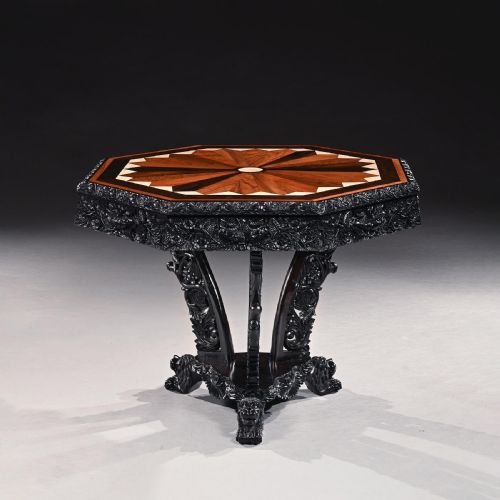
Anglo-Indian furniture refers to pieces made in India by local craftsmen for British residents during the colonial period. They combine British furniture forms with traditional eastern carving techniques.
These items frequently employ dense tropical hardwoods like padauk and feature deeply carved botanical and animal motifs.
How should I care for carved wood?
Keep carved wooden items away from direct heat sources and drastic humidity changes to prevent the timber from splitting. Dust the intricate recesses regularly with a soft brush.
Avoid using heavy liquid polishes that can build up within the carved details over time.