


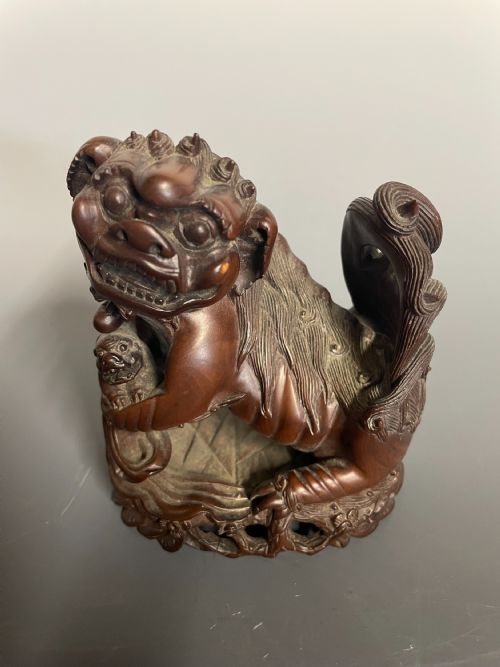


Brown Wooden Lion Sculpture
These brown wooden lion sculpture examples range from Black Forest heads to Grand Tour Medici figures, bringing substantial carved presence into a room.
Brown Wooden Lion Sculpture
A brown wooden lion sculpture brings together animal figures, wall masks, and architectural ornaments spanning the nineteenth century up to the nineteen-thirties. You meet Black Forest walnut heads, pine bookends, and hardwood wall carvings alongside Chinese boxwood and root wood foo dogs.
The selection includes Gothic Revival shield crests, Edwardian pairs, and Grand Tour Medici lions executed in various scales from desk accessories to monumental mantel ornaments. Figures appear alone, as heraldic pairs, or mounted upon marble bases and plinths.
Most entries sit firmly in the nineteenth century, though earlier traditional Chinese examples and later Art Deco interpretations appear across the listings. Buyers encounter everything from fierce architectural corbels to domestic decorative ornaments carved with notable muscular detail.
How they were made
Carvers shaped these objects using dense hardwoods, walnut, oak, boxwood, pine, and root wood with specialised hand chisels and gouges. Grain direction dictated the depth of relief for wall masks and the undercutting of manes on freestanding figures.
Makers finished walnut and oak surfaces through careful hand waxing to highlight the natural figuring of the timber. Some pieces incorporate contrasting materials, such as mounting wooden lioness figures directly onto polished marble bases.
Brown Wooden Lion Sculpture Retail Price Guide 2026
Typical asking prices for brown wooden lion sculpture among the pieces listed under this phrase on Sellingantiques today, from the lower quarter to the upper quarter. They describe what is for sale here now, not the wider market.
The selection spans the nineteenth century, the Edwardian era, and the nineteen-twenties and thirties.
What varies in quality
Quality rests upon the anatomical precision of the carving, particularly in the rendering of facial expressions, muscular tension, and the texture of the mane. Master carvers achieved depth and psychological weight that lesser workshops missed through stiff or repetitive chisel work.
The integrity of the timber and the strength of the original composition separate standard decorative items from exceptional sculptural works. Pairs matched in scale and balanced in opposing poses command greater presence than single assembled ornaments.
Eugene Emile Borga·LUIGI FRULLINI
The Brown Wooden Lion Sculpture Glossary
- Medici lion
- A representation of the marble lion sculptures guarding the Villa Medici in Rome, widely copied during the Grand Tour period. These figures typically crouch with one paw resting upon a sphere.
- Black Forest carving
- Woodwork originating from the Swiss and German border regions during the nineteenth century, known for realistic animal subjects and deep relief. Walnut was the preferred medium for these expressive naturalistic pieces.
- Foo dog
- A traditional Chinese guardian lion symbolising protection, frequently rendered in boxwood or root wood. These mythical beasts display stylised curls and fierce expressions.
- Heraldic lion
- A stylized lion designed for coats of arms and architectural crests, often seen in Gothic Revival and Pugin designs. These carvings emphasise symbolic majesty over naturalism.
- Grand Tour
- A cultural journey undertaken by nineteenth century Europeans to collect classical antiquities and souvenirs. Sculptures acquired on these travels often replicated famous Italian monuments.
Brown Wooden Lion Sculpture: Frequently Asked Questions
Where did these wooden lions sit originally?
Many large carvings functioned as architectural wall masks, heraldic shield crests, or architectural ornaments in nineteenth century libraries and halls. Smaller examples served as desk accessories, bookends, or mantelpiece ornaments.
Pairs often flanked doorways, fireplaces, or bookcases to project authority and classical taste. Grand Tour souvenirs and Black Forest pieces were designed specifically for display on prominent interior surfaces.
What is a Medici lion?
A Medici lion is a replica of the classical marble sculptures residing in Florence, featuring a proud beast resting one paw on a spherical ball. These forms became immensely popular during the nineteenth century Grand Tour.
Carvers interpreted this classical archetype in various woods, creating balanced pairs designed for architectural plinths and mantelpieces.
How do I tell Chinese foo dogs from European lions?
Chinese foo dogs, or guardian lions, feature stylised curly manes, broad snouts, and often rest a paw upon an embroidered ball or cub. They reflect traditional iconography distinct from Western naturalistic sculpture.
European pieces, whether Black Forest or Grand Tour, lean towards anatomical realism and classical heraldry.