

19th Century Carved Desk
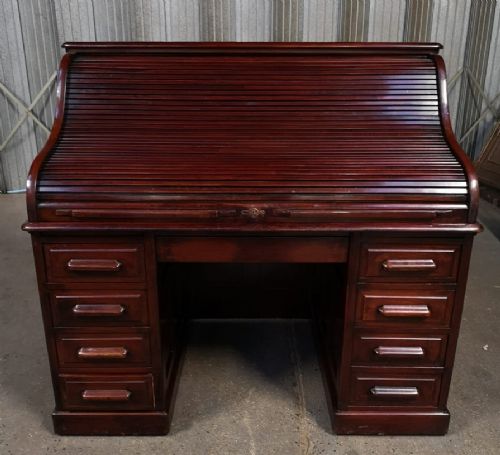
A 19th century carved desk brings solid oak and rich walnut work spaces into a study with detailed historical ornament.
19th Century Carved Desk
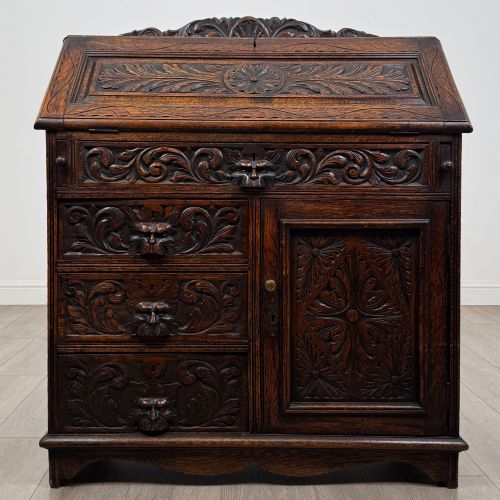
A 19th century carved desk encompasses pedestal formats, partners desks, and compact writing tables originating from Victorian workshops and earlier Regency periods. Buyers searching this phrase encounter substantial oak pieces displaying Green Man motifs, alongside walnut Davenport desks and pedestals.
The material palette draws heavily on oak, walnut, and mahogany, frequently paired with inset leather surfaces and brass hardware. Pieces span decades from the early 1800s through the late Victorian era, reflecting stylistic shifts from Regency refinement to Gothic and Renaissance revivals.
Materials and construction
Cabinetmakers constructed these writing surfaces primarily in solid oak, walnut, and mahogany, utilising dense hardwoods capable of supporting deep relief carving. Artisans executed intricate details such as lion masks, scroll leaves, and mythical winged figures directly into the timber frame.
Secondary elements incorporated leather writing inserts, brass pulls, and occasionally ormolu mounts to accent the woodwork. Structural joinery relied on traditional dovetailed drawers and sturdy pedestal configurations designed for daily use.
Common desk forms span compact Davenport writing boxes, pedestal units, and large partners tables.
Craftsmanship and execution
The distinction between standard utility furniture and superior examples rests on the depth, crispness, and ambition of the woodcarving. Pieces featuring fully realised figural elements like Green Man masks or winged lions demonstrate greater sculptural skill than simple linear mouldings.
Integration of secondary materials such as finely tooled leather writing surfaces and matched timber veneers elevates the overall execution. Proportion and structural integrity also separate basic regional tables from fully articulated partners desks and pedestal forms.
Gillows
The 19th Century Carved Desk Glossary
- Partners desk
- A large double-sided writing table designed for two people to work face-to-face, typically featuring banks of drawers on both sides. These substantial pieces frequently display heavy oak carving.
- Davenport desk
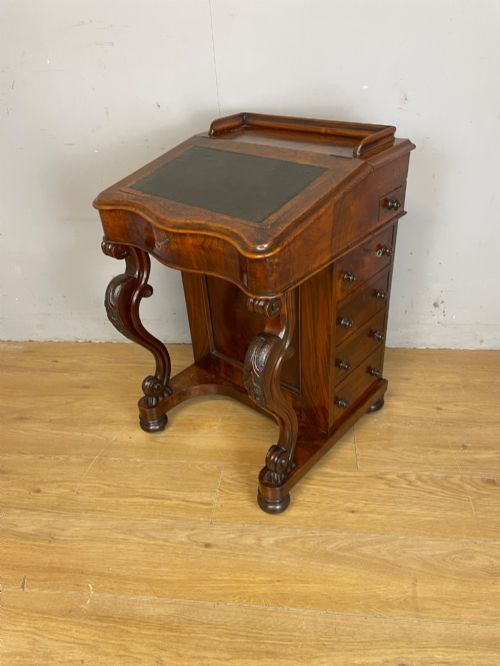
- A compact Victorian writing desk featuring a sloped, leather-inset writing surface above a set of side drawers. They often incorporate hidden compartments and delicate woodwork.
- Pedestal desk
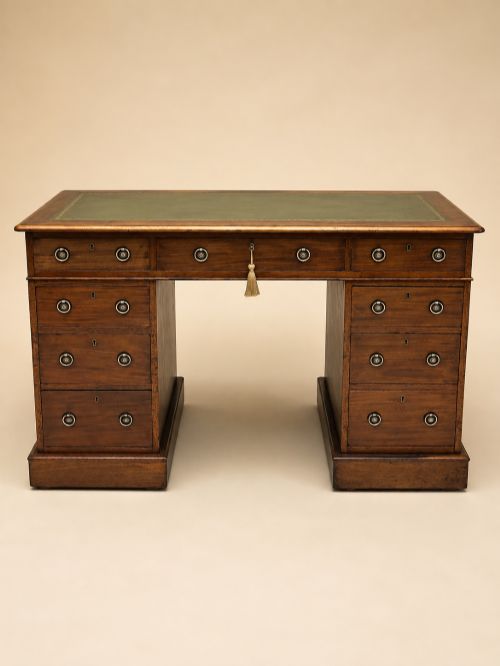
- A heavy freestanding writing table supported by two structural columns or pedestals containing drawers. Examples from this period often showcase elaborate carved decoration.
- Green Man
- A sculptural architectural motif depicting a human face disgorged from foliage or surrounded by vines. This pagan symbol appears frequently on Gothic Revival oak furniture.
- Ormolu
- Gilded bronze mounts applied to furniture for decorative effect. The technique adds metallic contrast to dark woods like mahogany and walnut.
19th Century Carved Desk: Frequently Asked Questions
How do I style a carved desk?
Integrating a heavily carved historical desk into a modern room requires balancing its visual weight with simpler surrounding elements. Pair the dark timber and detailed woodwork with neutral walls and minimalist seating to let the craftsmanship stand out.
These pieces function effectively as focal points in a home study or library. Keeping the surface uncluttered highlights the original leather insert and the carved borders.
How do I tell Victorian from Regency?
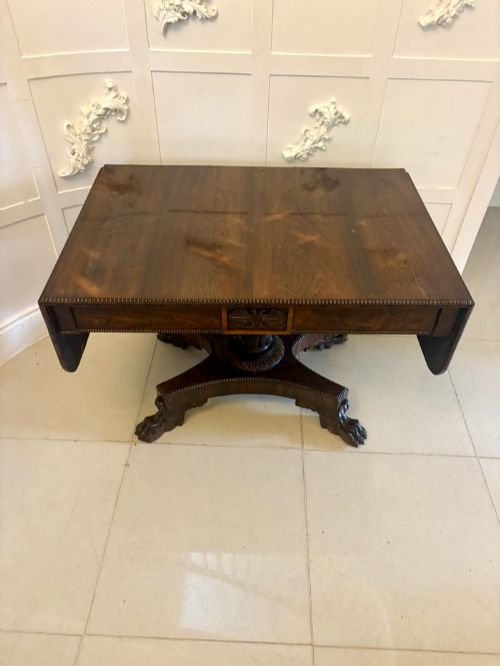
Regency pieces dating from the early part of the century tend to display cleaner classical lines, lighter proportions, and restrained brass inlays or reeded legs. Mahogany and rosewood are typical of this refined phase.
Victorian furniture from the later decades leans toward heavier proportions, darker oak, and more exuberant revival styles such as Gothic or Renaissance carving. Relief work becomes deeper and more sculptural during this later period.
Were these desks used for writing?
These pieces were built primarily for correspondence, bookkeeping, and administrative tasks in private homes, offices, and libraries. The integration of sloped writing surfaces, numerous small drawers, and compartments accommodated inkwells, quills, and stationery.
Larger partners desks allowed business associates or family members to conduct correspondence simultaneously from opposite sides of the same unit.