

19th Century Bronze Statuettes
These 19th century bronze statuettes capture classical figures, animals and historical subjects, offering collectors portable works of art shaped by skilled European founders.
19th Century Bronze Statuettes
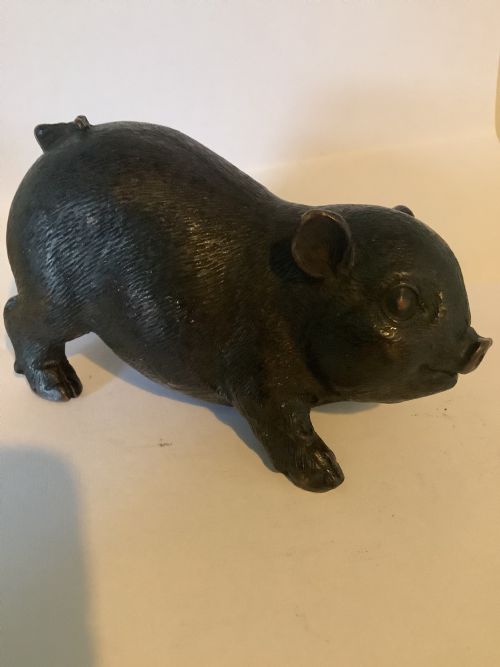
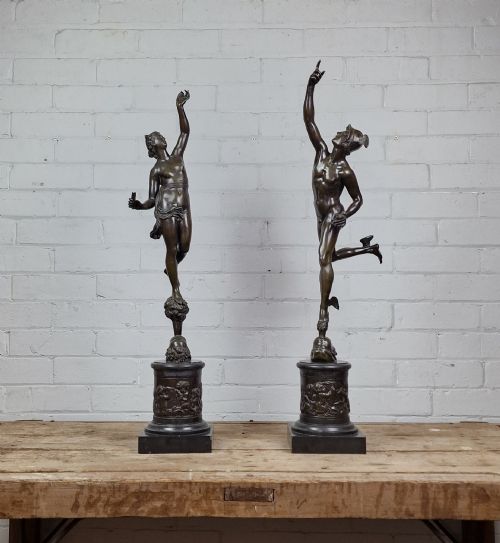
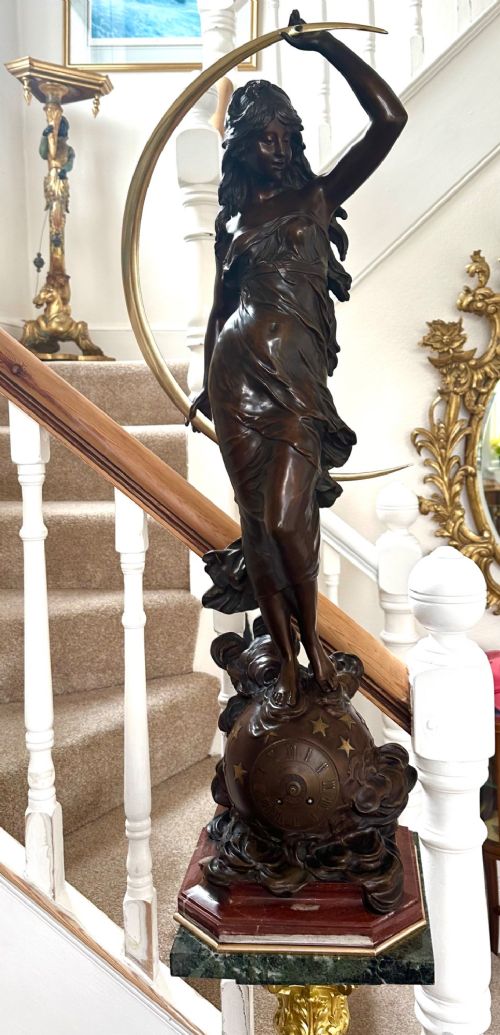
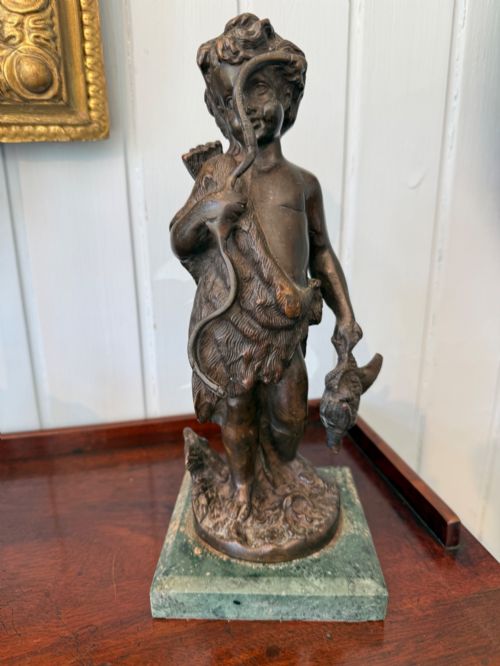
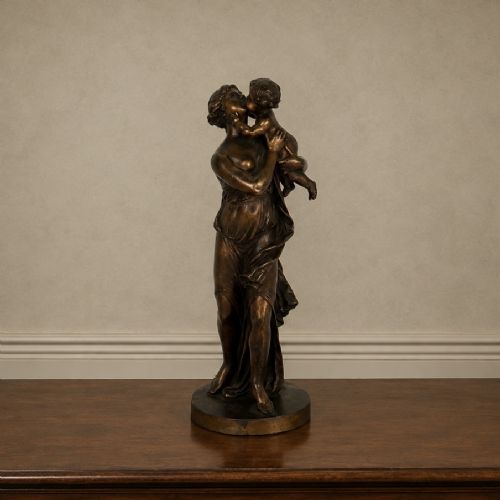
When a collector searches for 19th century bronze statuettes, they encounter a wide array of small-scale sculptures produced across Europe, particularly in France and Italy. These pieces depict mythological subjects, classical maidens, historical figures and realistic animals modelled by prominent sculptors.
The objects on this page span the Victorian era and the late decades of the nineteenth century, reflecting French Academic tastes and Italian Grand Tour souvenirs. Buyers frequently find figures mounted on bases of marble, slate or fossil stone, designed for display on mantelpieces and desks.
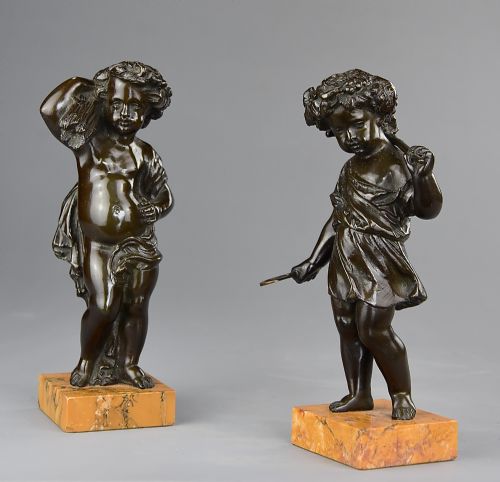
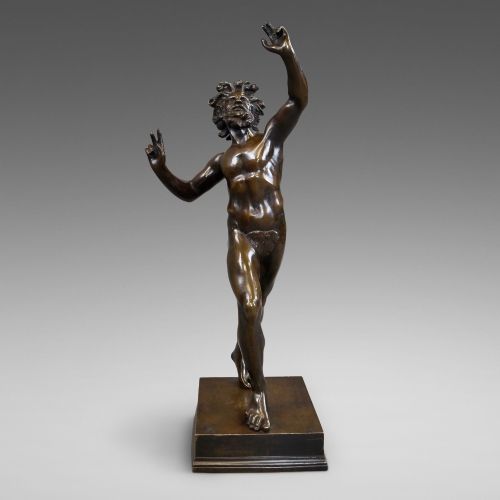
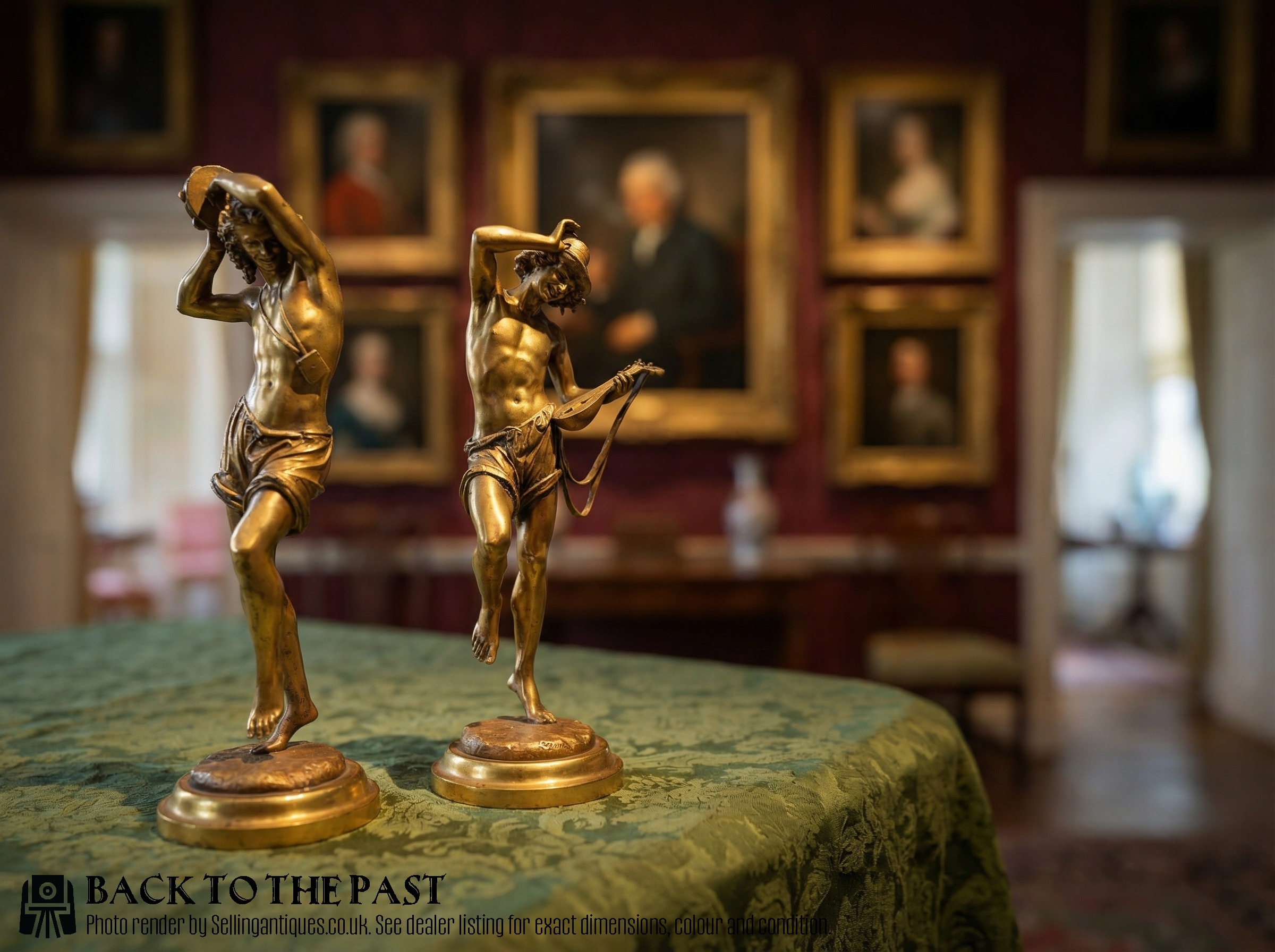
Subjects range from allegorical putti and theatrical characters to faithful reductions of famous antiquities. Whether cast as solitary figures or balanced pairs, these small bronzes bring nineteenth-century sculptural craft into domestic interiors.
Materials and casting methods
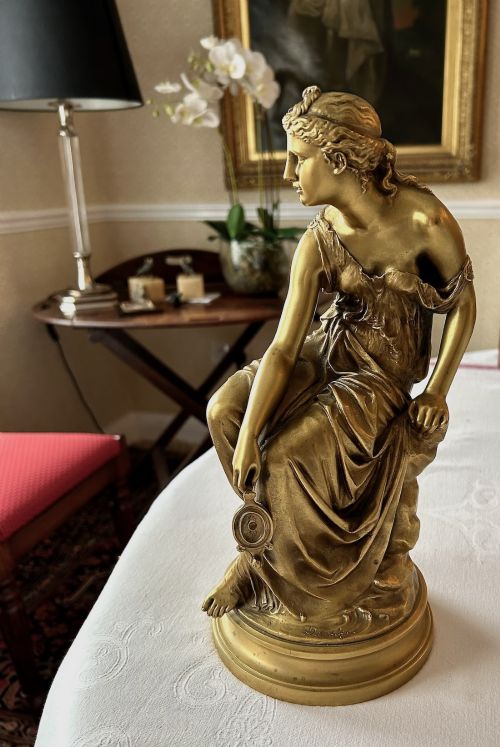
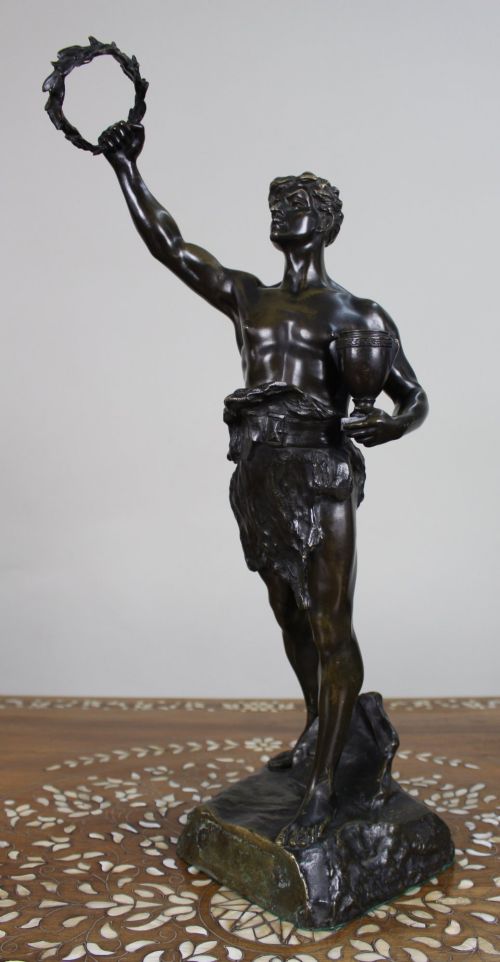
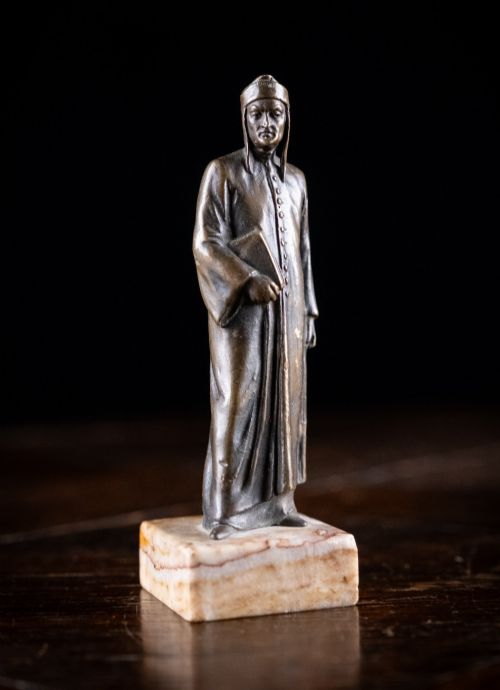
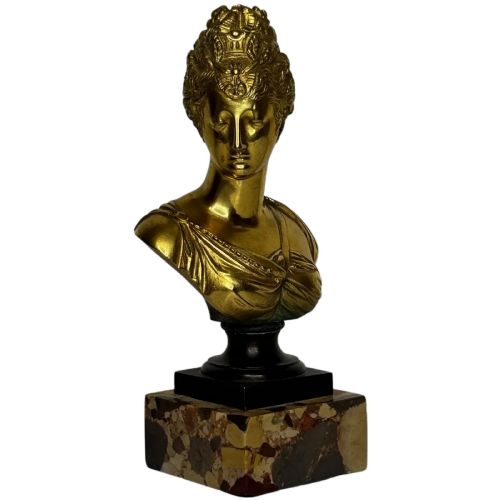
Surfaces received patination through chemical treatments to produce deep browns, dark greens or black tones, while other pieces were highlighted with gilt bronze or ormolu. Many statuettes were subsequently mounted onto heavy bases of marble, fossil marble or slate to provide stability and visual contrast.
Some nineteenth-century founders cast theatrical birds dressed in human attire, giving solemn historical dress to very bewildered-looking ducks.
Distinctions in quality
The fineness of a casting determines its place in the market, separating sharp, deeply chased surface details from softer, worn impressions. Superior examples preserve the nuances of the modeller's touch, whereas lesser pieces show blunt edges and simplified textures from degraded moulds.
The quality of the patination and the material of the base also dictate the standing of a statuette. Richly applied patinas and heavy bases of fossil marble or slate indicate higher standards of workshop production.
Carl Kauba·Etienne-Henri Dumaige·Antoine Louis Barye·Alfred Dubucand·Hamo Thornycroft·Jules Dalou·Edouard Drouot
The 19th Century Bronze Statuettes Glossary
- Patinated bronze
- Bronze treated with chemical solutions to alter the surface colour, producing rich browns, greens or blacks. This layer protects the metal and defines the visual mood of the sculpture.
- Grand Tour
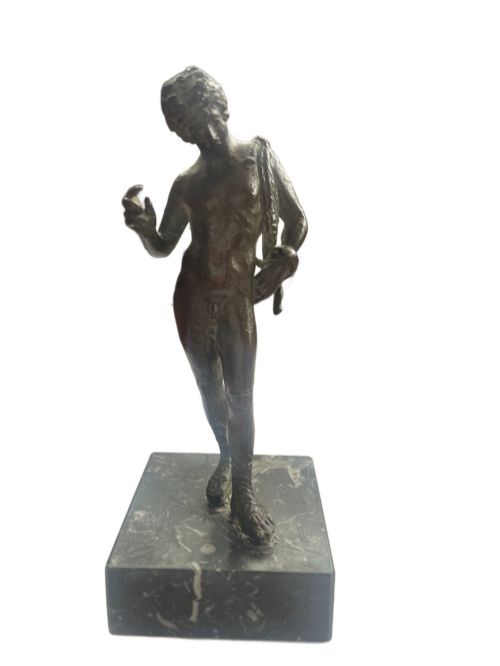
- A traditional trip through Europe undertaken by young upper-class men to study classical art. Souvenirs purchased on these journeys included small bronzes of ancient statues.
- Animalier
- A nineteenth-century artistic movement focused on the realistic depiction of animals. Sculptors in this style studied beasts in motion, often capturing dramatic natural behaviours.
- Ormolu
- Gilt bronze produced by applying a mixture of mercury and gold leaf to a bronze base and heating it. This technique creates a bright golden finish seen on decorative mounts and statuettes.
- Putto
- A representation of a chubby male infant, often winged, derived from classical art. These figures appear frequently in Renaissance and nineteenth-century decorative sculpture.
19th Century Bronze Statuettes: Frequently Asked Questions
What are animalier bronzes?
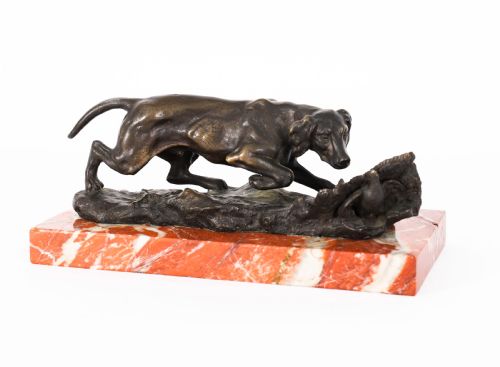
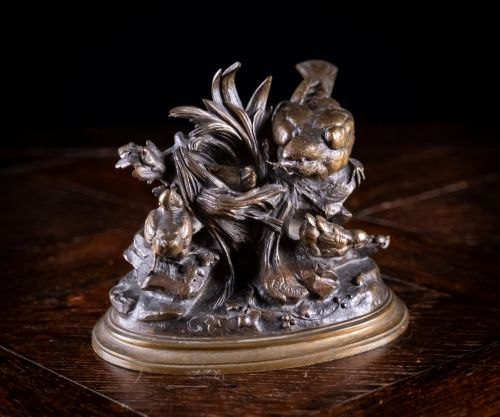
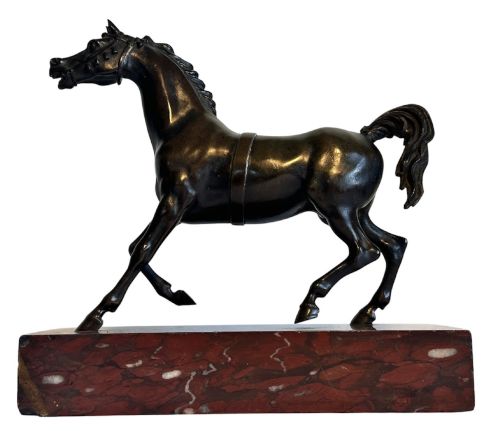
Animalier bronzes are nineteenth-century sculptures that focus on realistic depictions of animals in naturalistic poses. Artists observed creatures closely in menageries to capture accurate muscle structures and movement.
These pieces range from standing bulls and pacing lions to hunting dogs and birds. Collectors prize them for their anatomical precision and lively character.
What was the Grand Tour?
The Grand Tour was a traditional educational journey across Europe, particularly to Italy, taken by wealthy individuals in the eighteenth and nineteenth centuries. Travellers collected small bronze statuettes of classical antiquities as souvenirs.
These miniature bronzes allowed owners to display their classical learning and cultural refinement at home. They frequently feature dark patination and bespoke marble bases.
How do I care for bronze statuettes?
Bronze statuettes require minimal maintenance beyond gentle dusting with a soft, dry cloth. Avoid using commercial metal polishes, as abrasive cleaners can strip away the original patina.
Keep the sculptures away from excessive moisture and direct sunlight to preserve the surface finish and any delicate marble bases.
How are periods identified?
Dating these statuettes involves examining the casting technique, the style of the base and the signature or foundry mark. Finer details and specific patination styles often correspond to distinct decades within the nineteenth century.
Subject matter also offers clues, as movements like Animalier and Art Nouveau gained popularity at specific points in the Victorian and Edwardian eras.