
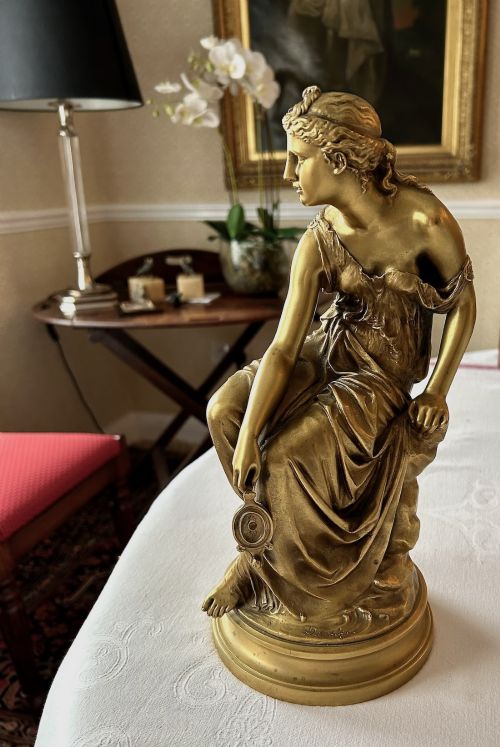
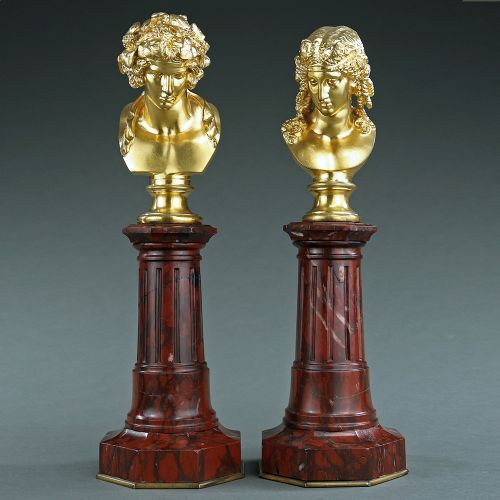
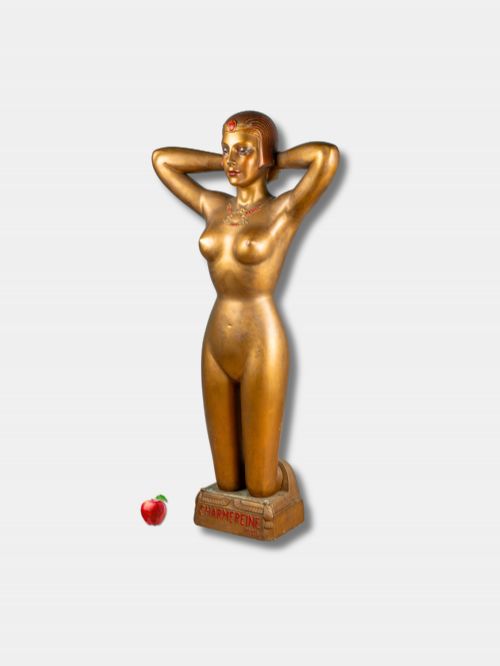
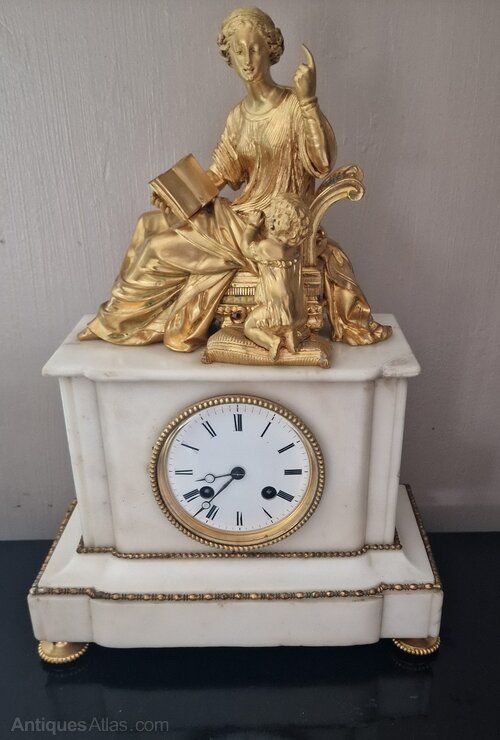
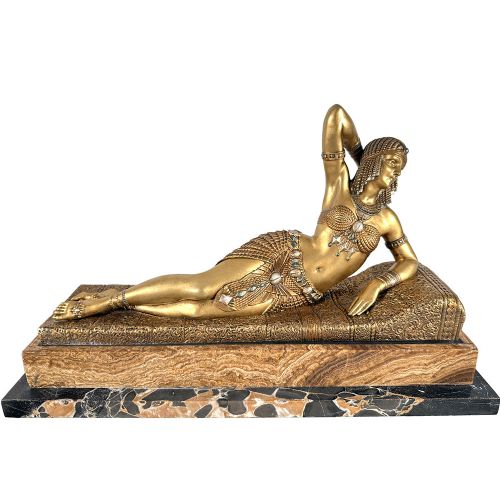


Gilded Bronze Figurine
These gilded bronze figurine works bring cast metal detail, gold surface treatment, and classical or modernist presence straight into an interior.
Gilded Bronze Figurine
A gilded bronze figurine represents sculptural work cast in copper alloys and finished with a gold layer, often taking the form of human figures, animals, or mythological subjects. Collectors searching for a gilded bronze figurine encounter objects ranging from nineteenth-century French foundry casts to twentieth-century Art Deco dancer studies.
The selections span distinct periods, including Victorian mantle pieces, Grand Tour souvenirs, and early twentieth-century modernist figures mounted on stone bases. Subjects vary widely from classical maidens and historical rulers to animals, allegorical representations, and eastern deities.
Functional items such as clocks, desk sets, and lamps frequently incorporate these figures as structural or decorative elements. The diversity of origins encompasses French studios, British makers, Japanese Meiji period examples, and Southeast Asian sculptures.
Materials and Technique
Foundries utilised traditional casting methods such as lost-wax or sand casting to shape the bronze, creating precise lines and textures before surface finishing. Artisans then applied mercury gilding or electroplating to achieve the characteristic gold finish across the bronze or ormolu surface.
Current listings feature nineteenth-century French pieces, Art Deco figures on marble bases, and antique clocks incorporating gilt bronze.
Qualities of Execution
The definition and crispness of the chasing separate standard foundry output from superior works, as skilled chasers hand-tooled the metal after casting to sharpen every detail of hair, expression, and drapery. The depth and integrity of the original gilding also influence the visual weight of the piece.
The quality of the base materials, whether veined marble, dense onyx, or fine porcelain, contributes to the overall stability and proportion of the sculpture. Signatures from established sculptors and marks from renowned foundries elevate the historical and artistic interest of the object.
Etienne-Henri Dumaige·Demetre Chiparus·Louis Riche·Ernst Barrias·Christophe Fratin·Bruno Zach·Claire Colinet·Aug. Moreau·AL Barye·Charlotte Monginot·Albert Ernest Carrier-Belleuse
The Gilded Bronze Figurine Glossary
- Gilt bronze
- Metal cast in bronze and coated with a thin layer of gold for a lustrous finish. This technique protects the underlying alloy and creates a bright golden appearance.
- Ormolu
- Finely ground gold-mercury amalgam applied to bronze, common in French decorative arts. The process yields a rich yellow metallic sheen that resists tarnishing.
- Patinated bronze
- Metal treated with chemical solutions to produce a controlled surface colour or dark tone. It often provides contrast against gilded highlights in sculptural pieces.
- Grand Tour
- Eighteenth and nineteenth-century travel tradition where wealthy collectors acquired classical antiquities and bronze reductions in Europe. These souvenirs emulate ancient statues found in Italy and Greece.
- Animalier
- Nineteenth-century artistic movement focusing on the realistic depiction of animals. Sculptors in this tradition studied anatomy closely at zoological gardens.
Gilded Bronze Figurine: Frequently Asked Questions
How do I clean gilded bronze?
Dust the surface gently with a soft, dry brush to remove particles without disturbing the metal or the gold layer. Avoid harsh chemical cleaners or abrasive cloths that can strip the delicate gilding.
Keep the piece away from direct moisture and handling oils to preserve the original finish over time. Professional conservation is recommended for deep cleaning or restoration work.
What is the difference between ormolu and gilt bronze?
Ormolu specifically refers to a historical French technique involving mercury gilding applied to a brass or bronze base. The term is most commonly associated with decorative mounts on clocks and furniture from the eighteenth and nineteenth centuries.
How do I identify a cast from a signature?
Foundry stamps and artist signatures are typically cast directly into the bronze base or incised into the metal during the finishing process. Compare these marks against known records of nineteenth and twentieth-century European foundries.
Cast quality and chasing detail remain the primary indicators of authenticity, as signatures can occasionally be replicated on later copies.
Where should I display these figures?
Place figures on stable surfaces away from direct sunlight and dramatic temperature fluctuations that might affect stone bases or metal expansion. Mantelpieces, desks, and dedicated display cabinets offer secure environments.
Ensure the weight of the bronze and marble base is fully supported by the furniture piece to prevent tipping.