


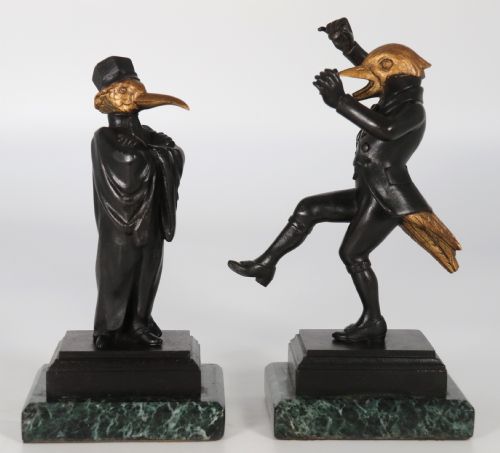


Gilt Bronze Animal Figure
These gilt bronze animal figure pieces bring character to a desk or mantel, spanning Vienna bronze, French Animalier and Chinese work.
Gilt Bronze Animal Figure
A gilt bronze animal figure brings together sculptural metalwork and natural history, spanning domestic pets, theatrical birds and exotic wildlife. Buyers seeking a gilt bronze animal figure find works ranging from small desk accessories to substantial mantel sculptures.
The pieces on this page appear in forms such as inkwells, cold-painted novelties and sculptural pairs. Nineteenth century French Animalier and Vienna bronze pieces dominate the selection alongside Chinese works and Italian marble-mounted pairs.
Makers and foundries represented include Franz Bergman, Paul-Édouard Delabrièrre, Christophe Fratin, AL Barye and Barbedienne. Periods stretch from the early nineteenth century through Victorian novelties to the art deco era.
Materials and construction
Foundries cast these figures in bronze or gilt metal before applying fire gilding, parcel-gilding or cold-painting to the surface. Pigments bring realism to cold-painted Vienna bronzes while mercury or electro-gilding provides the rich metallic sheen on French animalier pieces.
Sculptors mounted several of these figures on bases of olive wood, green marble or standard marble to anchor the weight. Desk accessories incorporate functional elements like inkwells alongside the animal subject.
Gilt Bronze Animal Figure Retail Price Guide 2026
Typical asking prices for gilt bronze animal figure among the pieces listed under this phrase on Sellingantiques today, from the lower quarter to the upper quarter. They describe what is for sale here now, not the wider market.
The listings on this page span the nineteenth century, nineteen-hundred, nineteen-thirty, and feature materials including bronze, olive wood and marble.
Assessing quality and execution
Quality rests in the anatomical precision of the modelling and the crispness of the chased surface detail. Fine works capture the musculature of horses, the plumage of pheasants or the expression of a caricature bear without losing naturalism.
The preservation of original cold-painting or gilding dictates the finish of the piece. Superior examples retain their original patination and mount securely to period bases such as olive wood or marble.
Franz Bergman·Paul-Édouard Delabrièrre·Christophe Fratin·AL Barye·Barbedienne
The Gilt Bronze Animal Figure Glossary
- Cold-painted bronze
- A method where enamel paints are applied to a cold bronze casting rather than fired in a kiln. This technique defines much of Vienna bronze production.
- Animalier
- A nineteenth century sculptural movement focused on realistic depictions of animals in action. French workshops pioneered this style of naturalistic casting.
- Parcel-gilt
- A finish where only specific portions of the bronze are gilded to create contrast against the dark patinated metal. This highlights particular details of the animal.
- Patina
- The surface sheen and colour developed by age or chemical treatment on bronze. Collectors value undisturbed patination for its historical depth.
Gilt Bronze Animal Figure: Frequently Asked Questions
What is a Vienna bronze?
Vienna bronze refers to small, highly detailed figures produced in Austrian workshops during the late nineteenth and early twentieth centuries. These pieces typically feature vibrant cold-painted enamel finishes over cast bronze.
Subjects often include humorous animal caricatures, humanised creatures and exotic wildlife. Franz Bergman stands among the most famous producers of this distinct genre.
How do I care for gilt bronze?
Gilt bronze requires gentle dusting with a soft, dry brush to prevent the accumulation of dirt in recessed chased details. Avoid liquid cleaners, polishes or abrasive cloths that can strip the delicate gold surface.
Keep pieces away from direct sunlight and high humidity to protect underlying patination and any cold-painted enamel work. Stable indoor environments preserve the original finish best.
What are Animalier sculptures?
Animalier sculptures depict animals in dynamic, naturalistic poses, capturing them in motion or repose. The movement gained prominence in nineteenth century France through artists observing nature directly.
Foundries like Barbedienne cast these works in bronze, often mounting them on marble bases. The focus remained on anatomical accuracy and expressive realism.
Are these pieces functional?
Some animal figures double as practical items, most notably desk accessories such as inkwells. Mr fox in his nightgown serves as an example of a functional inkwell disguised as a narrative scene.
Other works exist purely as decorative sculptures or mantel ornaments. Buyers should check individual descriptions to determine if a piece includes functional elements.