


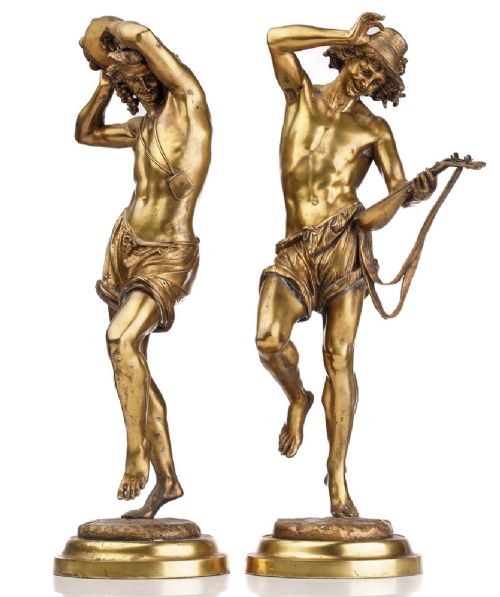

Antique Lute Player Statue
An antique lute player statue brings the sculptural romance of historic music rooms directly into the home through finely cast metal and moulded ceramic.
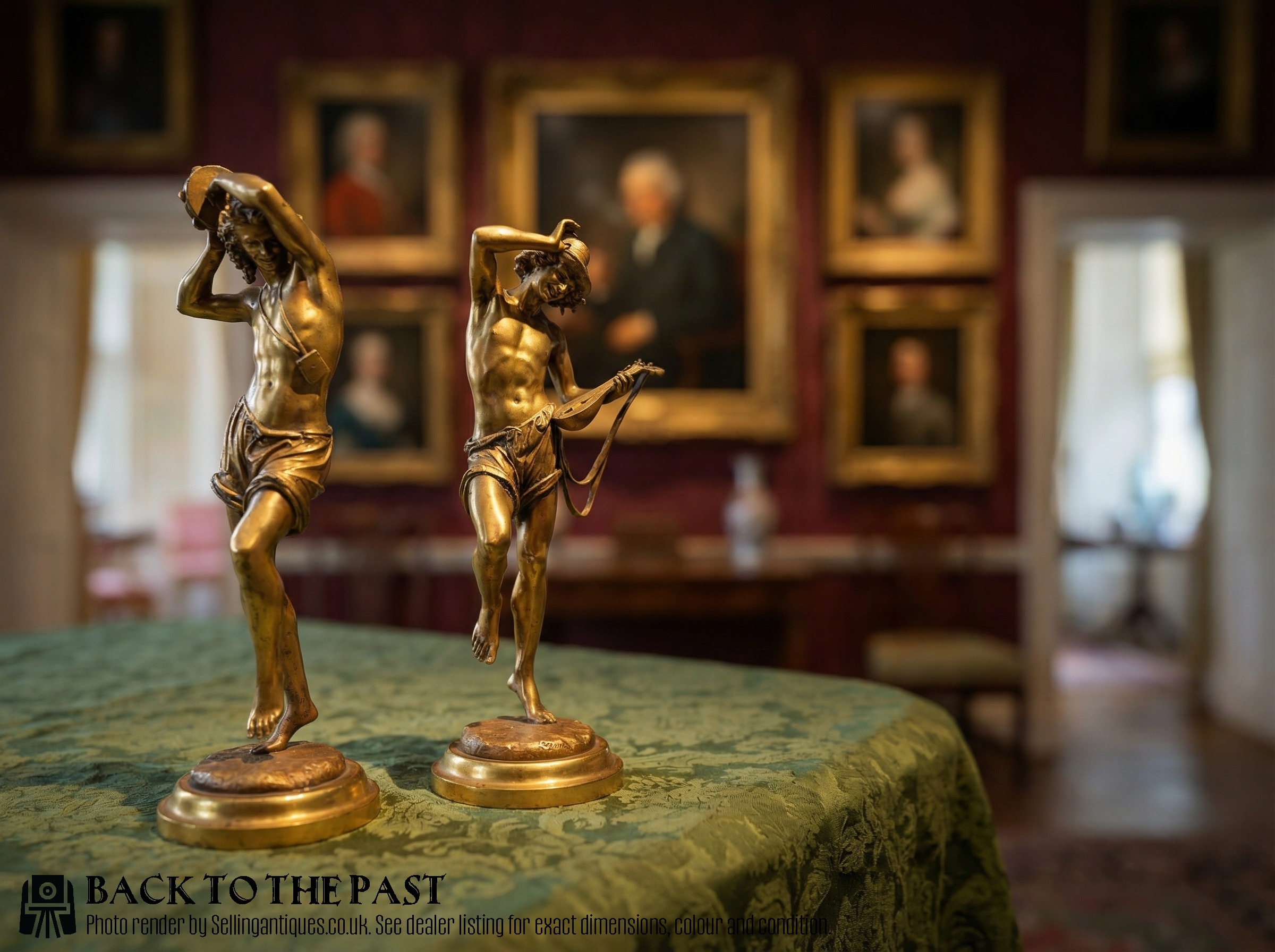
Antique Lute Player Statue
An antique lute player statue captures historical musicians, minstrels, and maidens mostly originating from nineteenth-century European workshops. These figures draw upon revival styles such as Rococo, Italian Renaissance, and French Classical aesthetics to portray performers with their instruments.
The objects take the form of bronze sculptures, hard-paste porcelain figurines, and painted terracotta pieces. The selection ranges from monumental single figures to balanced pairs of Venetian or Neapolitan musicians.
Makers and sculptors of the nineteenth century frequently rendered these subjects with careful attention to period costume and expressive gesture. The musician forms appear across various scales, from cabinet-size ceramic groups to substantial patinated metal statues.
Materials and construction methods
Foundry methods for the metal works rely on traditional bronze casting, often finished with deep patination or applied gold leaf and gilt layers. These techniques allow for intricate rendering of lute strings, folds in fabric, and facial expressions.
Ceramic examples utilise hard-paste porcelain and bisque porcelain, shaped through skilful moulding and detailed hand-painting or enamel work. Painted terracotta also appears, offering a different textural surface for sculptural figures.
Antique Lute Player Statue Retail Price Guide 2026
Typical asking prices for lute player statue among the pieces listed under this phrase on Sellingantiques today, from the lower quarter to the upper quarter. They describe what is for sale here now, not the wider market.
Listings feature works from nineteenth-century France, Italy, and Germany, executed in bronze, hard-paste porcelain, and terracotta.
Distinctions in quality and execution
Surface finishes, whether through careful patination on bronze or delicate enamel and gilding on porcelain, determine the visual depth of the piece. The presence of signatures from known modellers or established bronze-founders elevates the standing of the work.
Volkstedt Richard Eckert·Justo de Gandarias·S. Kinsburger·Paul Fournier·Albert Ernest Carrier-Belleuse·Renzo Colombo·Barbedienne
The Antique Lute Player Statue Glossary
- Patinated Bronze
- Bronze treated with chemical solutions to produce a specific surface colour and tone. This finish protects the metal and enhances sculptural definition.
- Hard-paste Porcelain
- A dense, durable ceramic composed of kaolin and petuntse fired at high temperatures. It allows for sharp moulding and a smooth glazed surface.
- Bisque Porcelain
- Unglazed porcelain with a matte, white texture resembling marble. It is frequently utilised for delicate nineteenth-century figural groups.
- Gilt Bronze
- Metal decorated with a thin layer of gold applied to the surface. It provides a bright, reflective finish often seen on decorative revival pieces.
Antique Lute Player Statue: Frequently Asked Questions
How do I identify the period of a lute player figure?
Dating relies on stylistic clues, foundry marks, and artist signatures stamped or engraved into the base or rear of the sculpture. Most examples date from the nineteenth century, showing influences from classical, renaissance, and rococo revivals.
Material composition and manufacturing techniques also provide clear indicators of nineteenth-century production methods.
Were these figures meant for display?
These statues were created as decorative cabinet pieces, mantel ornaments, or salon sculptures for nineteenth-century homes. Their detailed clothing and musical instruments were designed to be viewed closely from multiple angles.
Pairs of musicians were often placed symmetrically to balance interior mantelpieces or display furniture.
How should I care for a bronze or porcelain statue?
Bronze figures require gentle dusting with a soft, dry cloth to protect their patination from moisture and oils. Porcelain pieces should be cleaned with equal care, avoiding harsh chemical cleaners that might damage enamel or gilt details.
Stable indoor environments away from direct sunlight help preserve both metal patinas and ceramic glazes over time.