


19th Century Boulle Work
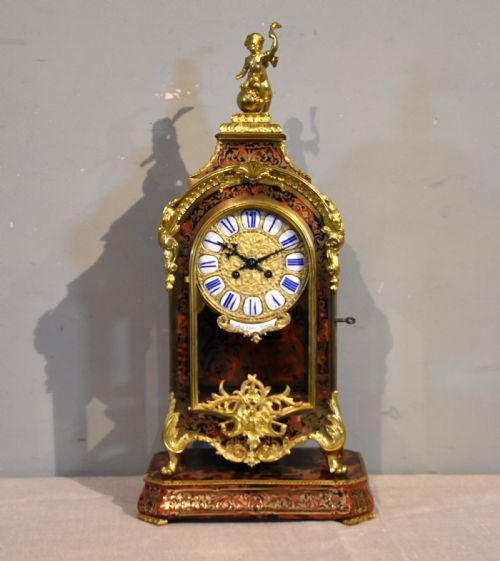
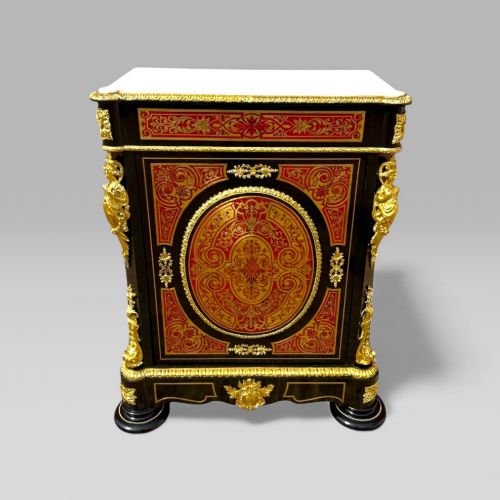
These 19th century boulle work pieces combine tortoiseshell and brass marquetry across cabinets, tables, and clocks for interiors that demand visual richness.
19th Century Boulle Work
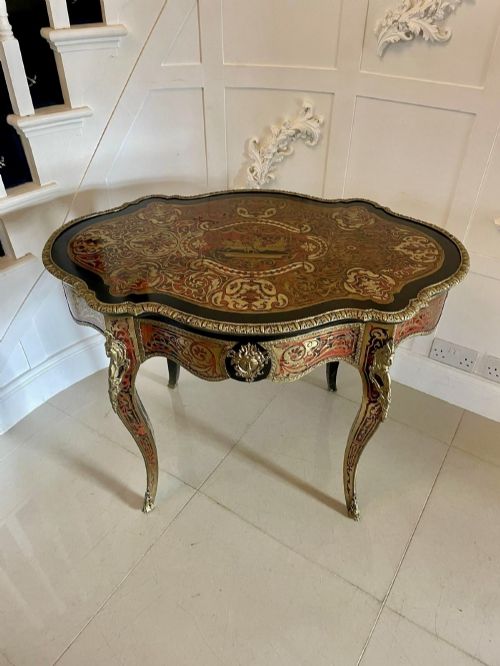
When you search for 19th century boulle work, you encounter decorative furnishings rooted in French revival aesthetics. The inventory relies heavily on Napoleon III items alongside Louis XV and Rococo revivals, capturing a distinct mid-to-late Victorian taste for opulent surface decoration.
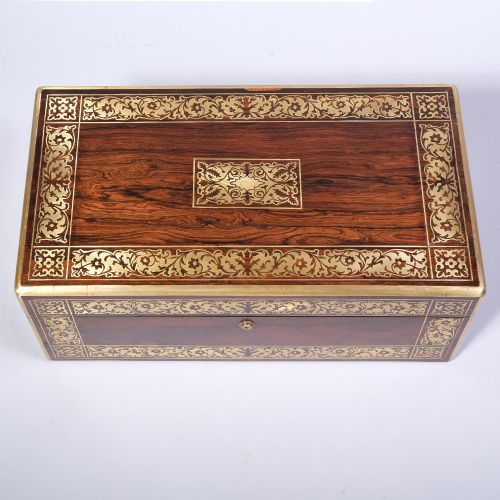
The dominant forms span practical furniture and decorative accessories. Centre tables, pier cabinets, writing boxes, and mantel clocks appear frequently, accompanied by tea caddies, credenzas, and display cabinets designed to hold precious objects.
How they were made
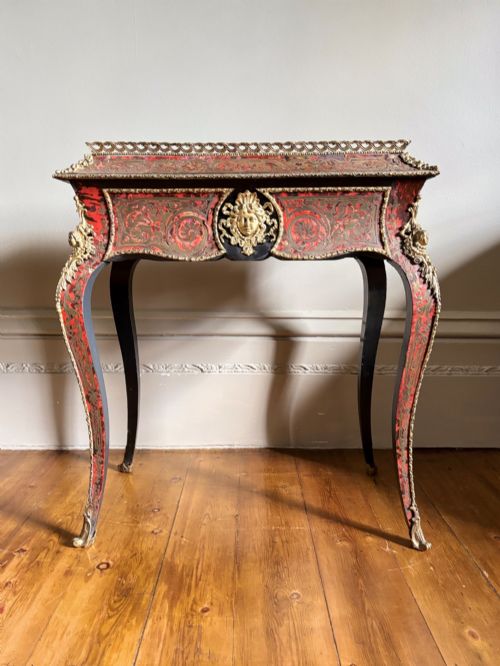
Maker workshops constructed these surfaces using contrasting materials, pairing dark ebonised wood with luminous brass and amber-toned tortoiseshell. Artisans also utilised red tortoiseshell variants, setting metallic inlay into organic shell grounds to create intricate marquetry patterns.
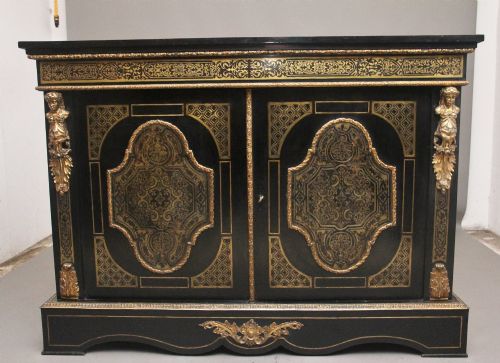
Mounts cast in ormolu and gilt bronze frame the marquetry panels, adding structural definition to corners, feet, and borders. Glass panels feature in display cabinets and pier cabinets, while wood provides the underlying carcass for tables and storage boxes.
The site listings demonstrate that 19th century boulle work predominantly takes the form of French Napoleon III pier cabinets and centre tables.
What varies in quality
Quality rests upon the precision of the brass and tortoiseshell cutting and the crispness of the cast ormolu mounts. Finer examples display tight joints between the inlaid metals and the organic shell, whereas lesser pieces show wider gaps filled with black mastic.
The depth of the chasing on the gilt bronze mounts separates standard production from exceptional studio output. Stronger pieces maintain structural integrity in the ebonised carcases, preventing the warping that affects delicate marquetry over time.
Maison Millet
The 19th Century Boulle Work Glossary
- Boulle work
- Marquetry technique involving tortoiseshell and brass inlaid in opposing counter-form patterns. First perfected in France during the seventeenth century, the style returned to popularity in the nineteenth century.
- Ormolu
- Gilt bronze mounts applied to furniture edges, feet, and key escutcheons. The metal receives an acid treatment before gold amalgam is applied and heated.
- Pier cabinet
- A low or tall display cabinet designed specifically to stand against the wall space between windows. These often feature glazed doors and elaborate brass inlay.
- Bonheur du jour
- A light lady's writing desk featuring a small cabinet or set of drawers on the upper surface. Nineteenth-century versions frequently incorporate tortoiseshell marquetry.
- Marquetry
- Decorative patterns formed by fitting thin pieces of wood, brass, and shell onto a structural wood base. Artisans cut multiple sheets simultaneously to achieve tight fits.
19th Century Boulle Work: Frequently Asked Questions
How do I care for boulle work?
Keep these items away from direct sunlight and dramatic humidity shifts, which cause the delicate tortoiseshell and wood ground to dry out and contract.
Dust the surface gently with a dry microfibre cloth and avoid using liquid polishes or harsh chemical cleaners on the brass and shell.
Were these pieces made in England or France?
Many examples originate from French workshops, particularly during the Napoleon III period, reflecting Parisian taste exported across Europe. British makers also produced comparable desk stands and cabinets using imported techniques.
Stylistic cues, construction methods, and documentation help distinguish the primary French origin from British interpretations.
Where should I place a pier cabinet?
These narrow cabinets suit narrow wall spaces, hallways, or drawing rooms where floor area is restricted.
Their glass fronts and reflective brass inlay catch ambient light, brightening darker corners of a room.