


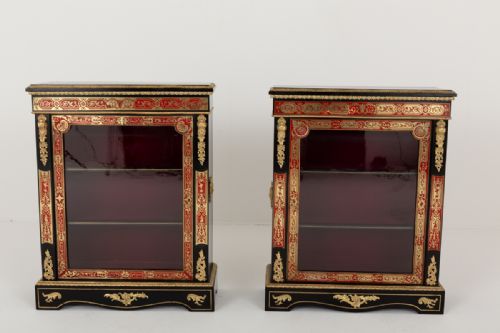


19th Century Boulle Cabinet
A 19th century boulle cabinet brings together tortoiseshell, brass, and ebonised wood into a striking focal point for a formal interior.
19th Century Boulle Cabinet
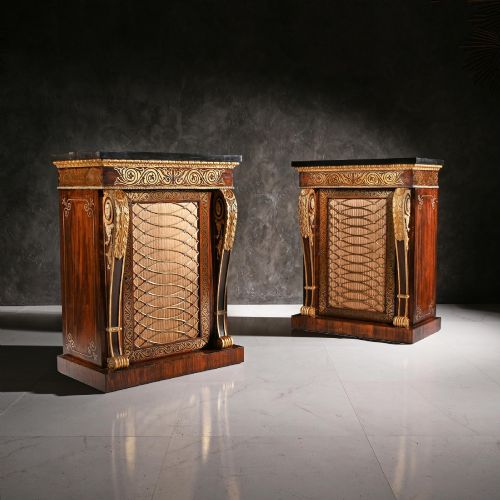
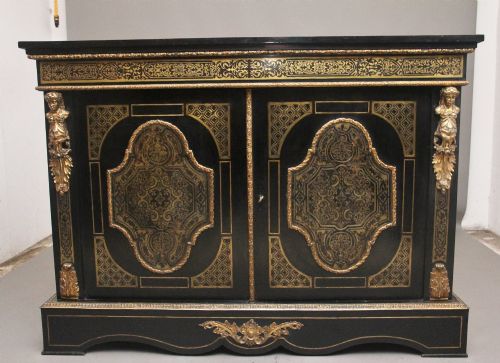
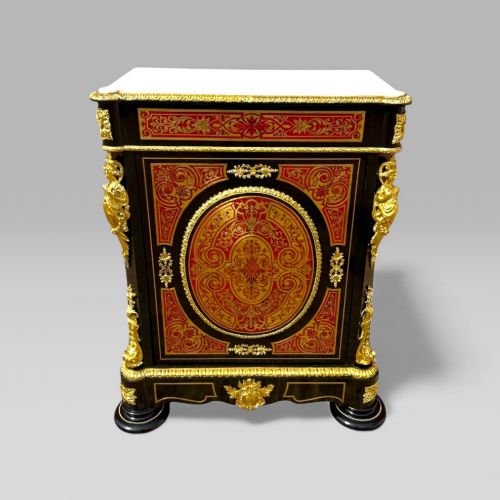
A 19th century boulle cabinet encompasses various forms designed for display and storage, including pier cabinets, credenzas, side cabinets, and writing desks such as the bonheur du jour. These pieces emerge predominantly within the French Napoleon III and Victorian styles, reflecting the mid-to-late nineteenth-century taste for ornate revival furniture.
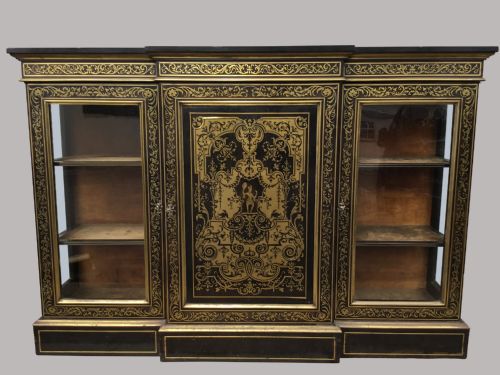
The pier cabinet and the credenza represent the most common configurations on this page. Pier cabinets stand tall and narrow, built to fit the wall space between windows, whereas credenzas offer a lower, broader silhouette often featuring serpentine fronts and glass doors for display.
Makers and workshops of the period utilised rich timbers like rosewood, ebony, and ebonised wood as a dark ground for metallic inlay. Pieces span from the 1850s through to the 1880s, documenting a sustained preference for elaborate marquetry across domestic interiors.
Assessing quality and execution
The precision of the brass and tortoiseshell marquetry dictates the tier of execution. Finer examples display tight, crisp scrollwork without gaps in the inlay, whereas lesser pieces show wider filler lines and simpler, stamped brass motifs.
The quality of the cast ormolu mounts creates a significant distinction between standard production and top-tier workshop output. Superior mounts exhibit sharp chiselling, deep relief, and secure attachment to the cabinet frame, whereas simpler items rely on shallow, uniform casting.
Secondary timbers and internal construction reveal the level of cabinetmaking skill. Better pieces employ solid mahogany or oak for internal shelving and drawer linings, maintaining structural stability across serpentine and breakfront shapes.
Cabinet forms on this page include side cabinets, credenzas, bibliotheques, and writing desks.
Louis Constantin Le Gaigneur
The 19th Century Boulle Cabinet Glossary
- Boulle
- A method of marquetry using brass and tortoiseshell, developed in France and popularised during the nineteenth century. It creates contrasting metallic and organic patterns across cabinet doors and panels.
- Ormolu
- Gilt bronze mounts applied to the corners, feet, and friezes of furniture. This material provides a bright, durable metallic finish that complements the dark ebonised or rosewood ground.
- Pier cabinet
- A narrow cabinet designed to stand against the wall space between windows. These pieces often feature single glass doors and fitted interior shelving for display.
- Credenza
- A low, broad cabinet used for storage and display, frequently fitted with serpentine front designs and marble tops. They anchor formal dining rooms and large reception spaces.
- Bonheur du jour
- A small writing desk featuring an upper cabinet section with drawers, shelves, or pigeonholes. These desks combine delicate proportions with elaborate marquetry decoration.
- Marquetry
- The art of applying pieces of veneer to a structure to form decorative patterns and pictorial designs. In these pieces, it combines brass, tortoiseshell, and exotic woods.
19th Century Boulle Cabinet: Frequently Asked Questions
What is a boulle cabinet?
A boulle cabinet is a nineteenth-century storage or display piece decorated with intricate marquetry made from brass and tortoiseshell. These items typically feature dark ebonised wood or rosewood surfaces enhanced by gilt bronze mounts.
Craftsmen built these cabinets in various forms, including tall pier units, low credenzas, and small writing desks. They served as formal reception room furniture designed to display decorative objects and catch the light.
How do I date a 19th century boulle cabinet?
Dating relies on examining the stylistic markers, secondary construction timbers, and assembly methods used inside the cabinet. Pieces from the 1850s and 1860s often display Napoleon III revival characteristics with dense brass scrollwork and heavy ormolu mounts.
Later nineteenth-century examples from the 1870s and 1880s incorporate similar French techniques adapted by English and continental makers. Looking at the backboards, drawer linings, and screw types helps confirm the manufacturing era.
Where should I place a pier cabinet?
A pier cabinet fits best in narrow wall spaces, traditionally between two windows or beside a fireplace. Its compact, upright proportions allow it to occupy minimal floor space while offering vertical display capacity.
Keep these cabinets away from direct, strong sunlight to protect the delicate tortoiseshell and timber veneers from fading or drying out. Pairing them with adequate interior room lighting highlights the reflective quality of the brass inlay.